There is a sound that has defined the supercar for half a century, and it is disappearing. It is not the sound of speed — electric motors are faster than ever — it is the sound of an engine working: a V12 at full throttle, a flat-plane V8 echoing off a tunnel wall, the crackle of an exhaust on the overrun. For a generation of enthusiasts, that sound was the point. The car was a machine you could hear before you could see it, and the noise was the emotion. Now the new cars are quiet, and the enthusiasts are furious, and the manufacturers are piping fake engine sounds through the speakers to compensate. The enthusiasts are wrong about the noise, though. It is time to say it plainly: the quiet supercar is better, and the loud one should go.
This is not an argument that supercars should be silent appliances. It is an argument that the noise was never the performance — it was the byproduct — and that the industry has confused a side effect with a soul for so long that it forgot what makes a fast car exciting. A supercar’s job is acceleration, cornering, braking and the feeling of the road through the controls. None of those require volume. The noise was a tax everyone else paid so that a few thousand owners could enjoy a soundtrack, and the tax has finally come due.
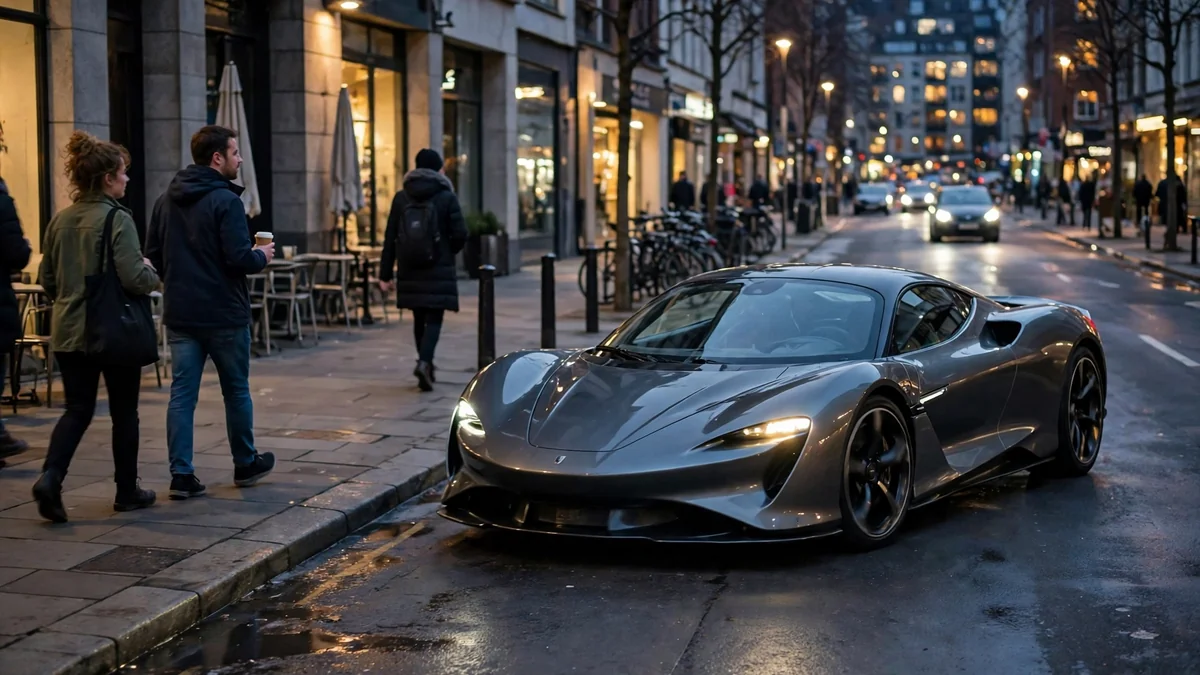
The numbers are not close
Start with the facts, because the debate is usually conducted in feelings. European noise regulation, Regulation 540/2014, has been tightening the legal sound limit for cars in stages: from 74 decibels for a standard car down to 68, with more powerful cars allowed a margin of a few decibels on top. The latest phase, taking effect for new registrations from July 2026, caps everyday cars at 68 decibels, typical sports cars at 71 and supercars at 72 — roughly the volume of a kitchen blender. The decibel scale is logarithmic, so the drop from the old 74-decibel limit to 68 is not a small trim: it is roughly a halving of the sound intensity. Journalists who attended the Goodwood Festival of Speed in July 2026 reported that series-production supercars from Ferrari, Lamborghini and Aston Martin sounded, in the words of one, “like vacuum cleaners”.
That sounds like a loss until you ask who the noise was for. A supercar at full throttle is not just loud for its driver; it is loud for everyone within hundreds of metres — the residents of the street it drives down, the pedestrians, the children trying to sleep, the hospital wards and the schools. Noise is pollution, and the science on it is settled: chronic traffic noise is linked to stress, raised blood pressure, disturbed sleep and worse health outcomes. The supercar owner experiences the noise as a thrill for a few seconds. The neighbourhood experiences it as a health burden all day. That is not a fair trade, and no amount of enthusiasm justifies it.
Quiet is faster, and quiet is more honest
Here is the engineering truth the nostalgia ignores: the quiet supercar is not a compromised supercar, it is a better-engineered one. The noise of the old cars was waste — energy leaving the exhaust as sound instead of pushing the car forward, a naturally aspirated engine screaming because it had to rev to make power. Turbochargers, which muffle exhaust sound by their nature, made engines more efficient. Hybrid systems made them faster still. Electric motors make them faster again, and almost silent while doing it. The fastest accelerating production cars in the world are now electric, and they do it without a soundtrack. The noise did not make the cars fast. The noise was what the cars had to put up with to be fast, and now they do not.
And there is an honesty point that matters. The loudest modern supercars are already faking it. Because the regulations test cars in their loudest modes, manufacturers cannot simply fit a loud exhaust and a quiet switch; so they pipe synthesised sound into the cabin, or tune the exhaust to bark on the overrun, manufacturing drama that the engine is not really producing. The AMG engineers who admitted they had to add artificial sound because the regulations made a real exhaust note impossible were describing the endgame of the loud-car philosophy: a car that pretends to be loud. A quiet supercar does not pretend. It is fast, and it does not apologise for the silence, and it does not need to fake a soundtrack to justify itself.
The counterargument, taken seriously
The strongest case for the loud car is not about performance at all; it is about culture and emotion. The sound of a V12 is a cultural object, like the smell of a printed book or the crackle of vinyl. People love it because it connects them to a century of racing, to the machines their heroes drove, to a time when a car announced itself. That is a real loss, and it is fair to mourn it. Nobody who has heard a well-tuned V12 at full throttle in a tunnel will pretend the experience is meaningless.
But culture is not a reason to keep imposing noise on everyone else, and the culture is adapting faster than the mourners admit. The new generation of performance cars has its own character: instant torque, perfect traction, acceleration that pins you to the seat without a build-up or a scream. The greatest V12 engines ever built deserve their museum, their documentaries and their place in history — and a museum is exactly where a V12 belongs now, preserved and celebrated, not blasting through a residential street at midnight. The cars that made the noise are not being erased; they are being honoured by being retired gracefully.

The future sounds like tyres
The hypercar world is already moving this way, and the engineering is spectacular: the best hypercar braking systems compared shows how much of the modern performance car’s magic is in systems that work silently — brakes, aerodynamics, hybrid torque fill. And how a hypercar V12 engine is made is a fitting tribute to the machine that defined the loud era: a masterpiece of engineering, and a masterpiece whose time has passed. The V12 was the greatest engine ever built for making noise and speed together. The electric motor is the greatest machine ever built for making speed alone. Speed is what a supercar is for.
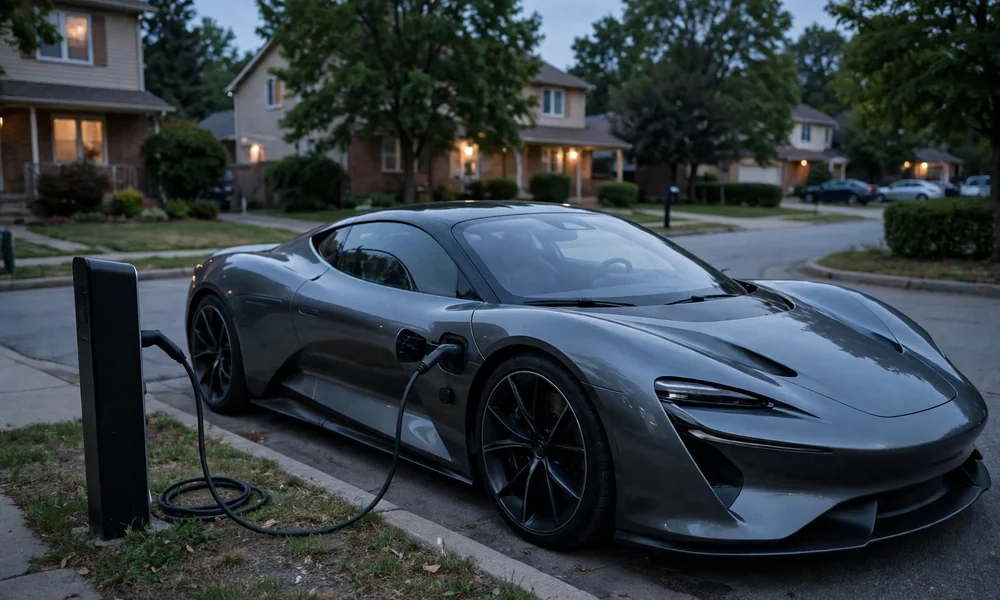
The loud supercar had a good run — half a century of thunder, and nobody should pretend it was not glorious. But it was glorious for the driver and miserable for everyone else, it was a byproduct mistaken for a soul, and it is being replaced by cars that are faster, more precise and more honest about what they are. The quiet supercar is not the death of excitement. It is excitement grown up: speed without the tax, performance without the pollution, a car that thrills its driver and leaves the street in peace. The future of the supercar is quiet. It is time to stop mourning the noise and start listening to what the new cars are actually saying.