Stand on the deck of a modern electric ferry and you will notice something odd. The boat is quiet, clean, and efficient, and it looks like a floating white box. It could be a hospital, a warehouse, or a car park. Nothing about it says where it is going, or where it came from, or why anyone should care. The case for retro electric ferry design is that ferries are not just transport. They are part of a place, and a ferry that looks like it belongs to its harbour, its river, or its history will be loved, used, and remembered in a way a white box never will be.

A ferry is part of the place it serves
Ferries are different from other boats because they belong to a community. The same vessel crosses the same water, day after day, carrying commuters, schoolchildren, shoppers, and tourists. People do not just ride it; they recognise it, photograph it, and miss it when it is in refit. A ferry with character becomes a landmark, and a landmark earns affection that no amount of efficiency can buy. That affection matters, because it turns passengers into advocates, and advocates into the political support that keeps ferry services funded.
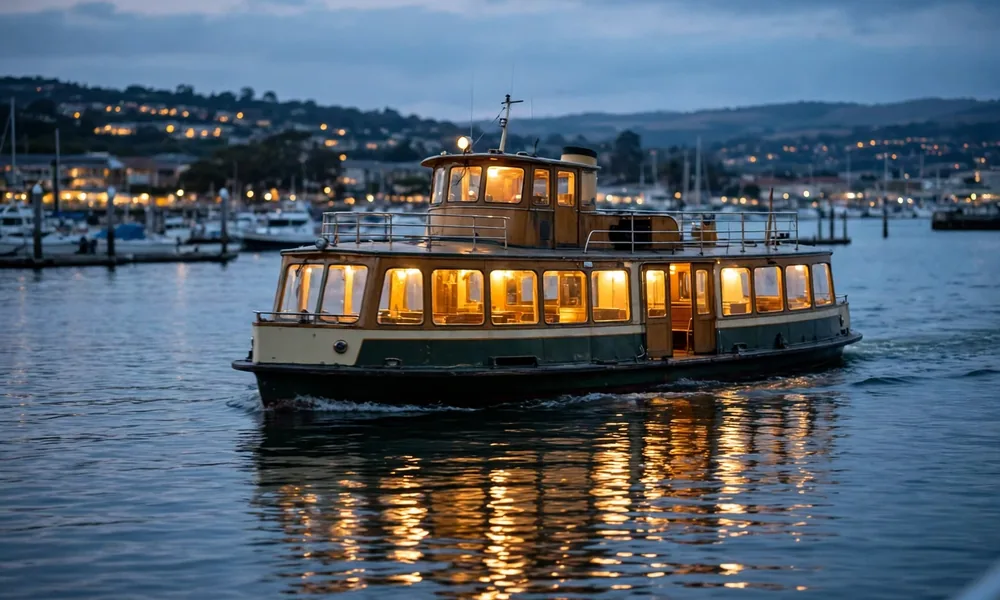
Retro design gives a ferry that character without inventing it. The classic ferry shapes, the rounded bows, the varnished wood, the brass details, the cream and green paint schemes, are not decoration. They are the visual language of a hundred years of working boats, and they tell passengers immediately what the vessel is and where it belongs. A modern electric ferry dressed in that language is not pretending to be old. It is saying that it is part of a tradition, and that tradition is worth continuing.
Heritage looks are not nostalgia, they are engineering
There is a lazy assumption that retro design means old-fashioned engineering, and it is wrong. The classic ferry hull forms, the gentle curves, the flared bows, and the generous freeboard, were shaped by decades of practical experience in real water. They handle a chop well, they keep passengers dry, and they are forgiving in a docking manoeuvre. Modern designers can keep those shapes and build them in modern materials, with modern electric propulsion underneath, and get the best of both worlds: a hull that works, and a look that lasts.
The electric powertrain actually makes retro design easier, not harder. An electric motor is small and quiet, and it can be placed low in the hull, freeing the deck and the superstructure for the classic shapes that a big diesel engine and its exhaust would have crowded out. The electric ferry propulsion system is, in a sense, the ideal partner for a retro hull: silent, compact, and invisible, letting the design speak for itself.
Passengers choose with their eyes
Transport planners like to pretend that passengers choose ferries on speed and price alone, and the numbers matter, but they are not the whole story. People choose the journey they enjoy, and they remember the journey that made them smile. A retro-styled ferry with wooden benches, big windows, an open deck, and a proper funnel shape, even if the funnel now hides batteries and cables rather than smoke, is a journey people look forward to. Tourists photograph it, locals point it out to visitors, and the ferry becomes part of the reason to visit the place at all.
That appeal has a direct commercial value. A ferry that attracts tourists earns more from fares, from onboard cafes, and from the shops and restaurants near its piers. The best electric ferries are not only the most efficient ones; they are the ones people want to ride, and want is a design problem, not just an engineering one.
Retro does not mean inefficient
The obvious objection to retro ferry design is that it must be less efficient than a modern, optimised shape. That objection deserves a fair hearing, and the honest answer is that the trade-off is smaller than it looks. A ferry’s speed is modest, its route is short, and its energy use is dominated by the weight of the vessel and the drag of its hull at low speed, not by the shape of its superstructure. A well-designed retro hull, built with modern computational tools, can be nearly as efficient as a plain modern one, and the small penalty is repaid many times over in passenger numbers and public support.
There is also a maintenance argument that runs in retro’s favour. Classic ferry details, the simple shapes, the accessible machinery, the durable materials, are easier to repair than the complex, sealed, bespoke panels of a futuristic design. The diesel versus electric ferry debate showed that simplicity and maintainability matter as much as headline efficiency, and the same lesson applies to the hull and the superstructure above it.

The danger of designing for nobody
The alternative to retro design is not always good modern design. Too often, it is design for nobody: a ferry shaped by cost-cutting, by a generic brief, and by a committee that wanted it to look modern without knowing what modern means. The result is a boat that is neither beautiful nor distinctive, that ages badly, and that nobody defends when the budget comes under pressure. A ferry that nobody loves is a ferry that is easy to cut, and a ferry service that is easy to cut is one that will be cut.
Retro design protects against that by giving the ferry a constituency. When a community loves its ferry, it fights for it. A ferry that looks like it belongs will be kept, maintained, and celebrated, and that longevity is itself a form of efficiency, because the most sustainable boat is the one that is never replaced.
What good retro ferry design looks like
Good retro design is not a costume. It is not a matter of bolting fake brass and pretend wood onto a modern hull and calling it heritage. It is a serious design discipline: studying the classic ferries of a particular place, understanding why their shapes worked, and then building a modern electric vessel that carries those shapes honestly, in real materials, with real craftsmanship. The best examples are unmistakably modern underneath, with electric motors, modern safety systems, and accessible boarding, and unmistakably traditional on the surface, with lines that a passenger from a century ago would still recognise.
That honesty is what separates a good retro ferry from a theme-park boat. The designers who get it right are the ones who treat the past as a source of engineering wisdom, not as a style catalogue.
The verdict: build ferries people will love
The electric ferry is a triumph of clean, quiet engineering, and it deserves a design to match. A white box is a waste of that triumph. Retro electric ferry design takes the best of the past, the hulls that worked, the shapes that belonged, the details that lasted, and pairs them with the best of the present, silent electric power and modern safety. The result is a ferry that is efficient, practical, and loved, and a loved ferry is a ferry that lasts. Build the boat for the place it serves, and the place will keep it.


