Range figures sell electric cars, but efficiency is what they cost to run. A car with a huge battery and a thirsty motor can travel a long way between charges while wasting energy at every mile; a slippery, light, well-engineered car can go nearly as far on a much smaller battery, charge faster, and cost less in electricity every single year.
This ranking uses the EPA’s official combined efficiency ratings for model years 2025 to 2027, taken from the fueleconomy.gov vehicle file. Only the most efficient version of each model is listed. The gap between first and tenth is wider than most buyers expect: the leader uses nearly a fifth less energy per mile than the car in tenth place.
How Efficiency Is Measured
The EPA measures efficiency in kilowatt-hours per 100 miles, and converts it to MPGe, miles per gallon equivalent, where one gallon of petrol holds about 33.7 kilowatt-hours of energy. Lower kilowatt-hours per 100 miles is better; higher MPGe is better. The figures below reward low drag, light weight, efficient motors and a heat pump.
1. Lucid Air Pure — 146 MPGe
The Lucid Air Pure is the efficiency king by a clear margin, using just 23.1 kilowatt-hours per 100 miles for an EPA rating of 146 MPGe, and it still manages 420 miles of range. Its secret is a 900-volt architecture, motors designed in-house, and a drag coefficient among the lowest of any production car. It goes 4.3 miles on each kilowatt-hour; the median electric car manages about 2.7.
2. Tesla Model 3 Standard RWD — 139 MPGe
The Model 3 has been the efficiency benchmark for mainstream buyers for a decade, and the 2026 Standard rear-wheel-drive version uses 24.3 kilowatt-hours per 100 miles for 139 MPGe and 321 miles of range. A decade of iteration shows: an optimised motor, a sophisticated heat pump and battery software that squeezes every mile from the pack. It is the cheapest car in the top three.
3. Tesla Model Y Standard RWD — 138 MPGe
The Model Y is a taller, heavier crossover, so it should be thirstier than the Model 3 — and it is, but only just. At 24.4 kilowatt-hours per 100 miles and 138 MPGe, it is the most efficient SUV-shaped EV on sale, with the same 321 miles of range. Our ranking of the longest-range EVs of 2027 shows how range and efficiency tell different stories.
4. Hyundai Ioniq 6 Standard Range — 135 MPGe
The Ioniq 6 is the streamliner of the list, a teardrop saloon with a drag coefficient of 0.21, and it uses 25.0 kilowatt-hours per 100 miles for 135 MPGe. Its 800-volt platform cuts electrical losses, and the long-range rear-wheel-drive version is one of the most efficient cars ever tested in the real world at around 4.4 miles per kilowatt-hour.
5. Toyota bZ — 131 MPGe
Toyota arrived late to the efficiency race and then immediately placed fifth. The 2027 bZ uses 25.5 kilowatt-hours per 100 miles for 131 MPGe, with 314 miles of range from its larger battery. It is not the most exciting car here, but it is proof that Toyota’s decades of hybrid efficiency work translate directly to pure electrics, and its dealer network and reliability record make it an easy car to live with.

6. Nissan Leaf — 120 MPGe
The Leaf is the old hand of the list, the car that proved ordinary people would buy an electric car, and it still holds its own at 120.4 MPGe and around 28 kilowatt-hours per 100 miles. It is small, light and honest, and its efficiency comes from simplicity rather than exotic engineering. For city driving and short commutes it remains one of the cheapest electric miles you can buy.
7. Chevrolet Bolt — 120 MPGe
The 2027 Bolt returns as the affordable efficiency pick, rated at 120 MPGe and 28.2 kilowatt-hours per 100 miles, with 262 miles of range. It costs about $616 a year in home electricity for 12,000 miles, only about $110 more than the Lucid, which shows how close the whole top ten really is. The Bolt’s job is to make efficient electric driving normal and cheap, and it does it without any fuss.
8. Hyundai Kona Electric — 118 MPGe
The Kona Electric is the small SUV for buyers who want the Model Y’s shape in a smaller, cheaper package. At 117.8 MPGe it is only a fraction behind the Bolt, and it brings Hyundai’s efficient powertrain and a practical cabin. Its efficiency comes from a compact footprint and a well-tuned motor rather than extreme aerodynamics, which makes it a good real-world performer in mixed town and motorway driving.
9. Hyundai Ioniq 5 — 116 MPGe
The Ioniq 5 shares its platform with the Ioniq 6 but wears a boxy, retro hatchback body, and the drag penalty costs it about 19 MPGe against its slippery sibling. At 116.2 MPGe it is still firmly in the efficient elite, and its 800-volt charging is among the fastest of any car here. The battery chemistry underneath matters too, as our explainer on lithium iron phosphate EV batteries sets out.
10. BMW i4 — 116 MPGe
The i4 closes the list at 116.2 MPGe, the most efficient premium German saloon on sale and proof that a traditional luxury car can be efficient without looking like a science project. It drives like a BMW should, with rear-wheel-drive balance and a beautifully finished cabin, while using barely more energy per mile than cars half its price. Efficiency, it turns out, is not only for minimalists.
Most Efficient EVs Compared
| Rank | Model | MPGe | kWh per 100 miles | EPA range |
|---|---|---|---|---|
| 1 | Lucid Air Pure | 146 | 23.1 | 420 miles |
| 2 | Tesla Model 3 Standard RWD | 139 | 24.3 | 321 miles |
| 3 | Tesla Model Y Standard RWD | 138 | 24.4 | 321 miles |
| 4 | Hyundai Ioniq 6 Standard Range | 135 | 25.0 | 240 miles |
| 5 | Toyota bZ | 131 | 25.5 | 314 miles |
| 6 | Nissan Leaf | 120 | 28.0 | About 210 miles |
| 7 | Chevrolet Bolt | 120 | 28.2 | 262 miles |
| 8 | Hyundai Kona Electric | 118 | 28.6 | About 260 miles |
| 9 | Hyundai Ioniq 5 | 116 | 29.0 | About 300 miles |
| 10 | BMW i4 | 116 | 29.0 | About 300 miles |
What Does Efficiency Save You?
At the American average home electricity price of about 18 cents per kilowatt-hour, the Lucid Air Pure costs about $505 a year to run for 12,000 miles, while the tenth-placed BMW i4 costs about $616. That is only about $110 a year between first and tenth — until you add charging time. The efficient car adds more than 200 miles in the time a thirsty truck adds 100,
A Rare Fact
At motorway speed, aerodynamic drag is responsible for most of the energy an EV uses, and it rises with the square of speed. Drive at 80 mph instead of 60 and drag nearly doubles, which is why the same car can be brilliantly efficient in town and merely average on the motorway.
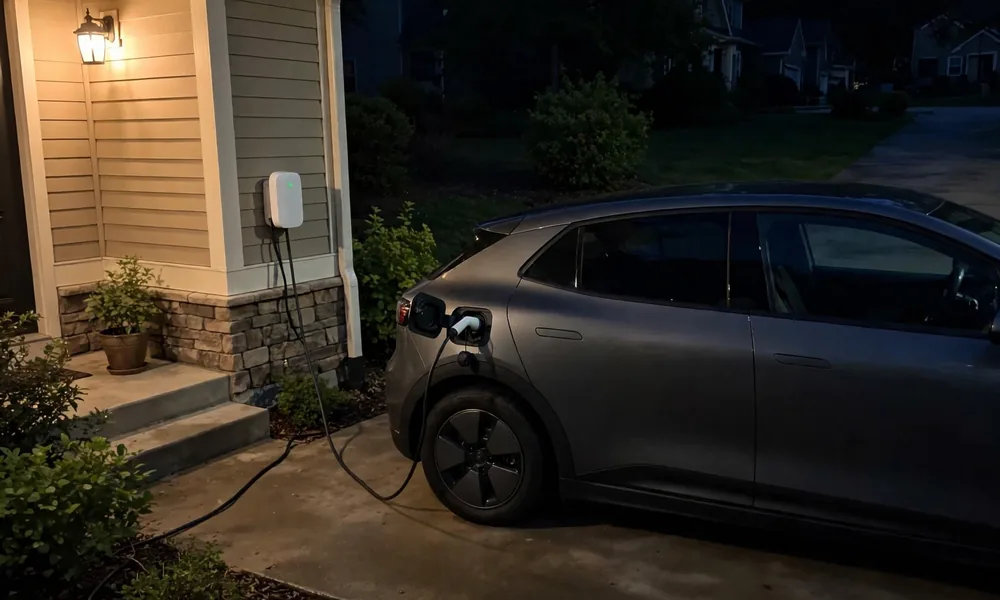
A big battery hides a thirsty car for a while, but it cannot hide it forever: the charging bills, the charging stops and the weight all add up. The ten cars above prove that the best electric cars are not the ones with the biggest batteries, but the ones that waste the least. The voltage that makes much of this possible is explained in our guide to what an 800-volt EV platform is.


