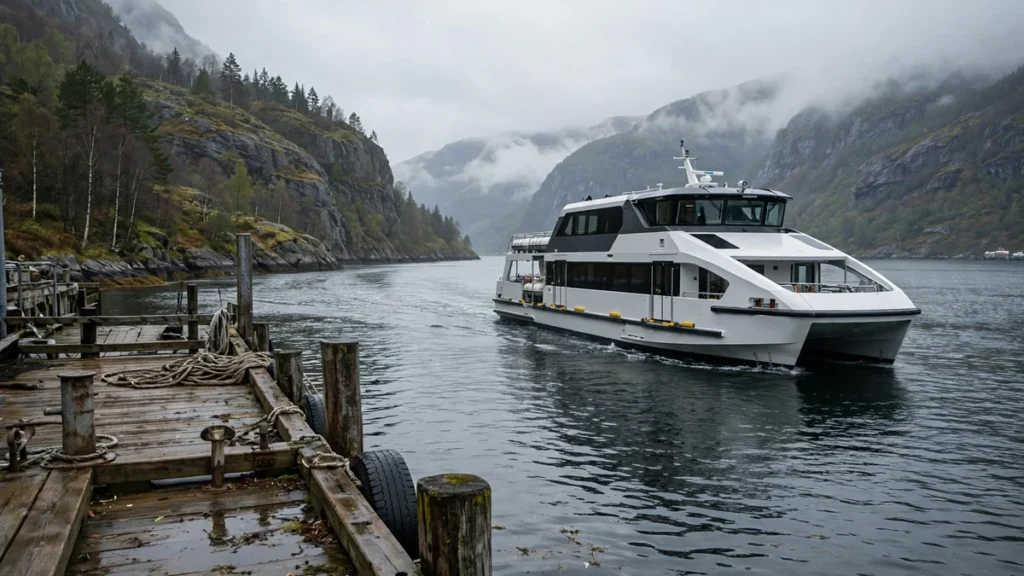
Every ship is a compromise between power, speed, fuel and the water it moves through, and the propulsion system is where that compromise is decided. A container ship crossing an ocean, a ferry hopping between islands and a cruise ship holding station in a harbour all need different answers, and naval architects have spent a century inventing them. The result is a family of systems that look nothing alike yet all do the same job: turn fuel into thrust.
This guide explains the seven ship propulsion systems that matter most today, from the giant two-stroke diesel that still powers world trade to the electric pods that let a cruise ship turn on the spot.
The Top Ship Propulsion Systems, Explained
1. The slow-speed two-stroke diesel
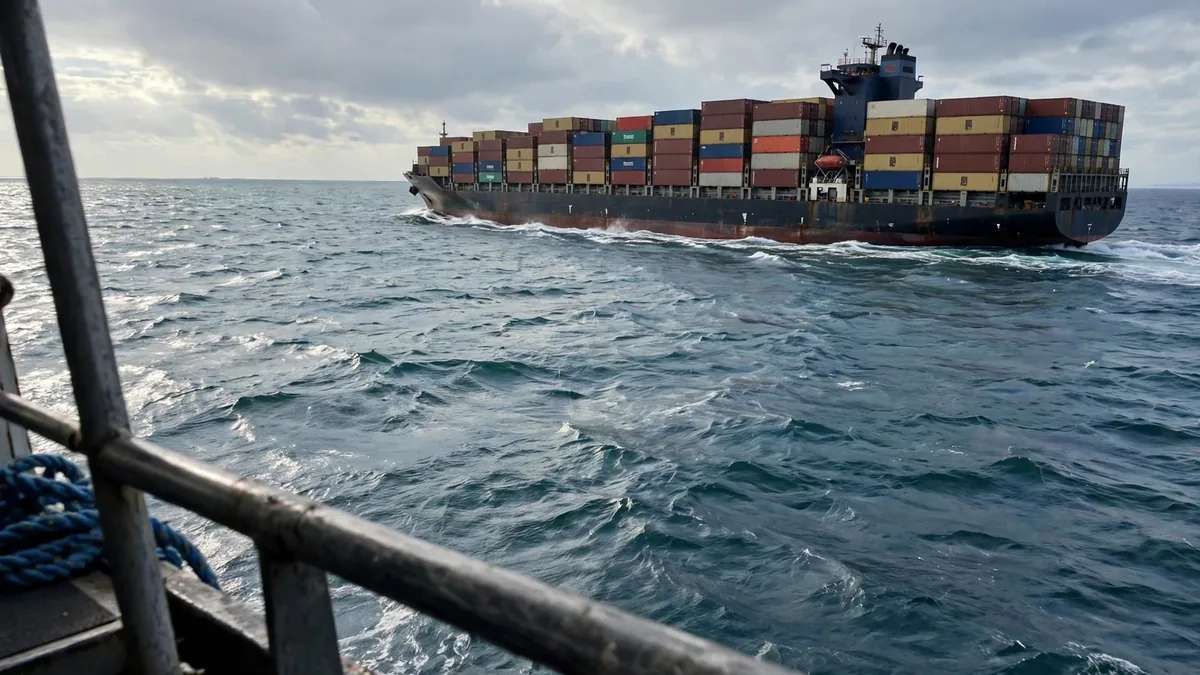
The slow-speed two-stroke diesel is the workhorse of world trade, and it is the largest engine most people will ever see. Running at barely a hundred revolutions per minute, it is coupled directly to the propeller with no gearbox at all, and a single engine can produce more power than a small power station. Its cylinders are as tall as a person, and its pistons move with a slow, deliberate force that suits a ship crossing an ocean at a steady twenty knots.
Its great virtue is efficiency. At its best, a modern two-stroke turns more than half of its fuel’s energy into useful work, a figure no other combustion engine matches. For now, though, if a ship is carrying the world’s goods across an ocean, there is a very good chance one of these engines is doing the pushing.
2. The medium-speed diesel with a gearbox
Medium-speed diesels are the flexible middle ground of marine power. Several smaller engines can be coupled through a gearbox to one or two propeller shafts, so a ship can run on one engine at low speed and bring more online as demand rises. That flexibility makes them the standard choice for ferries, offshore vessels and cruise ships, where the power demand changes constantly through the day.
The gearbox is the key. It lets the engines run at their efficient speed while the propeller turns at its own, slower pace, and it allows one engine to be shut down for maintenance while the others keep the ship moving. For ships that need to manoeuvre, stop and start all day, the flexibility is worth every decibel.
3. Diesel-electric propulsion
Diesel-electric propulsion separates the engines from the propeller entirely. Diesel generators make electricity, and electric motors turn the propellers, with cables instead of shafts connecting the two. The engines can sit anywhere in the ship, low down and well insulated, while the motors sit exactly where the thrust is needed. It is the same idea as a hybrid car, scaled up to the size of a building.
The benefits are quiet running, flexible layout and easy power sharing: the same generators that drive the ship also power the lights, the air conditioning and the cargo gear. The cost is conversion loss, since every change from mechanical to electrical power and back again wastes a little energy, and the electrical systems themselves are expensive to buy and to fix.
4. The azimuth pod
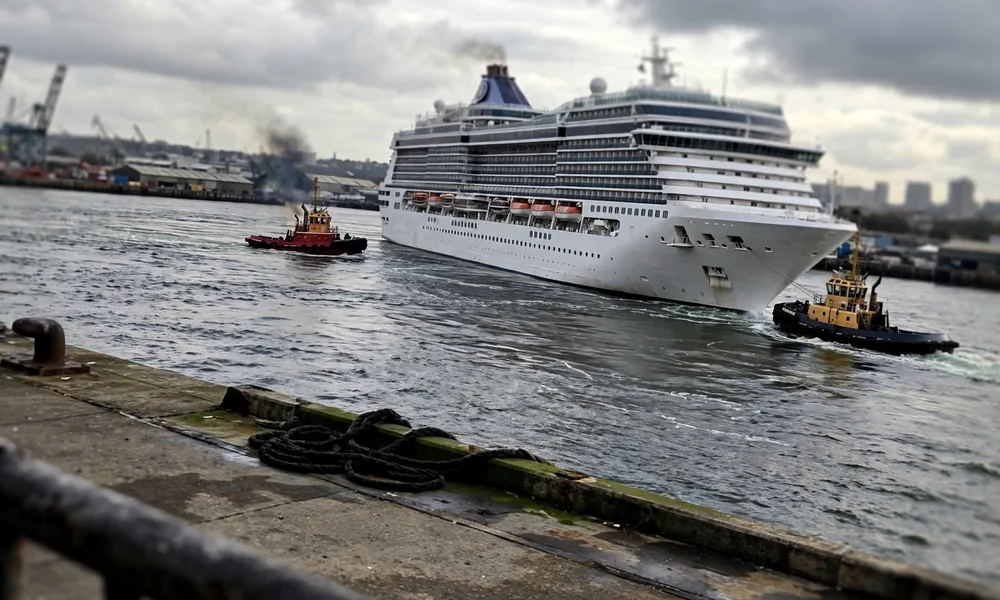
An azimuth pod, often called an Azipod, hangs an electric motor and its propeller in a pod beneath the ship, and the whole pod can rotate through 360 degrees. There is no rudder, no long shaft and no gearbox: the pod simply points its thrust in whatever direction the bridge asks for. A ship with pods can turn on the spot, slide sideways into a berth and hold station in a current without an anchor.
The manoeuvrability is extraordinary, which is why pods dominate modern cruise ships and icebreakers, where precise control matters more than top speed. Their weakness is exposure: the pod sits outside the hull, vulnerable to grounding and expensive to repair in dry dock, and they are less efficient than a conventional shaft at high speed.
5. The controllable-pitch propeller
A controllable-pitch propeller lets the crew change the angle of its blades while the propeller is spinning, like changing gear on a bicycle. Instead of slowing the engine to slow the ship, the blades flatten, reducing thrust while the engine keeps running at its efficient speed. Reverse is just a matter of turning the blades the other way, with no need to stop and restart the engine.
This is why controllable-pitch propellers are standard on ferries, tugs and offshore vessels, where the ship is constantly speeding up, slowing down and reversing. Our look at how a ship propeller is built shows the precision that goes into the hub and blades.
6. Waterjets
Waterjets work by sucking in seawater and firing it out of a nozzle at the stern, pushing the boat forward by reaction. There is no propeller hanging below the hull, which means a waterjet boat can run in water barely deeper than its own draught, and there is nothing to snag on a rope or a rock. They are the standard choice for fast ferries, patrol boats and any vessel that needs to sprint.
At high speed, waterjets are efficient and astonishingly manoeuvrable, steering by moving the nozzle rather than a rudder. The submarine world has its own version of the same idea, explained in our guide to how a submarine propeller works, where silence matters more than speed. On the surface, waterjets trade efficiency for speed and shallow water, and for the right boat that is a trade worth making.
7. Wind-assisted propulsion
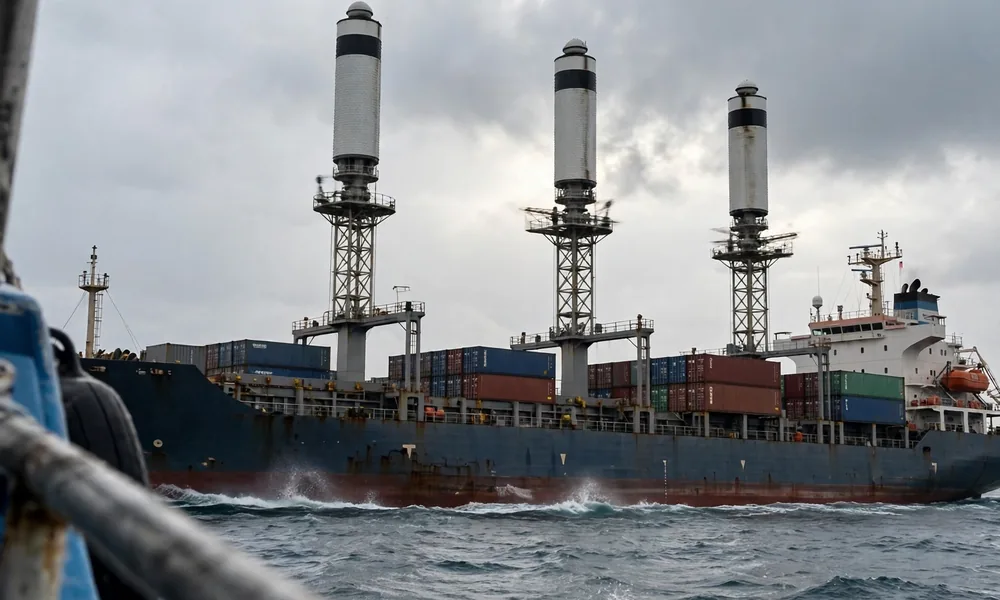
Wind-assisted propulsion is the oldest idea on this list, made new again. Modern ships are fitting rigid sails, spinning rotor sails and even kites, all designed to add thrust from the wind and let the engines burn less fuel. A rotor sail is a tall spinning cylinder that uses the Magnus effect to generate lift from the wind, while a rigid wing sail works like an aircraft wing stood on end.
The savings are real, often ten to twenty percent of fuel on a windy route, and the systems are automated, trimming themselves without extra crew. Yet with fuel prices rising and emissions rules tightening, wind is coming back to commercial shipping in a serious way. The engineering of the rotating parts has much in common with propeller design, and our guide to submarine propeller materials shows how much thought goes into a blade that must survive the sea.
The Takeaway
No propulsion system wins everywhere. The slow-speed diesel rules the open ocean, the pod rules the harbour, the waterjet rules the sprint, and the wind is quietly returning to all of them. The future of ship propulsion is not one system replacing the rest but a mix: cleaner fuels in the big diesels, batteries and pods for manoeuvring, and wind assistance wherever the route allows it. The ships of the next decade will be hybrids in the truest sense, using every source of thrust available,