You put the headset on, the room disappears, and a mountain valley opens up in front of you. It feels like you are standing there, until you turn your head quickly and the edges of the image smear, or you look to the side and the world goes soft and blurry. That is not the game failing. That is the lenses, the two small pieces of shaped plastic between your eyes and the screens, doing their job well in the centre and less well at the edges.
VR headset lenses are the most overlooked part of a virtual reality system. People compare headsets by resolution, by refresh rate, and by price, and then they blame the screens when the image looks soft. The lenses decide how much of the screen you actually see, how sharp it stays when you move your eyes, and how long you can wear the headset before your eyes ache.
The specification sheet for a VR lens is short, but every number on it is a trade-off. A wider view means more distortion at the edges. A sharper centre means a smaller sweet spot. Here is what each of those numbers means, and how to read them together.
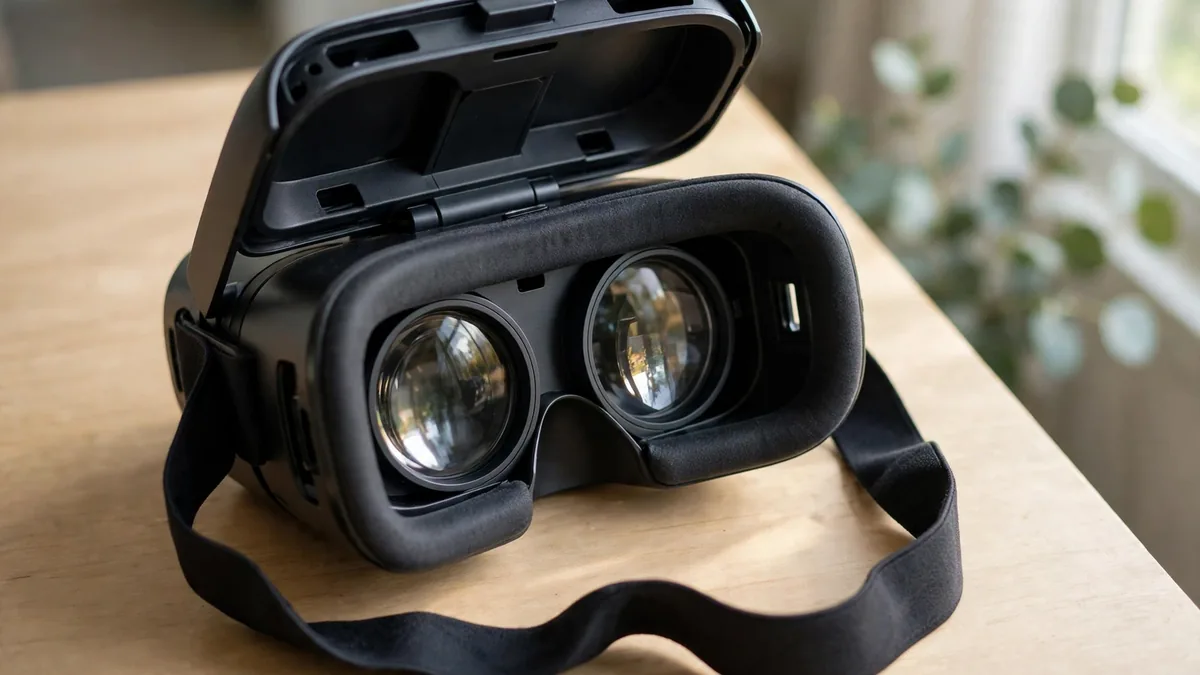
VR Headset Lenses Specs Explained
1. Field of view
Field of view, usually written as FOV, is the first number on the sheet, and on a modern consumer headset it is usually between 90 and 110 degrees horizontally, with some wide headsets reaching 120 degrees or more. Human vision covers about 200 degrees horizontally, so even the widest headset is a window, not a full view.
2. Lens type: Fresnel versus pancake
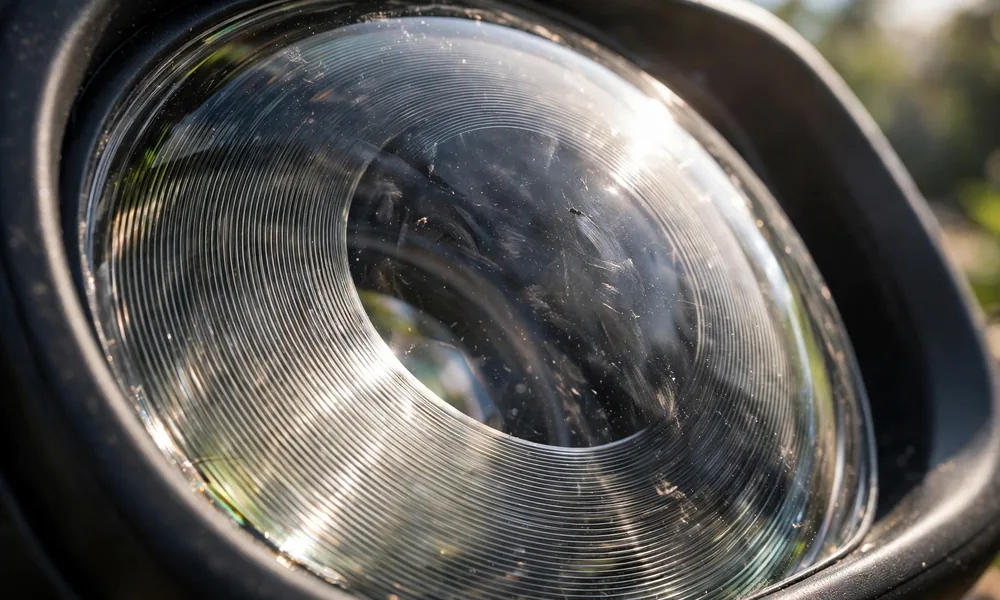
The lens type is the reason the whole specification sheet looks the way it does. Most older headsets use Fresnel lenses, which are flat discs with fine concentric ridges that bend light in steps, like a lighthouse lens. They are light and thin, but the ridges scatter light and create a faint god-ray effect around bright objects on a dark background. Newer headsets use pancake lenses, which fold the light path back on itself with polarised layers, making the headset much slimmer and the image sharper across the frame. The way those lenses are made is described in how VR headset lenses are made, from moulding the plastic to coating the finished lens.
3. Sweet spot and eye box
The sweet spot is the area of the lens where the image is sharp, and on a Fresnel headset it can be surprisingly small, sometimes only a few millimetres wide. Pancake lenses usually have a larger sweet spot than Fresnel lenses, which is one reason they feel easier to wear. The full working principle is set out in how VR headset lenses work, including how the lenses bend light from the screen to your eye.
4. Resolution per eye and pixels per degree
Resolution per eye is the number everyone quotes, and on a modern headset it is usually between 1,800 and 2,500 pixels across each eye, with high-end headsets reaching more. But resolution alone does not say how sharp the image looks, because the pixels are spread across the field of view. Pixels per degree, usually written as PPD, divides the resolution by the field of view, and a headset with 2,000 pixels across 100 degrees gives about 20 pixels per degree.
5. Interpupillary distance range
Interpupillary distance, usually written as IPD, is the distance between the centres of your pupils, and for most adults it is between 58 and 72 millimetres. A headset must let you move its lenses apart or together to match your IPD, or the image will be blurred and your eyes will strain as they try to converge on a picture that is not where they expect it to be. Cheaper headsets move the lenses in fixed steps, or move the screens digitally and leave the lenses where they are, which is a compromise that works for most people but not for everyone. If your IPD sits at the edge of the range, this number matters more than the resolution.
6. Chromatic aberration and distortion
Chromatic aberration is the colour fringing you sometimes see at the edges of a bright object in VR, where the red, green, and blue light bend by slightly different amounts through the lens and separate into a faint rainbow. Distortion is the bending of straight lines near the edges of the image, where the lens magnifies the centre more than the edges. A lens with low native distortion needs less software correction, keeps more of its pixels, and looks sharper at the edges. The display behind the lens matters too, and the numbers are explained in the OLED display panel specifications, where brightness, contrast, and response time decide how the image holds up behind the lens.
7. Eye relief and glasses compatibility
Eye relief is the distance between the lens and your eye, and on a modern headset it is usually between 12 and 20 millimetres, adjustable with a dial or a spacer. Too close and your eyelashes brush the lens, smearing it with every blink; too far and the field of view narrows, because you are looking through the lens from further back, like looking through a window from across the room.
VR Headset Lenses Specs
| Specification | Typical range |
|---|---|
| Field of view | About 90 to 110 degrees horizontal |
| Lens type | Fresnel or pancake |
| Resolution per eye | About 1,800 to 2,500 pixels across |
| Pixels per degree | About 18 to 25 |
| IPD adjustment range | About 58 to 72 millimetres |
| Eye relief | About 12 to 20 millimetres |
| Sweet spot | Larger on pancake, smaller on Fresnel |
| Chromatic aberration | Corrected in software, lower is better |
What Does a VR Headset Cost?
A VR headset with good lenses is estimated to cost roughly $300 to $500 for a mainstream standalone headset, and roughly $900 to $1,500 for a high-end headset with pancake lenses and higher resolution. The lenses themselves are a small part of that price, but they decide whether the expensive screens inside are actually worth it. A headset with excellent screens and poor lenses is estimated to feel worse than a cheaper headset with well-matched lenses, which is why the lens specification deserves as much attention as the resolution on the box.
A Rare Fact
The Fresnel lens in many VR headsets was invented for lighthouses, not for computers. Augustin-Jean Fresnel designed the ridged lens in 1822 so a lighthouse could throw its light further out to sea without a lens weighing tonnes. Two hundred years later, the same ridged design is bending light a few centimetres from your eyes.

VR lenses never get the attention the screens or the processors get, yet they are the part that decides what you actually see. Read the field of view, the lens type, the pixels per degree, and the IPD range together, and the headset stops being a list of numbers on a box and becomes what it really is: two small lenses standing between you and another world.


