Floor the throttle in a modern performance car and the gearbox does something that feels like magic. The next gear is already waiting, engaged and ready, and the change arrives in a fraction of a second with barely a pause in the pull. There is no lurch, no lost momentum, just a seamless rush forward. Behind that smoothness sits one of the most complicated gearboxes ever fitted to a road car, and it is expensive for the same reason it is fast.
A dual-clutch gearbox is, in effect, two gearboxes in one case. One clutch handles the odd gears, the other the even gears, and while one is driving, the other has already selected the next gear. That trick demands precision engineering, exotic materials and software that thinks faster than the driver, and every part of it is built to tolerances a normal gearbox never needs. This is why it costs so much.
Why It Costs So Much
Reason 1: It is two gearboxes, not one
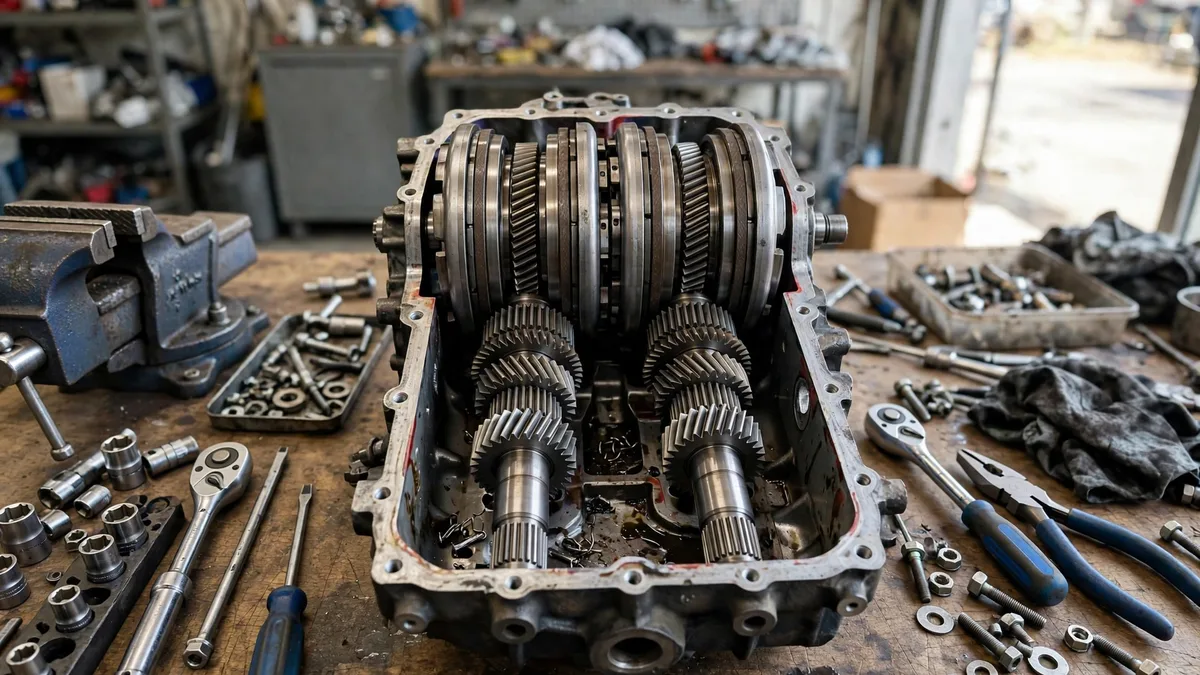
The core idea of a dual-clutch gearbox is simple to describe and hard to build: two input shafts, one nested inside the other, each with its own clutch, each driving its own set of gears. The outer shaft carries the even gears and the inner shaft the odd gears, and the two clutches must hand power over between them in milliseconds without a jolt or a gap. That means twice the gear sets, twice the synchronisers, twice the bearings, and a case that must hold all of it in perfect alignment while it spins at thousands of revolutions per minute. A conventional automatic has one set of gears and one clutch pack; a dual-clutch unit has nearly double the hardware, and the bill reflects it. The step-by-step build is covered in how a dual-clutch gearbox is made.
Reason 2: The clutches live a hard life
Two clutches, opening and closing hundreds of times on a single drive, must slip just enough to be smooth and grip just enough to be fast, all while handling the full torque of a powerful engine. In many performance cars the clutches are wet, running in oil to keep them cool, which adds pumps, seals, filters and a cooling circuit of its own. The clutch plates themselves are made from friction materials that must survive heat, wear and repeated engagement without fading, and they are machined to tolerances that keep them perfectly flat. The materials behind that durability are set out in dual-clutch gearbox materials engineering.
Reason 3: The gears are cut to extraordinary precision
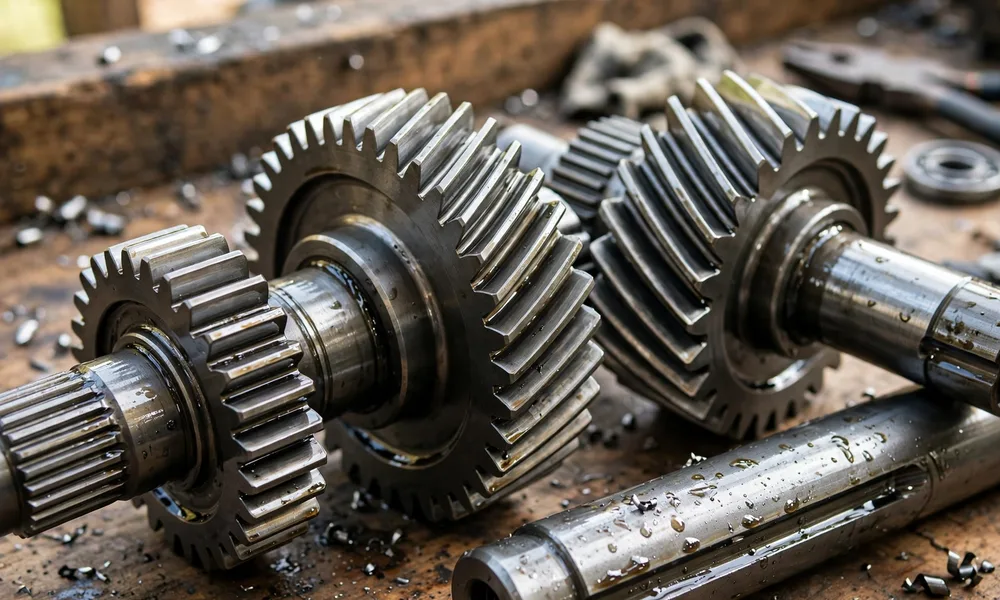
Every gear in a dual-clutch gearbox is machined, hardened and ground to a finish that would shame most machine tools. The teeth must mesh quietly at high speed, shift under load without crunching, and survive hundreds of thousands of gear changes over the life of the car. That requires special steels, heat treatment, and grinding machines that cost millions and are run by specialists. A gear that is a few microns out of true will whine, wear quickly, or fail, and the gearbox has dozens of them, all of which must be perfect. The cost of that machining is spread over a relatively small number of gearboxes, because dual-clutch units are fitted mainly to performance and premium cars, not to every car on the road.
Reason 4: The software is as important as the steel
A dual-clutch gearbox is only as good as its brain. A dedicated control unit reads the throttle, the road speed, the engine load, the steering angle and the driver’s habits, and decides which gear to pre-select next, when to open one clutch and close the other, and how quickly to do it. It must shift smoothly in traffic, brutally fast on a track, and gently when the car is cold, and it must do all of that without ever getting confused. Developing that software takes years of calibration on test tracks and in all weathers, and it is tuned differently for every car the gearbox is fitted to. How the finished unit behaves on the road is explained in how a dual-clutch gearbox works.
Reason 5: Heat is the enemy, and cooling costs money
Two clutches slipping and gripping in a small case generate a great deal of heat, especially in stop-start traffic or on a track, where the gearbox is worked hardest. If the oil gets too hot, the clutches fade, the shifts turn rough and the gearbox protects itself by slowing down. Performance dual-clutch units therefore need their own cooling: oil pumps, heat exchangers, temperature sensors and sometimes a separate radiator, all plumbed into a case that is already crowded. That cooling system adds weight, complexity and cost, and it must be engineered to survive the same heat, vibration and grime as the rest of the car. A gearbox that overheats is a warranty claim waiting to happen, so manufacturers spend heavily to make sure it never does.
Reason 6: Few factories can build one
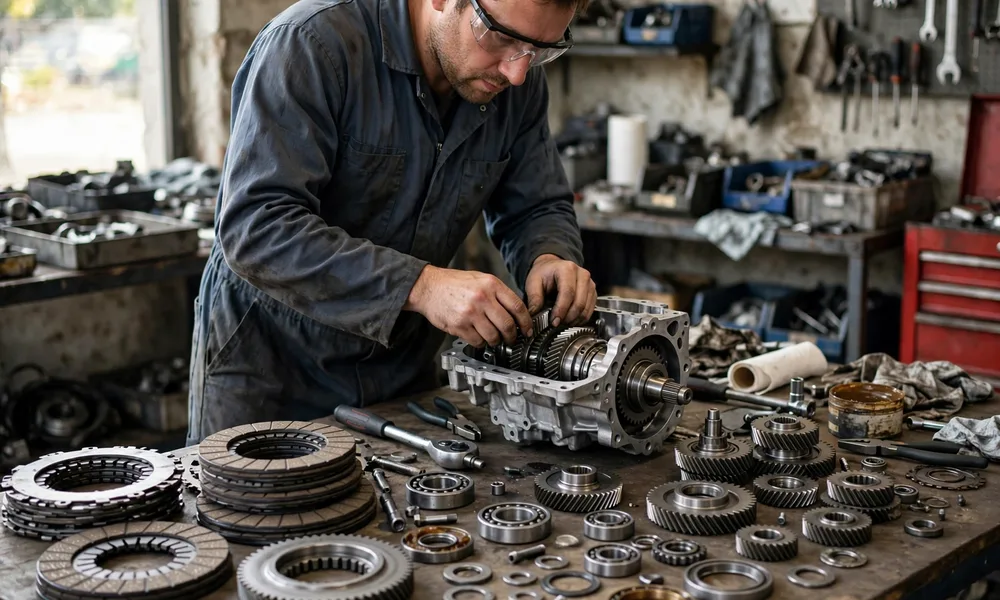
Building a dual-clutch gearbox at scale requires a factory full of specialised machines, clean assembly rooms and technicians who understand a device with hundreds of parts, many of which must be fitted in a precise order. Only a handful of suppliers in the world — companies like BorgWarner, Getrag and ZF — build these gearboxes in volume, and car makers buy from them rather than building their own. That concentration keeps volumes low and prices high, and it means a car maker cannot simply shop around for a cheaper alternative. When a new gearbox is developed, the tooling alone can cost tens of millions, and that investment is recovered over a limited number of cars.
Dual-Clutch Gearbox at a Glance
| Specification | Detail |
|---|---|
| Clutches | Two, one for odd gears and one for even gears |
| Typical gear count | Seven or eight speeds |
| Shift time | As little as 8 to 100 milliseconds |
| Clutch type | Wet multi-plate in most performance cars |
| Torque capacity | Up to around 600 newton metres and beyond |
| Control | Dedicated electronic control unit with adaptive software |
| Main advantage | Near-seamless shifts, fast acceleration, good efficiency |
| Main drawback | Complex, heavy, and expensive to repair |
What Does It Cost?
As rough estimates, a dual-clutch gearbox typically costs a car maker around $3,000 to $6,000 per unit, and a replacement or a major repair for an owner can run to $5,000 to $10,000 or more once labour is included. Those figures are estimates, not quotes, and they vary widely with the model, the torque rating and the manufacturer. The price is one reason dual-clutch gearboxes are still rare in cheap cars, where a simpler gearbox keeps the sticker price down.
A Rare Fact
The dual-clutch idea is far older than the cars that made it famous. It was first patented in the 1930s by French engineer Adolphe Kégresse, and Porsche tested an early version in its racing cars in the 1980s, but the electronics of the day could not control it properly. It took another twenty years, and the arrival of fast, cheap computing, before the gearbox could shift as its inventors had imagined. The fastest gearbox in a modern supercar is, in that sense, a ninety-year-old idea finally given the brain it needed.
A dual-clutch gearbox costs so much because it is two gearboxes, two clutches and a computer, all packed into one case and asked to shift faster than a human ever could. When it works, the driver feels nothing but the acceleration, and that invisibility is the point. The gearbox is expensive precisely because it makes something extraordinarily difficult feel entirely effortless.


