On a bright morning at a small airfield, a two-seat electric aircraft lifts off with a sound closer to a hairdryer than an engine. It climbs smoothly, circles the field, and lands twenty minutes later to applause from a small crowd. It is a lovely machine, and a strange one: it looks like an ordinary light aircraft, it flies like an ordinary light aircraft, and yet it costs several times more than the petrol aeroplane parked beside it — and it can only fly for about an hour before it needs recharging.
That gap is the story of electric aviation. The motors are simple and reliable, the running costs are low, and the flight is quiet and clean. But building an electric aircraft that is safe, certified, and useful is one of the most expensive engineering problems in transport — not one big thing, but a pile of small, stubborn ones.
Here is where the money actually goes.

The Battery Problem
The single biggest cost driver is the battery, and the problem is weight. A litre of aviation fuel stores roughly fifty times more energy per kilogram than the best lithium-ion batteries flying today. That means an electric aircraft must carry an enormous, heavy battery to fly even a short distance — and every kilogram of battery is a kilogram that cannot be a passenger, luggage, or fuel reserve. Designers end up in a cruel loop: a bigger battery gives more range, but the extra weight demands more power, which demands a bigger battery.
Aviation batteries are also far more expensive than car batteries. They must survive vibration, temperature swings, and a crash without catching fire, and they are produced in tiny numbers compared with the millions of car packs. A battery pack for a small electric aircraft is estimated at $50,000 to $150,000, and it will need replacing after a few hundred charge cycles — a cost spread across every flight hour. The battery chemistry itself is the same family of cells described in our guide to e-bike battery specs, but the aviation version is built, tested, and documented to a far stricter standard.
Certification: Paying for Proof
An electric car can be sold after passing crash tests and type approval. An aircraft must be certified — a process in which every system, every material, and every line of software is documented, tested, and inspected by aviation authorities before a single passenger can fly. Certification of a new aircraft type routinely takes five to ten years and costs hundreds of millions of dollars. For electric aircraft, the bill is bigger still, because the regulators are writing the rules for battery safety, high-voltage systems, and electric propulsion at the same time as the manufacturers are trying to meet them.
That cost lands on a tiny number of airframes. A carmaker spreads development across millions of vehicles; an electric aircraft maker may build a few dozen a year. So each aircraft carries a huge share of the certification bill, and until volumes rise, certification alone keeps electric aircraft expensive.
Materials: Light, Strong, and Costly
Weight is the enemy of flight, so electric aircraft are built from the lightest materials available: carbon fibre composites for the airframe, titanium for high-stress fittings, and aluminium-lithium alloys where metal is needed. These materials are expensive to buy and expensive to work with. Carbon fibre must be laid up by hand or by specialised machines, cured in autoclaves under heat and pressure, and inspected for defects that could be catastrophic at altitude. A single airframe can take thousands of hours of skilled labour to build, and there is almost no room for the automated production lines that make cars cheap.
The motors are part of the same story. Aircraft motors must be extremely light for their power, which means exotic magnets, precision-machined housings, and cooling systems that work in thin, cold air. They are cousins of the ones in our guide to the best electric motors for EVs, but built to aviation tolerances and produced in dozens rather than millions. Even the small motors in our guide to drone motor specs show the same pattern.
Labour: Hand-Built, One at a Time
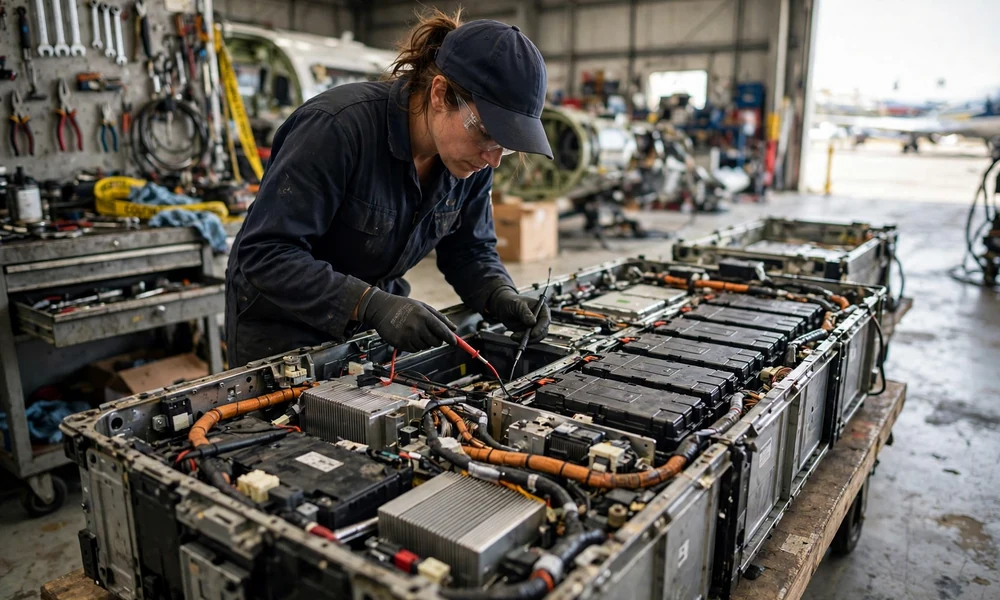
There is no assembly line for electric aircraft. Each one is largely hand-built by highly skilled technicians — composite specialists, avionics engineers, and licensed aircraft mechanics — and each build is followed by extensive ground testing and flight testing. A new electric aircraft may fly hundreds of test hours before it is delivered, with engineers poring over data from every flight. That labour is slow and expensive, and it cannot be rushed: aviation has no tolerance for the kind of defects a car factory can fix with a recall.
The same scarcity applies to maintenance: electric aircraft need technicians who understand both aviation and high-voltage systems, and there are very few of them.
Rarity: A Market of Dozens
Perhaps the simplest reason electric aircraft are so expensive is that almost nobody makes them. The global market for small electric aircraft is measured in dozens of airframes a year, not thousands. Suppliers charge more for small orders, tooling costs are spread over a handful of units, and there is no competitive pressure to cut prices. Early buyers are paying for the development of the whole industry, not just their own aircraft.
This will change — slowly. As battery energy density improves, as certification rules settle, and as production volumes grow, prices should fall. But for now, an electric aircraft is a rare machine in the truest sense: a hand-built, heavily certified, battery-limited aircraft produced in tiny numbers, and priced accordingly.
What Does an Electric Aircraft Cost?
A two-seat electric trainer aircraft is estimated at $250,000 to $400,000, compared with $150,000 to $200,000 for a comparable petrol trainer. A four-seat electric aircraft under development is estimated at $500,000 to $1 million or more. Prices are estimates only and vary by manufacturer, range, and certification status. The running costs tell a different story: electricity is far cheaper than aviation fuel, and an electric motor has far fewer moving parts than a piston engine, so the cost per flight hour can be lower — if the aircraft flies enough hours to spread its battery replacement cost.
A Rare Fact
The first electric aircraft flew in 1973 — a converted motor glider in Austria, powered by nickel-cadmium batteries, that managed a flight of about fourteen minutes. It was a curiosity, not a product. For the next forty years, electric flight stayed a hobby for enthusiasts, because batteries were simply too heavy. The modern electric aircraft exists only because the lithium-ion cells developed for phones and laptops, and then scaled up for cars, finally became light enough to lift an aeroplane. The industry is, quite literally, riding on the back of the smartphone battery.

Electric aircraft are expensive because they are fighting physics, regulation, and economics all at once: a battery that is heavy for the energy it holds, a certification process that costs a fortune, materials and labour that refuse to be cheap, and a market too small to spread the costs around. None of those problems is permanent. But until batteries get lighter and production gets bigger, the quiet little aeroplane on the runway will keep carrying a price tag that makes even seasoned pilots blink.