Sixty milliseconds. That is how long a modern hypercar gearbox takes to change gear, about the time it takes you to blink. In that blink, clutches open and close, gear sets swap, and more than a thousand horsepower is handed from one ratio to the next without a jolt, a slip or a sound out of place. Do it badly and the car lurches, the tyres break loose, the engine over-revs and something very expensive breaks. Do it well, lap after lap, and the driver never thinks about the gearbox at all, which is exactly the point. The gearbox is the most invisible part of a hypercar, and it is also one of the most expensive, because making a machine that shifts that fast, that smoothly, under that much power, is one of the hardest jobs in automotive engineering.
A family car gearbox is built by the million on automated lines, and it is a marvel in its own right. A hypercar gearbox is built in the dozens, largely by hand, from materials that belong in a jet engine, to tolerances that belong in a watch. The price is not a markup on a normal gearbox. It is the cost of a different kind of machine entirely.

How a Hypercar Gearbox Is Made
Most hypercars use a dual-clutch gearbox, which is really two gearboxes in one case. One clutch handles the odd gears, the other handles the even gears, and the next gear is always pre-selected, waiting. When the driver pulls the paddle, the clutches swap in milliseconds and the car never loses drive. Building that system to survive hypercar power takes six stages, and each one is a craft in itself.
Step 1: Designing for a thousand horsepower
Engineers start by modelling every gear, shaft and bearing under full load, including the shock of a launch, the heat of a track session and the forces of a downshift at high speed. The gears are sized to be as small and light as possible while still surviving forces that would twist an ordinary shaft like a liquorice stick. The case itself is designed as a structural part of the car, stiff enough to keep the gears in perfect alignment when the chassis flexes.
Step 2: Forging and machining the gears
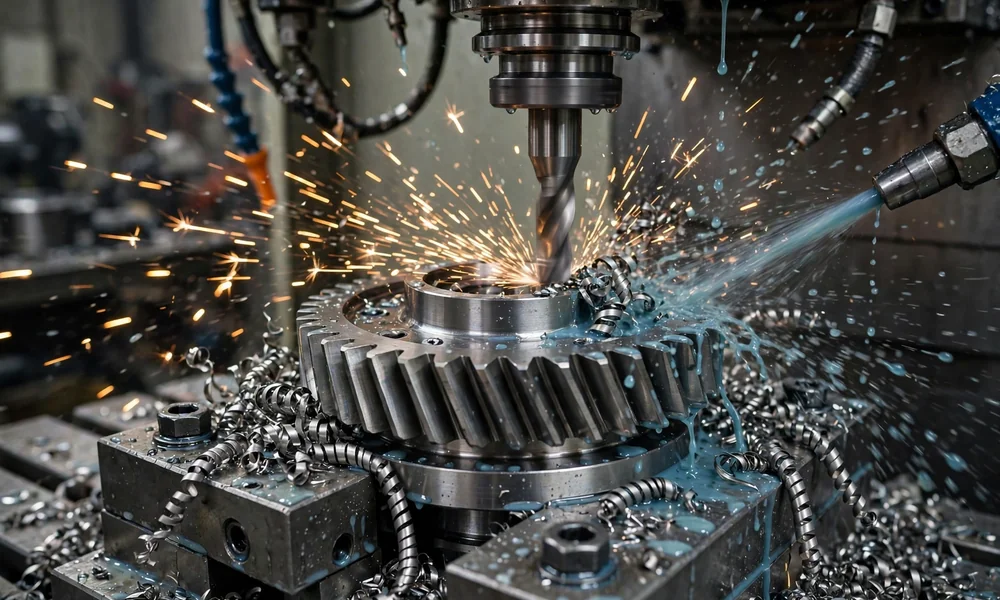
The gears are cut from special steels, forged to align the grain of the metal, then machined on computer-controlled grinders that hold tolerances of a few microns, thinner than a human hair. Each gear is ground, honed and polished until its teeth mesh with its partner almost silently, because any roughness becomes heat, noise and wear at ten thousand revolutions per minute. The cutting of these gears is the same discipline that makes a dual-clutch gearbox work at all, and the tolerances only get tighter as the power rises.
Step 3: Heat-treating for a hard skin and a tough core
After machining, the gears are heat-treated, heated and cooled in a controlled cycle that makes the surface of the teeth extremely hard while leaving the core tough and flexible. The heat treatment is tuned for each gear, and a mistake here cannot be fixed later. Gears are tested for hardness at several points, and any that fail are scrapped, however much machining they have already had.
Step 4: Building the clutches
The two clutches are the heart of the system, and they are the hardest part to get right. Each clutch is a stack of friction plates that must grip instantly, slip smoothly when needed, and survive temperatures that can reach hundreds of degrees during a hard launch. The hydraulic system that operates them must respond in milliseconds, with pressures controlled to a fraction of a bar, and it is tested thousands of times before it is trusted.
Step 5: Hand assembly in a clean room
The gearbox is assembled by hand, by technicians who build the same unit all day, every day, and who know each one by its feel. The gears, shafts, bearings and clutches are fitted into the case, the clearances are measured with feeler gauges and dial indicators, and shims thinner than paper are added or removed until every clearance is exactly right. The materials that make this possible are exotic throughout the car, and the materials behind a hypercar gearbox read like a list from an aerospace catalogue.
Step 6: Testing on the rig, then on the car
Before it is fitted to a car, the gearbox is run on a test rig that simulates full-power shifts, launches and track sessions, while sensors watch temperatures, pressures and vibrations. Only when it has survived both does it earn its place in a customer’s car. The testing alone costs a fortune, because the rig, the engineers and the destroyed test units are all part of the price of the ones that pass.
What the Numbers Say
| Specification | Hypercar gearbox |
|---|---|
| Type | Dual-clutch, 7 or 8 speeds, paddle shift |
| Shift time | As little as 60 milliseconds |
| Power handled | Over 1,000 horsepower in the most powerful cars |
| Gear tolerance | A few microns on tooth profile |
| Clutch type | Wet multi-plate, sintered and carbon friction material |
| Case material | Cast aluminium or magnesium alloy, structural |
| Production volume | Dozens to a few hundred units per model |
What It Costs, and Why
A replacement hypercar gearbox typically costs an estimated $30,000 to $70,000, and for some limited models the figure is higher still. The number is not a mystery once the build is understood. The gears are machined from expensive steels in tiny batches, the clutches use friction materials that cost more per kilogram than many metals, the case is cast and machined to aerospace standards, and the whole unit is assembled by hand and tested to destruction. The development cost is the largest share of all: designing, testing and proving a gearbox for one hypercar model costs many millions of dollars, and that cost is spread over a few hundred cars, not a few hundred thousand.
The gearbox does not work alone. It must hand its power to the wheels without breaking traction, and the component that splits that power is built to the same standard. How a hypercar differential is made shows the same story on the other side of the gearbox: tiny production runs, hand assembly and materials chosen for survival rather than cost.

Why the Price Stays High
The price stays high because nothing about a hypercar gearbox can be made cheaper without making it worse. Lighter gears need stronger steel. Faster shifts need more precise hydraulics. Higher power needs bigger clutches, and bigger clutches need better cooling. Every improvement adds cost, and every cost is multiplied by the small production run.
Electric hypercars are beginning to change the picture, because an electric motor needs fewer gears, sometimes only one or two. The gearbox may shrink, but it is not going away, and it is not getting cheap.
A Rare Fact
Some hypercar gearboxes are so precisely built that they are filled with oil and run on a test rig before they are ever fitted to a car, and the oil is then drained and analysed for metal particles, like a blood test.


