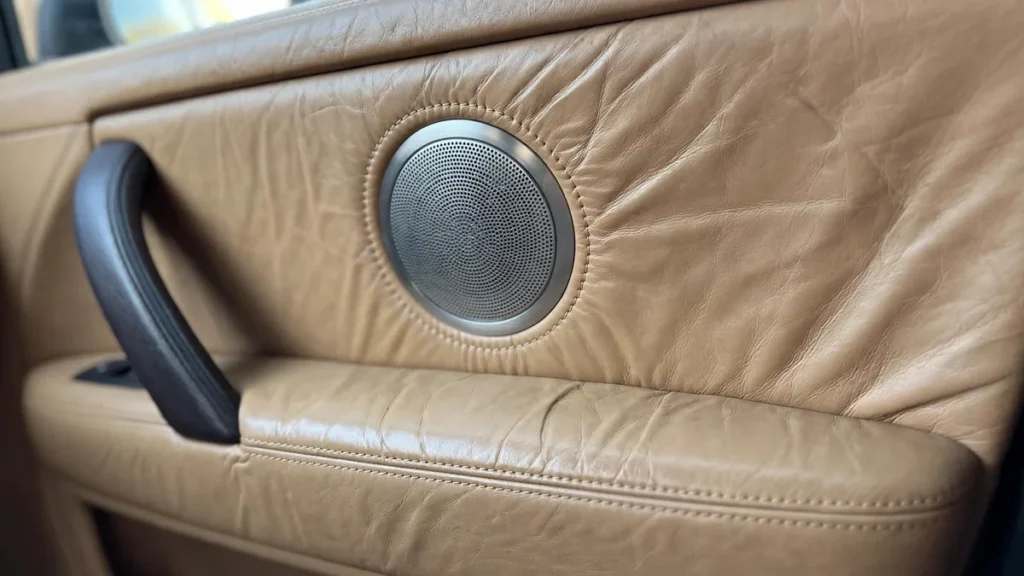
Open the door of a luxury car and the first thing you notice is not the dashboard or the screens. It is the smell, warm and rich, and the way the seat gives softly under your hand, the leather cool at first and then warming to your skin. That smell and that softness can add five figures to the price of a car, and buyers often wonder what they are actually paying for.
The answer is waste. Most of every hide is thrown away, most of the labour is done by hand, and most of the cost is in rejecting anything less than perfect. A luxury car uses only the cleanest centre of a small number of hides, tanned slowly, dyed through, cut by people who read the skin like a map, and stitched by workers who spend an hour on a single seat back.
This article breaks down where the money goes when a luxury car is trimmed in leather, and why the same material costs so much more here than it does anywhere else.
Where the Money Goes: The Cost of Luxury Car Leather
| Cost Driver | Ordinary Car | Luxury Car | Why It Costs More |
|---|---|---|---|
| Hide usable share | Most of the hide | Centre only, about a third | Scars and edges rejected |
| Hides per car | 2 to 3 hides | 5 to 8 hides | Low yield, more animals |
| Tanning time | Days | Weeks | Slow cure, soft hand feel |
| Stitching per seat | Machine, minutes | Hand guided, hours | Diamond patterns, matched seams |
| Perforation | Rarely offered | Thousands of holes | Each hole checked clean |
| Inspection | Sample checked | Every panel checked | A wrinkle means refitting |
The Hides: Paying for Leather You Never See
The first cost is the hide itself, and the waste built into choosing it. Luxury tanners buy hides from cattle raised in cool climates, where the animals suffer fewer insect bites and barbed wire scratches, because every mark on the skin will show in the finished leather. Only the cleanest part, the centre, is used for the seats you sit on, while the edges and marked areas are cut away for hidden panels or rejected entirely.
The maths of that waste is brutal. Where an ordinary car uses two or three hides and most of each one, a luxury car can need five to eight hides, because only about a third of each hide is good enough for the visible surfaces. The way luxury car leather is made shows the grading and cutting that creates this waste, and the cost article starts where that process ends: with a pile of rejected leather that still had to be bought, shipped and inspected before it was discarded.

Tanning and Dyeing: Weeks Instead of Days
The second cost is time in the tannery. Ordinary car leather is chrome tanned in days, a fast chemical process that turns a perishable skin into a usable material. Luxury car leather is usually chrome tanned for softness, then re-tanned with vegetable extracts for body and scent, a slow second stage that takes weeks.
Then comes the dye, and the dye is where the price climbs again. The hides are tumbled in large drums with dyes that soak right through the skin, rather than sitting on the surface like paint, so a scratch will not show a pale line underneath. The colour is matched to a sample the car maker approved months earlier, and each batch is checked against it in daylight before it is allowed to move on. The reasons a luxury grille costs so much show the same pattern of small batch work and high rejection rates, and the tannery applies it to a material that starts life on a farm.
Cutting and Stitching: Hours by Hand
The third cost is the labour in the trim shop, and it is the largest line on the bill. Cutting is where the leather meets the seat, and the cutter works around the natural flaws, placing the best pieces where they will be seen and touched most. A panel cut the wrong way will wrinkle within a year.
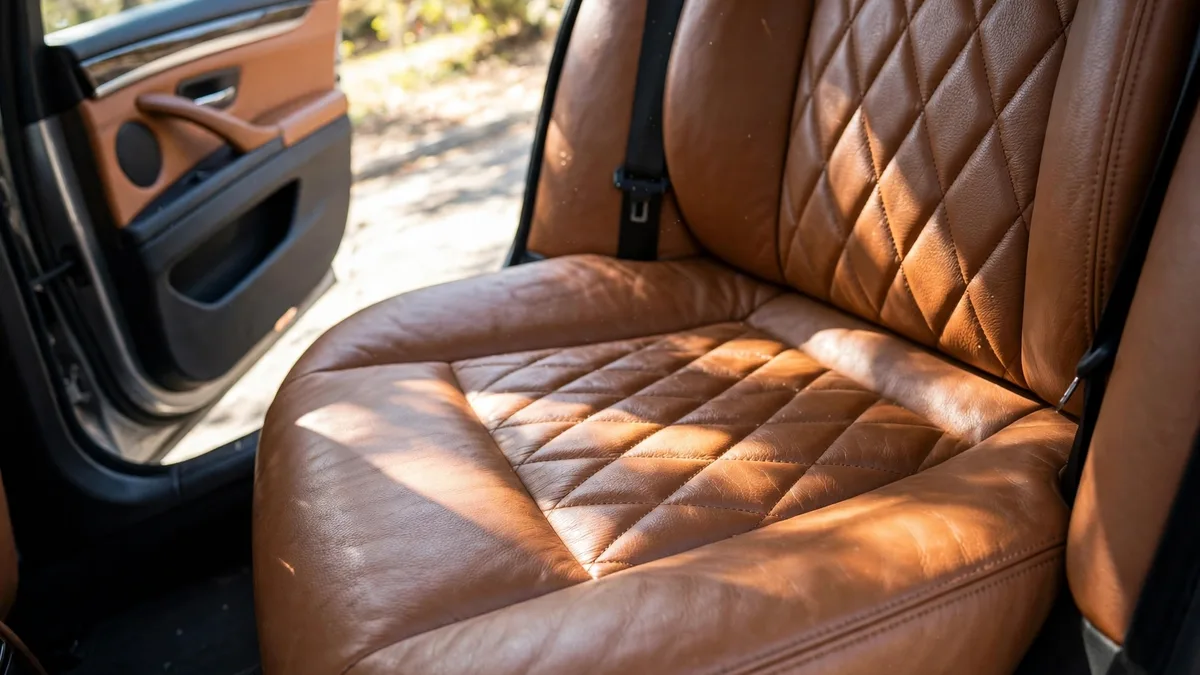
Stitching is slower still. On a luxury car the stitching is part of the design, not just a join: contrast thread in a neat diamond pattern across a seat back can take a single stitcher an hour or more, and the seam length is checked constantly, because uneven stitching is visible from the door. The reasons carbon ceramic brakes cost so much follow the same logic, where hand work and low volume turn a simple part into an expensive one, and a leather seat is hand work from the first cut to the last stitch.

Fitting and Inspection: The Seat That Fails Is Stripped
The fourth cost is fitting, and it is where the waste returns. The stitched covers are pulled over the seat foam and frame, stretched by hand, smoothed over the bolsters, and eased out until every wrinkle is gone. Then the seat is checked from every angle.
That refitting is pure cost: the same cover, the same foam, the same worker, doing the job twice. The finish adds its own cost too: the leather is cleaned, conditioned with a light dressing that keeps it supple, and inspected under bright light for the final time, with the colour checked against the sample and the stitching looked at one last time before the seat is signed off. A final pass with a soft cloth lifts any dust from the stitching, and only then is the seat wrapped for the journey to the car. Every one of those checks is a person, paid by the hour, looking for a flaw most buyers would never notice.
A Rare Fact About Luxury Leather
Here is a detail that surprises people who think leather is leather. Some luxury makers buy hides only from bulls raised at high altitude, because the cooler air means fewer insects and the animals are kept away from barbed wire, so the skins arrive with almost no marks at all. The most exclusive cars use leather from a single tannery that has supplied the same maker for decades, and the tannery keeps its recipes secret, the way a perfume house keeps its formulas. The leather in those cars is not a commodity bought on the open market; it is a relationship between a farm, a tannery and a car maker, built over years.
Is the Price Worth It
Whether luxury leather is worth the money depends on how you use your car. If you drive every day, the softness, the smell and the way the leather ages are things you touch and breathe on every journey, and few options give you that much daily pleasure for the price. It will not split at the seams, it will not fade to grey in the sun, and it will still smell faintly of the tannery years after the car was built.
But do not mistake the price for a markup on a cow hide. It is the cost of eight hides to make one interior, weeks in the tannery, hours at the stitching bench and a seat that was stripped and refitted until it was perfect, and the smell when you open the door is the only honest record of that you will ever get.