Under the waterline of a luxury ship, running along the turn of the hull, sits a long steel fin that never moves. It has no motor, no hydraulics, and no controls on the bridge. It is a fixed stabilizer fin, sometimes called a bilge keel, and it is one of the cheapest-looking parts of the ship. Yet fitting a pair of them to a large luxury vessel can cost more than the fuel they save in a year, and owners regularly ask why a piece of steel that does nothing should cost so much. This article explains the price of a fin that never moves, and why ships keep paying it.
First, What a Fixed Fin Actually Does
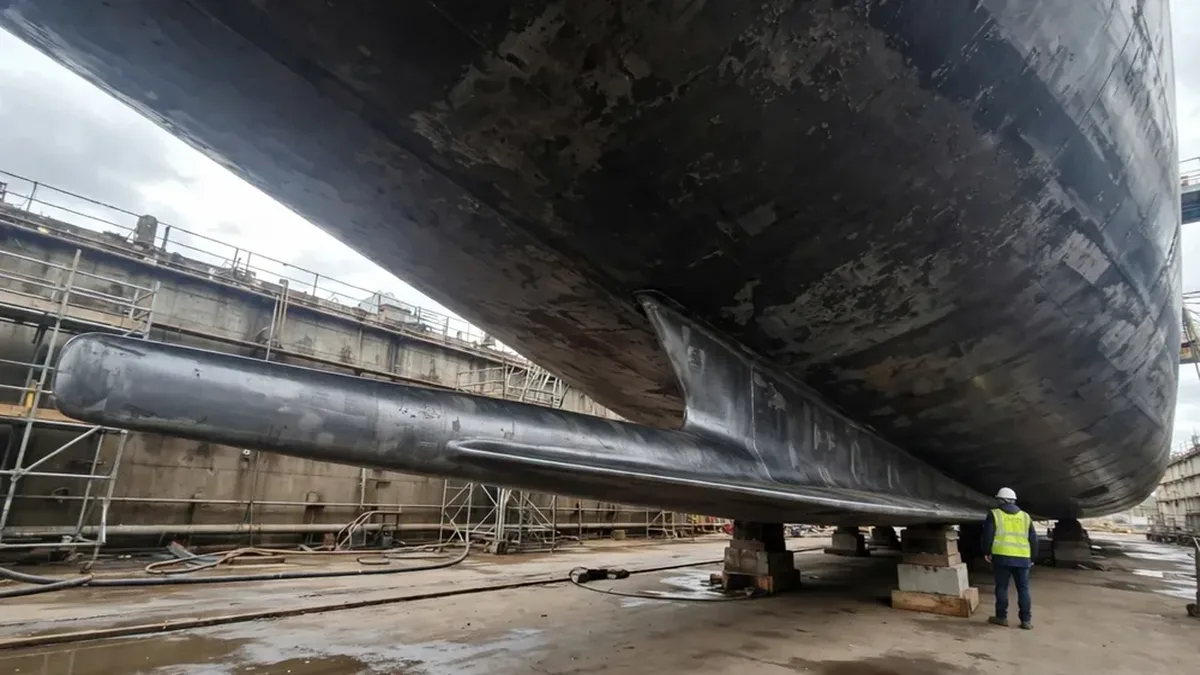
A fixed stabilizer fin is a long, flat plate of steel welded to the hull at the bilge, the curved turn between the bottom and the side. There is one on each side, running for many metres along the hull. When the ship rolls, the fin pushes against the water and resists the motion, damping the roll the way a hand in water resists a wave. It does not stop rolling the way an active fin stabilizer does. An active system swings its fins to fight the roll, cutting it by most of its size, while a fixed fin only trims the worst of it, typically reducing roll by a fifth to a third. It is the quiet partner to the active system, always working, never noticed, and that permanence is the first reason for its price. It must last the life of the ship.
The Steel Is Not Ordinary Steel
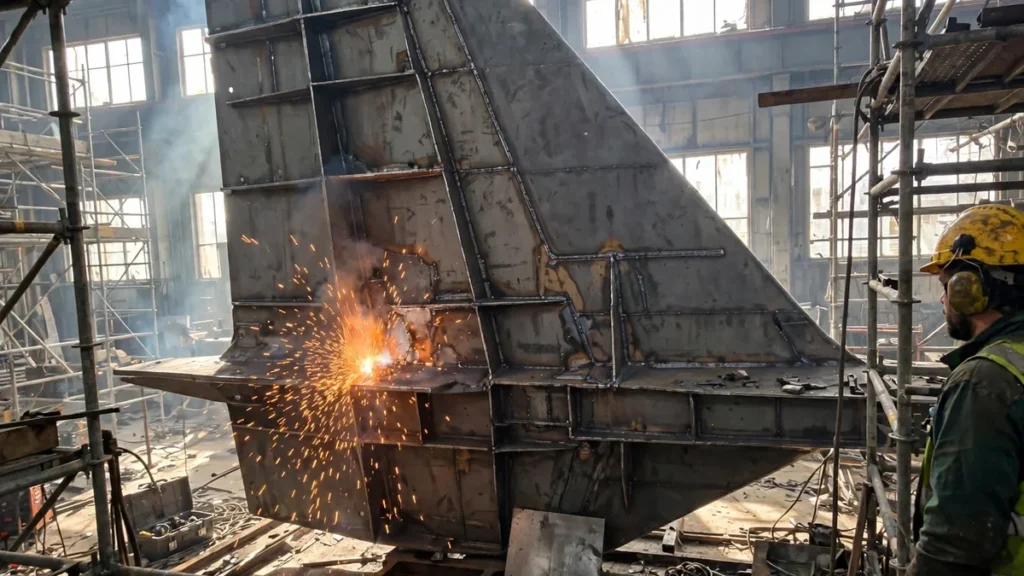
The fin is made from high-strength marine steel, thicker than the hull plating around it, because it takes the full force of the water every time the ship rolls. A fin on a large luxury ship can be 20 to 40 millimetres thick at the root, tapering toward the tip, and tens of metres long. That is tonnes of steel per side, and it must be formed to follow the curve of the hull exactly, which means cutting, rolling, and fitting plate by hand in the yard. Welds are inspected with ultrasound, and the whole fin is coated with antifouling paint so marine growth does not roughen it and add drag. The material bill alone is significant, but the steel is the smallest part of the story. The real cost is in making it part of the hull.
Fitting It to the Hull: The Expensive Part
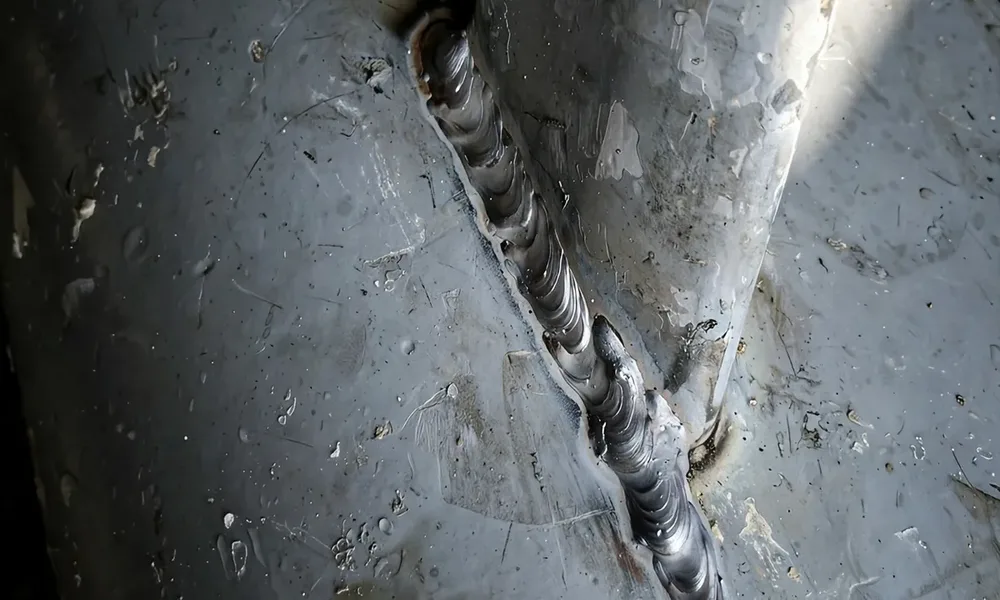
A fin is not bolted on. It is welded to the hull along its full length, and that weld is one of the most demanding joints on the ship. The hull plating at the bilge is curved in two directions, so the fin’s root must be shaped to meet it without gaps, and the weld must be continuous, full-penetration, and free of defects. Welders work in awkward positions under the hull, often in dry dock, with inspectors checking every metre. Behind the fin, inside the hull, the yard fits extra frames and brackets to spread the load, because the fin acts like a lever. Every roll tries to peel it off the hull, and the force at the root is enormous. That internal reinforcement is invisible from outside, but it is hours of steelwork, and it is why a fin cannot simply be added to a finished ship without a major docking. The fitting cost is the largest share of the price, and it is almost all skilled labour.
Design: A Fin That Helps Without Hurting
Designing a fixed fin is a balancing act. A bigger fin damps roll better, but it also adds drag, which costs fuel on every mile the ship travels. A fin set at the wrong angle does little, while one set right trims roll without adding much resistance. Naval architects model the fin in towing tanks and in computer simulations, testing different lengths, depths, and angles against the ship’s roll behaviour. The fin’s length is usually a third to a half of the ship’s length, and its depth, how far it sticks out from the hull, is typically 300 to 600 millimetres. Those numbers are tuned to the ship’s size, speed, and service, and the design work is billed by the hour by specialists. A fin that looks like a simple plate is, in fact, a tuned hydrodynamic device, and the tuning is part of the price.
Where the Money Goes
The shares surprise people who expect steel to dominate. Steel is only a quarter of the price. Fitting, design, and docking take the rest. The fin must be installed in dry dock, which means the ship is out of service while the work happens, and dry dock days are billed whether the welders are working or waiting. Inspection adds its own cost, because every weld is checked, and any defect means cutting out and re-welding. A fin is cheap to draw and expensive to build, and the gap between the two is skilled labour in a dry dock.
| Cost driver | Share of the price | Why it costs so much |
|---|---|---|
| Fitting and welding | About 35 percent | Full-length welds, internal reinforcement |
| Steel and forming | About 25 percent | High-strength plate, shaped to the hull |
| Design and testing | About 20 percent | Tank tests, simulation, roll modelling |
| Coating and protection | About 10 percent | Antifouling, corrosion protection |
| Docking and inspection | About 10 percent | Dry dock time, ultrasound checks |
The Drag Trade-Off, and Why Ships Accept It
A fixed fin always adds drag, and drag always costs fuel. On a large luxury ship the penalty is small, typically one to two percent of total resistance, but it is paid on every mile, for the life of the ship. Against that, the fin cuts roll, which makes guests comfortable, protects the active stabilizers from overwork, and reduces the wear on everything that moves when the ship rolls. Owners accept the fuel cost because comfort is the product a luxury ship sells, and a ship that rolls heavily in a beam sea is a ship guests do not return to. The fin’s price, spread over decades, is small beside the revenue of a single season, and it is paid once, while the comfort is delivered on every voyage.

Why Not Just Rely on Active Stabilizers
Active fin stabilizers are more powerful, and most luxury ships carry them. But they have moving parts, seals, hydraulics, and control systems, and they need power and maintenance. When they fail, or when the ship is at anchor with the power off, the fixed fin is still there, damping the roll. The two systems are partners, not rivals. The fixed fin handles the constant, small work, and the active fins handle the big rolls. Removing the fixed fin to save money would load the active system harder, shorten its life, and leave the ship with nothing when it is switched off. That is why naval architects keep fitting fixed fins to ships that already have the best active systems money can buy. The fin costs more than the fuel it saves in a year because it is not bought to save fuel. It is bought to keep the ship steady for its whole life, without ever asking for anything in return. To see its active partner, read our guide to luxury yacht stabilizer specs, the story of how a luxury yacht stabilizer is made, and how a luxury ship rudder is made.