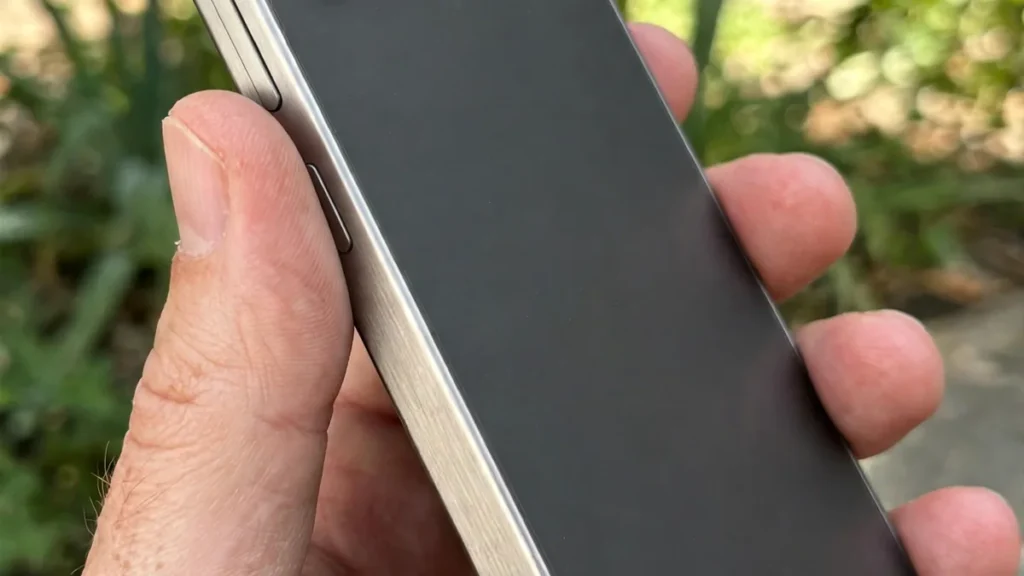
Pick up a flagship phone and the first thing your fingers notice is the frame. It is cool, slightly rough, and strangely light for something that feels so solid. It does not bend, it does not scratch easily, and it shrugs off drops that would have shattered the aluminium phones of a few years ago. That band of metal around the edge is titanium, and it is the most expensive part of the phone you never think about.
The frame looks simple — a thin rectangle with rounded corners — but almost nothing about it is simple. Titanium is famously stubborn: it resists cutting tools, it grabs and galls, it springs back when bent, and it demands slow, careful machining that wears out expensive cutters. A single frame passes through dozens of steps, each one capable of ruining it, and the factories that can do the work well can be counted on two hands.
That is why the titanium frame costs so much. It is not the metal alone, though the metal is dear. It is the machining, the finishing, the scrap, and the sheer number of frames that never make it out of the factory. This is what sits behind the price.

Why It Costs So Much
1. Titanium itself is expensive to produce
Titanium is the ninth most common element in the Earth’s crust, yet it is costly to turn into usable metal. The ore must be converted to titanium tetrachloride, then reduced with magnesium in a sealed vessel in a slow batch process that takes days. The result is a spongy mass that must be melted, often twice, in a vacuum furnace before it becomes an ingot. Aerospace-grade titanium alloy is estimated at roughly $30 to $60 per kilogram as raw material, before a single cut is made, and only a handful of countries produce it at scale.
2. Machining titanium destroys tools
Titanium is strong, light, and stubbornly resistant to cutting. It holds heat at the cutting edge instead of carrying it away in the chips, so tools run hot and wear out fast. Machinists must cut slowly, flood the work with coolant, and use coated carbide or ceramic cutters that cost far more than ordinary tooling. A phone frame takes far longer to machine than an aluminium one, and the tooling bill per frame is several times higher. The machining challenges, from heat to tool wear, are the reason titanium work commands a premium in every industry.
3. Most of the metal becomes scrap
A phone frame starts life as a solid block or a thick forged blank, and the finished frame weighs only a fraction of what the machinist started with. Milling the inside pocket, the button holes, the antenna breaks, and the camera opening removes most of the material as chips. Some of that titanium can be recycled, but the chips are contaminated with coolant and mixed with other metals, so they sell for a fraction of the price of fresh alloy. The step-by-step journey from raw metal to finished frame is described in how smartphone titanium frame is made, and the amount of metal cut away is the first shock.
4. The finish takes hours, not minutes
The brushed texture on a titanium frame is not painted on. The frame is blasted with fine media, brushed with diamond paste, or anodised in a controlled bath to build a thin coloured oxide layer. Each frame must match the others exactly, so the process is checked under bright lights by human inspectors. A single speck, a faint line, or a patch of uneven colour sends the frame back for rework or into the scrap bin. The materials behind that finish — the alloys, the coatings, and the surface treatments — are covered in smartphone titanium frame materials engineering.
5. The yield is brutally low
Phone makers reject a large share of the frames they machine. Titanium warps slightly as internal stresses are released during cutting, so a frame that measured perfectly at one step can be out of tolerance at the next. Antenna breaks must be filled with plastic to exactly the right depth, button holes must line up to a tenth of a millimetre, and the glass must sit flush all the way around. When a frame fails any of those checks, hours of machining are lost with it, and the cost of the failures is folded into the frames that survive.
6. Only a few factories can do it
Machining titanium phone frames at the scale of millions of units needs specialised five-axis machines, clean rooms, and operators with years of experience. Few suppliers have that combination, and phone makers compete for their capacity. When demand spikes, prices rise, and the supplier holds the stronger hand. Forging the blanks is its own rare craft, as shown in titanium forging materials engineering, where heat, pressure, and timing turn a dull ingot into a blank worth machining.

Smartphone Titanium Frame Specs
| Specification | Typical range |
|---|---|
| Alloy | Grade 5 titanium, Ti-6Al-4V, about 90 percent titanium with aluminium and vanadium |
| Density | About 4.43 grams per cubic centimetre, roughly 40 percent lighter than steel |
| Tensile strength | About 900 to 1,100 MPa, roughly twice that of common aluminium alloys |
| Frame weight | About 30 to 45 grams for a large flagship phone frame |
| Wall thickness | About 2 to 3 mm on the side band, thinner around antenna breaks |
| Surface finish | Brushed or blasted, roughness about 0.4 to 1.6 microns Ra |
| Machining time | Several hours per frame across milling, drilling, and finishing steps |
| Hardness | About 33 to 38 HRC, harder than aluminium and harder to cut |
What Does a Smartphone Titanium Frame Cost?
The frame is a small part of the phone, but its cost is out of proportion to its size. Aerospace-grade titanium alloy is estimated at roughly $30 to $60 per kilogram as raw material, and the machining, finishing, and inspection of a single frame are estimated at roughly $25 to $60 per unit in volume production. A finished titanium frame is estimated to cost a phone maker roughly $40 to $100, compared with roughly $10 to $20 for an aluminium frame. All prices are estimates only and vary widely by supplier, volume, and finish, but the gap explains why titanium frames appear only on the most expensive phones.
A Rare Fact
Titanium earned its place in phones the hard way: it was first used in spacecraft, jet engines, and submarines, where its strength and resistance to corrosion mattered more than its price. The same metal that holds together a fighter jet’s airframe now holds together the phone in your pocket. Phone makers even borrow aerospace forging and machining methods directly, because the frame must survive years of drops, heat, and pocket wear without bending — a job that aluminium, for all its cheapness, simply could not do as well.
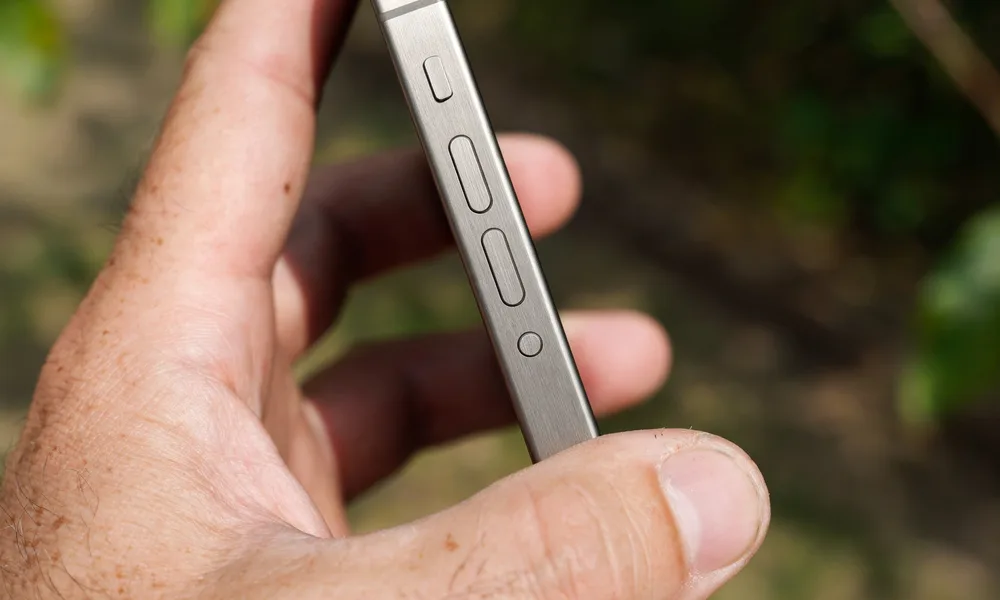
A titanium frame is a small rectangle of metal with an outsized bill attached. The metal is dear, the cutting is slow, the tools wear out, most of the block ends up as chips, and a large share of finished frames never leave the factory. Yet the result is a phone that feels different the moment you pick it up — lighter, harder, cooler to the touch — and that feeling is exactly what the price buys.