Point a camera at a dark room and it sees nothing. Point a thermal camera at the same room and the world lights up: warm bodies glow, cold windows turn black, a draught under a door becomes a visible river of cool air. A thermal camera does not see light at all. It sees heat, and the sensor that makes this possible is one of the most remarkable and most expensive imaging devices ever built. A good thermal sensor can cost hundreds or thousands of dollars (estimate) on its own, and in high-end cameras the sensor is often the most expensive part of the whole device. The price is about a chip that can feel temperature differences smaller than a tenth of a degree, in total darkness, without touching what it measures.
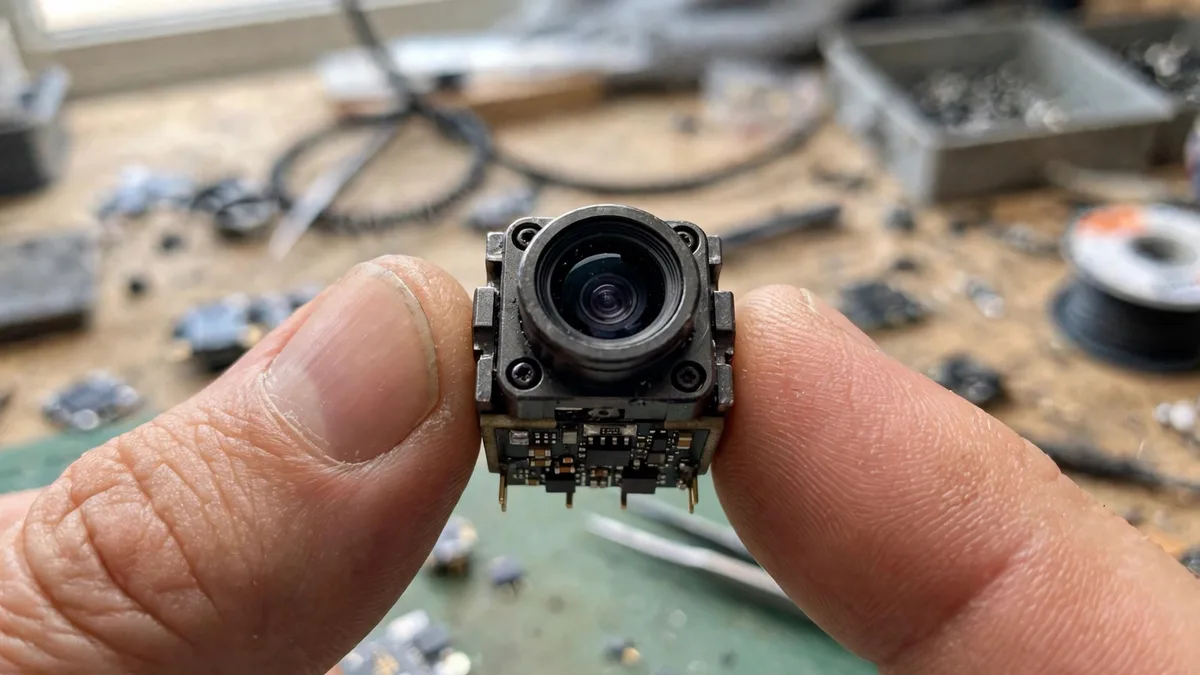
The surprise is that the sensor looks so ordinary. It is a small square of silicon behind a dark lens, not much bigger than the sensor in a phone camera. But inside that square is an array of tiny detectors, each one a miniature thermometer, each one needing to be isolated from its neighbours, calibrated, and read thousands of times a second. Building that array is closer to watchmaking than to ordinary electronics, and only a small number of factories in the world can do it well.
Why the Thermal Camera Sensor Costs So Much
1. Every pixel is a tiny thermometer
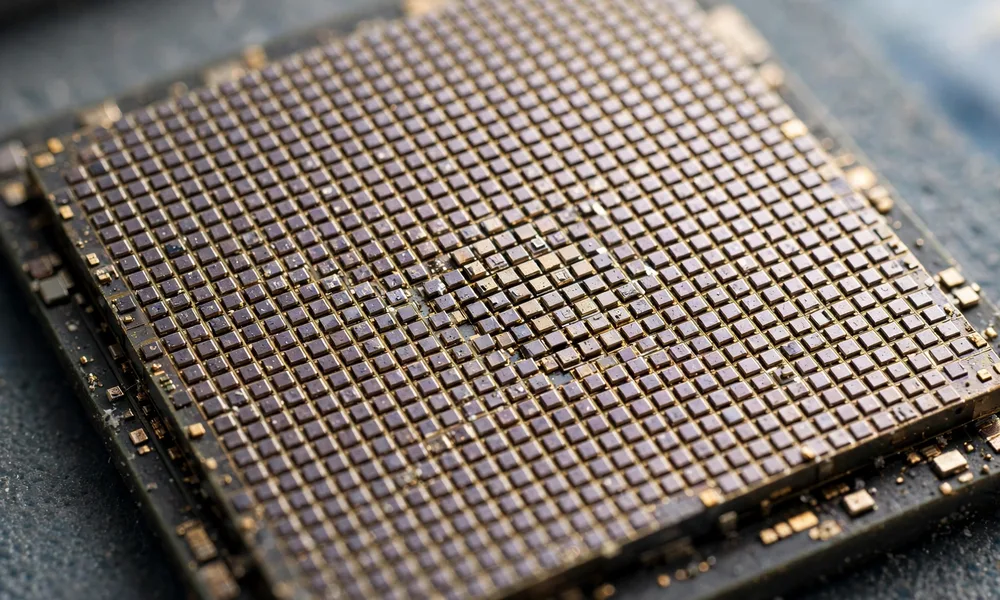
An ordinary camera sensor counts photons. A thermal sensor, a microbolometer, measures temperature. Each pixel is a tiny suspended bridge of material that warms up by a fraction of a degree when infrared radiation lands on it, and that tiny warming changes its electrical resistance. Measuring a change that small, thousands of times a second, across tens of thousands of pixels, needs exquisitely sensitive electronics. The pixels must also be thermally isolated from each other, or the heat would blur from one pixel to the next. Each pixel hangs on tiny legs above the silicon below, like a microscopic suspension bridge.
2. The materials are exotic and hard to work with
The sensing layer of a microbolometer is usually vanadium oxide or amorphous silicon, materials chosen because their resistance changes sharply with temperature. Neither is easy to deposit in the thin, even layers a sensor needs, and both demand specialist equipment and cleanrooms. The lens is another problem: ordinary glass blocks infrared, so thermal lenses are made from germanium, a rare and expensive element, or from chalcogenide glass. A single germanium lens element can cost more than a whole ordinary camera lens (estimate). The sensor inside a cinema camera is built from more familiar materials, which is one reason it costs far less.
3. The pixels must be built in a vacuum
Air conducts heat, so a microbolometer only works properly if its pixels sit in a vacuum. Each sensor is sealed inside a vacuum package, a tiny airtight chamber with an infrared-transparent window, and the seal must hold for the life of the camera. Building vacuum packages at this scale is a specialist skill, and any leak ruins the sensor. The packaging alone can cost a significant share of the sensor’s price (estimate).
4. Calibration is slow, individual, and unavoidable
No two thermal sensors are exactly alike. Each one must be calibrated pixel by pixel against known temperatures, a process that can take hours and needs precision blackbody sources that cost as much as a car (estimate). The calibration data is stored on the sensor itself, and without it the image would be a meaningless smear. Cheaper sensors skip some of this and accept noisier images; a good sensor is calibrated thoroughly, and the labour is part of the price. This is also why thermal cameras need a periodic shutter click: the sensor recalibrates itself against a known temperature while you use it.

5. The market is small and mostly military
Thermal imaging began as military technology, and for decades it was restricted by export controls that kept volumes low and prices high. Even today, the market for thermal sensors is tiny beside the market for phone cameras: millions of units a year rather than billions. Small volumes mean the enormous cost of developing a sensor is spread across far fewer buyers. The autofocus motor in an ordinary camera is cheap precisely because it is made by the hundred million; a thermal sensor is not.
6. Resolution is brutally expensive
Doubling the resolution of a thermal sensor more than doubles its cost. The pixels are already near the limit of what can be manufactured reliably, and a larger array means more pixels that must all work, more vacuum packaging, and a bigger germanium lens. A low-resolution thermal camera for home use might have 160 by 120 pixels, while a professional one has 640 by 480, and the price jumps by an order of magnitude (estimate) between the two. The physics of infrared light sets a hard floor on pixel size, so thermal sensors cannot simply follow phone cameras down the path of ever-smaller pixels.
7. It must work in conditions that destroy other electronics
Thermal cameras are used by firefighters walking into burning buildings, by soldiers in deserts and arctic cold, and by engineers inspecting live power lines. The sensor must keep its calibration from minus twenty to plus fifty degrees, shrug off shock and vibration, and keep working when the camera around it is baking. Building a sensor that stable needs materials and packaging that are far beyond what a consumer camera requires, and every one of those choices adds cost.
Thermal Camera Sensor at a Glance
| Specification | Detail |
|---|---|
| Detector type | Microbolometer array, uncooled |
| Sensing material | Vanadium oxide or amorphous silicon |
| Typical resolution | 160 by 120 up to 640 by 480 pixels |
| Temperature sensitivity | Less than 0.05 degrees Celsius (estimate) |
| Lens material | Germanium or chalcogenide glass |
| Packaging | Vacuum-sealed with an infrared window |
| Calibration | Pixel-by-pixel against known temperatures |
| Main uses | Firefighting, building inspection, security, industry |
What Does It Cost?
A basic thermal sensor for a phone accessory costs around a few hundred dollars (estimate), while the sensor in a professional handheld camera can cost several thousand dollars (estimate) on its own, and military-grade sensors cost far more still (estimate). The camera around it, the screen, the battery, and the housing, is often the cheap part. The price falls slowly as volumes grow and phone accessories bring thermal imaging to more people, but the physics of the sensor sets a floor that no amount of mass production can remove. The fingerprint sensor in a phone shows the other end of the scale: a sensor made by the billion is cheap, while a sensor made by the thousand is not.
A Rare Fact
A thermal camera can see a person through smoke, through light fog, and in pitch darkness, but it cannot see through ordinary glass. Glass blocks the infrared wavelengths a thermal sensor reads, so a window that looks clear to your eyes looks like a solid black wall to a thermal camera. The sensor sees the heat of the world itself, and the world, it turns out, is transparent in places our eyes never imagined and opaque in places we take for granted.