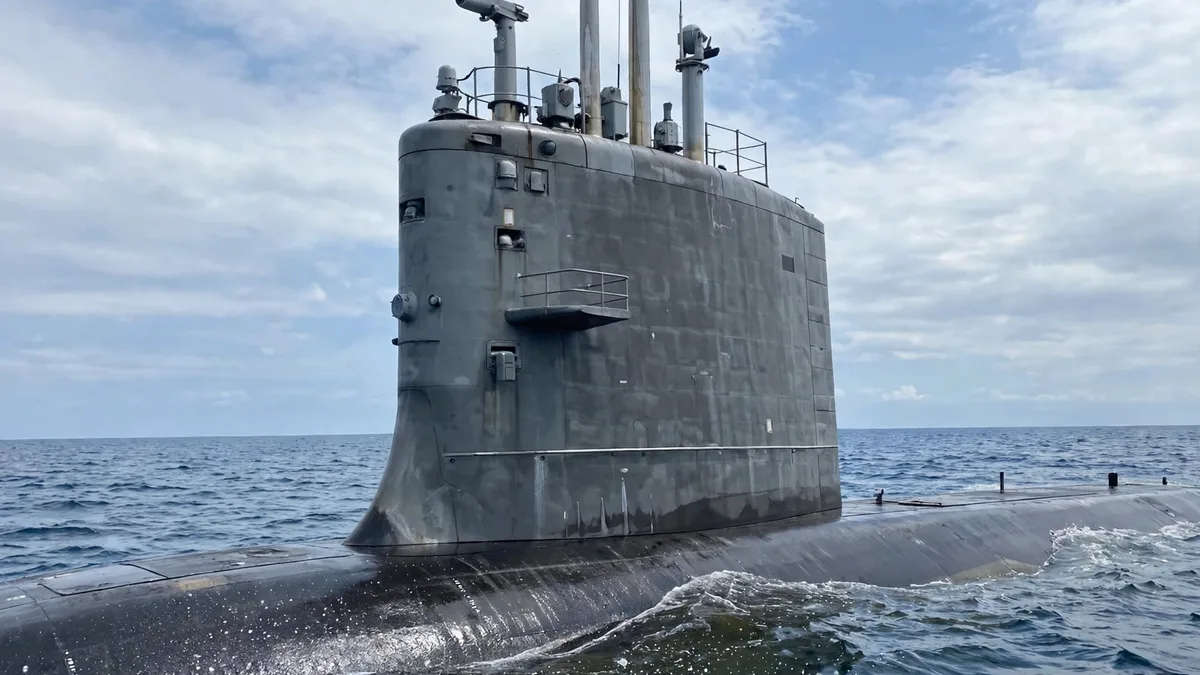
From a distance, a submarine looks like a smooth steel tube, with one small bump on top. That bump is the conning tower, also called the sail, and it is the only part of the submarine that regularly rises above the waves. Inside it are the periscopes, the antennas, the radar masts and the bridge from which the submarine is steered when it is on the surface, and it is one of the most expensive structures on the whole boat.
A luxury submarine, the kind built for private owners, research or special operations rather than for a navy, can cost hundreds of millions of dollars, and its conning tower alone can cost several million. That seems extraordinary for a steel structure a few metres tall, until you understand what it has to do. It must survive the crushing pressure of the deep sea, stay watertight in a storm, hide the submarine from radar and sonar, and carry some of the most sensitive instruments ever put to sea. This guide explains why it costs so much.
How It Works
1. Pressure-proof steel, shaped to survive the deep
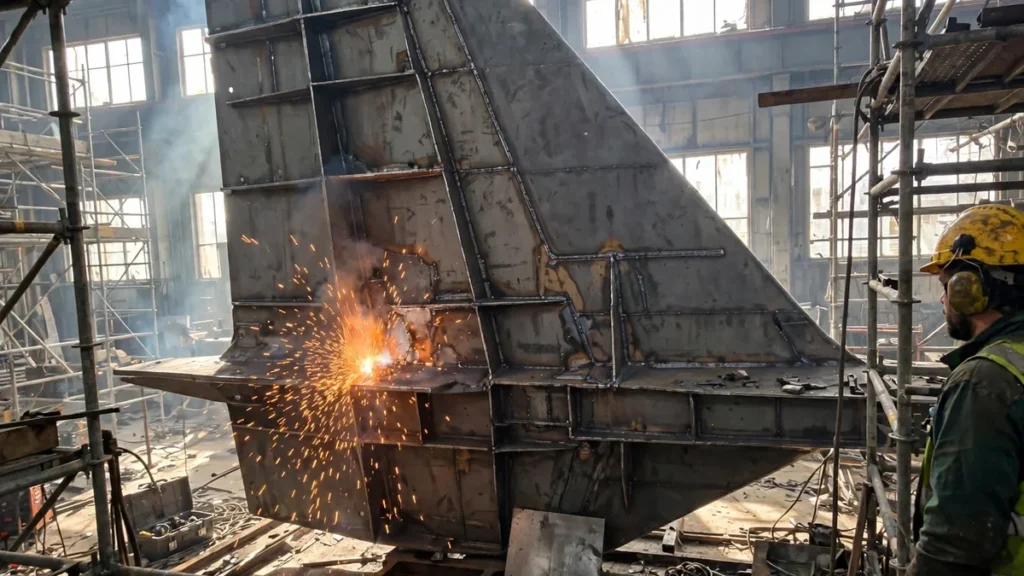
The conning tower is not a thin shell. It is a pressure-resistant structure, built from high-strength steel many centimetres thick, welded by specialists and tested to survive depths where the water pressure would crush an ordinary ship like a tin can. Every weld is inspected, every plate is checked for flaws, and the whole structure is tested in a pressure chamber before it is ever fitted to a submarine.
The shape matters as much as the steel. The tower is designed to cut through the water cleanly when the submarine surfaces, to shed waves without slamming, and to avoid creating turbulence that could be heard by another vessel’s sonar. That shape is refined in computer models and in test tanks, over months of work, before a single plate is cut. The way a luxury submarine conning tower is made shows how that steel is shaped, welded and tested, and why the work can only be done by a handful of yards in the world.
2. Periscopes, masts and eyes that must never leak
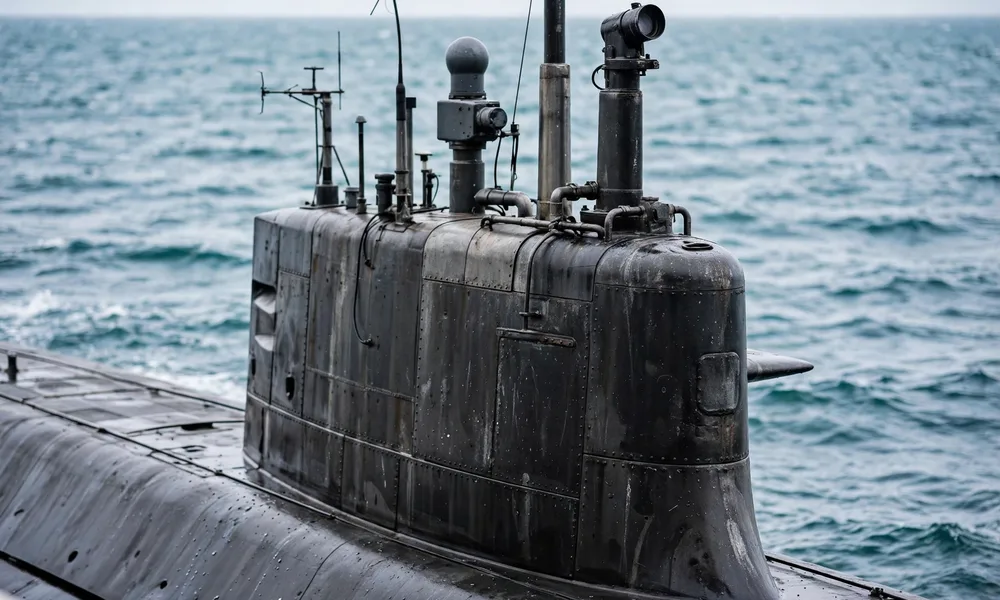
The conning tower carries the submarine’s eyes. The periscope, the radar mast, the communications antennas and the electronic surveillance masts all pass through the top of the tower, and each one is a hole in a pressure hull that must never leak. The seals around those masts are among the most carefully engineered parts of the whole submarine, because a single leak at depth could be catastrophic.
Modern periscopes are no longer simple tubes with mirrors. They are optronic masts, with high-definition cameras, thermal imagers and laser rangefinders, sending their pictures down to screens inside the submarine, so the crew no longer has to stand with an eye to a lens. Those cameras and sensors cost hundreds of thousands of dollars each, and they must work perfectly in salt water, in darkness and in rough weather. The way the luxury submarine conning tower specs are explained shows what each of those instruments does, and why they cannot be bought off the shelf.
4. The bridge, the controls and the crew who stand watch
When a submarine is on the surface, it is steered from the bridge at the top of the conning tower, a small open platform where the officer of the watch stands with binoculars, looking out over the sea. That platform must be safe in a storm, with rails, handholds and a shelter from the wind, and it must give a clear view in every direction, because a submarine on the surface is slow to turn and hard to stop.
Inside the tower, below the bridge, are the controls, the communications equipment and the access hatch that leads down into the hull. The space is cramped, because every cubic centimetre inside a submarine is precious, and yet it must hold the equipment that lets the submarine talk to the outside world, navigate, and defend itself. The way a luxury conning tower works shows how that small space is organised, and how the crew move through it in the dark, in rough weather, without hesitation.
5. Safety systems, and the cost of never failing
A conning tower must never fail, because if it fails, the submarine fails with it. It carries emergency escape systems, backup communications, and the flood valves and sensors that warn the crew if water is getting in. It is built with redundancy at every level, so that if one system fails, another takes over without the crew having to think about it.
6. Small numbers, secret work and the people who build it
Only a handful of shipyards in the world can build a submarine conning tower, and fewer still can build one to luxury standards, with a finished interior, quiet systems and a polished exterior. The welders, engineers and technicians who do that work are among the most highly paid in shipbuilding, because their skills are rare, their work is secret, and a single mistake can cost lives.
The materials, too, are bought in tiny quantities, with no bulk discount, and many of them are restricted, because the same steel, the same coatings and the same sensors are used in military submarines. A private buyer is therefore paying not just for the materials and the labour, but for access to a world of engineering that is closed to almost everyone else. That exclusivity is part of the price, and part of the appeal, for the very few people who can afford it.
| Cost factor | Why it pushes the price up |
|---|---|
| Pressure hull steel | High-strength steel, thick plates, specialist welding, pressure testing |
| Periscopes and masts | Optronic masts, cameras, thermal imagers, sealed against leaks |
| Stealth treatments | Radar-absorbing coatings, angled shape, anechoic tiles |
| Bridge and controls | Surface bridge, navigation, communications, cramped fit-out |
| Safety and redundancy | Backup systems, escape gear, flood sensors, certification |
| Production volume | Built one at a time, by a handful of specialist yards |
| Specialist labour | Rare, highly paid welders and engineers, secret work |
| Typical price | Estimated $2 million to $10 million for the tower alone |
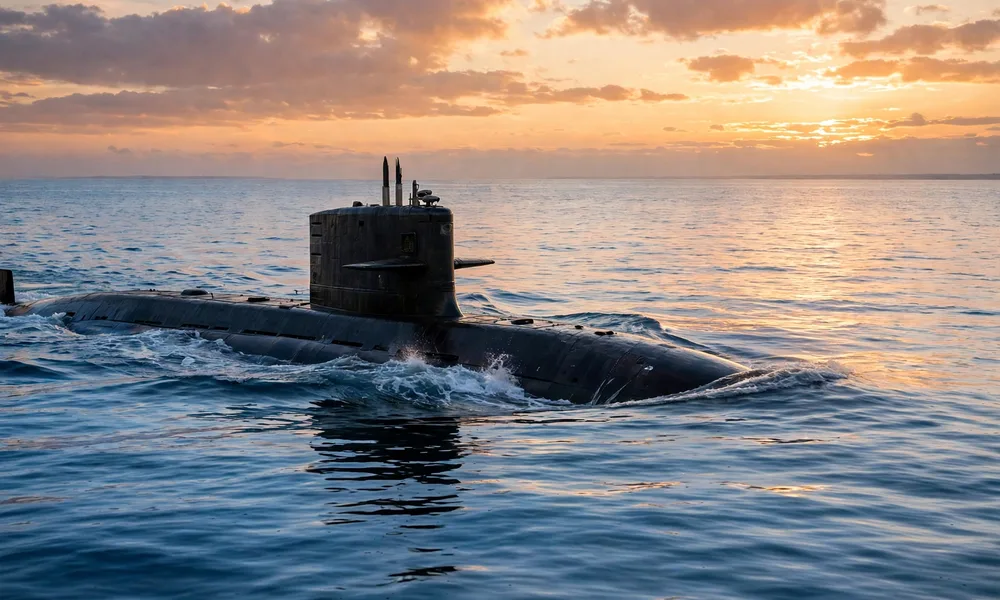
A luxury submarine conning tower costs an estimated $2 million to $10 million on its own, depending on its size, its sensors, its stealth treatments and the yard that builds it. The submarine it sits on can cost hundreds of millions more. That is a staggering price for a steel bump on top of a tube, until you remember what it has to do. It must survive the deep, hide from radar and sonar, carry instruments that cost more than a house, and never, ever fail. When you add all of that together, the millions start to make sense, even if they still take your breath away.
Here is a rare fact worth knowing. The word conning comes from the old nautical word conn, meaning to steer a ship, and the conning tower was originally the armoured place from which a warship was steered in battle. On the earliest submarines, there was no tower at all, just a small hatch on top of the hull, and the captain had to stand on the deck in the open sea to see where he was going. The tower was added so he could stand inside, protected from the waves and from enemy fire, and look out through a periscope instead. More than a century later, that same small tower is still the submarine’s eyes, its ears and its bridge, and it is still the most expensive few metres on the whole boat.