Look at the cars parked outside any primary school at half past three, and you will see the most wasteful journeys in modern transport. Two-tonne machines, carrying one adult and one child, driven a mile and a half, to sit idling in a queue. Now look at the parent who arrives on a cargo e-bike: two children in the box, school bags on the rack, shopping on the way home, parked in a space the size of a doormat, for pennies. The case for cargo e-bikes is the case for admitting that most of the trips we make by car never needed a car at all — and that the machine that replaces them has been on sale for years.
This is not an argument against cars. A cargo e-bike cannot tow a caravan, cross a country or carry a family of five in a snowstorm. It is an argument against using a car for the trips a cargo bike does better: the school run, the weekly shop, the nursery drop-off, the hardware store, the commute with a bag that will not fit in a pannier. Those trips are most of urban driving, and they are the trips where a car is at its worst — slow, expensive, impossible to park — and a cargo e-bike is at its best.

It carries more than you think
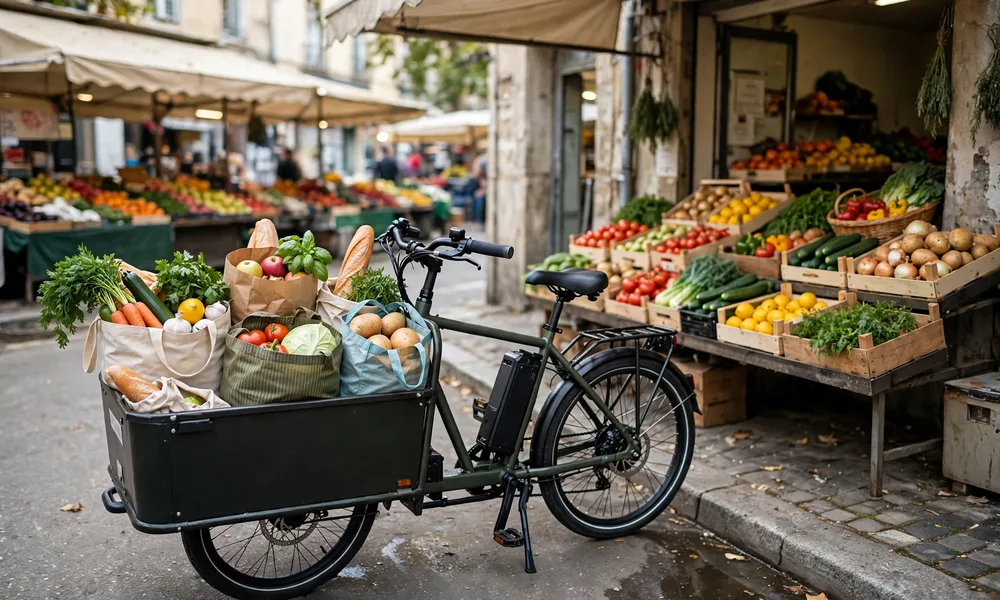
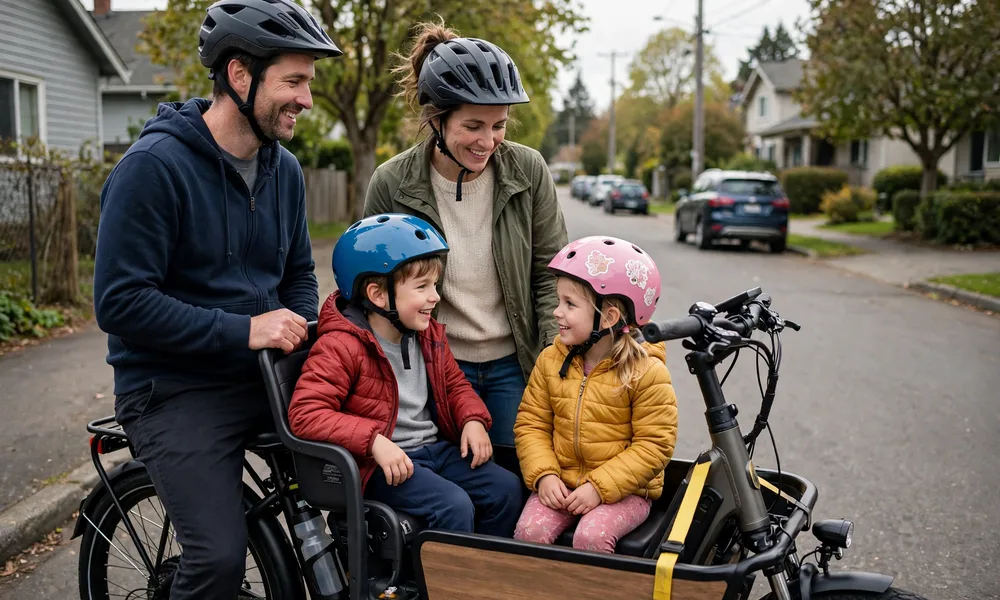
The first surprise of a cargo e-bike is the load. A well-built longtail or front-loader is rated for 100 to 150 kilograms of payload, and some platforms are rated higher still — 200 kilograms or more including the rider. A front-loading box bike carries 50 to 100 litres of cargo alongside one or two young children. A longtail carries two child passengers in proper seats plus the groceries. That is a full weekly shop, a school run with two children and their bags, a hardware store trip with modest timber, or a parcel delivery round that would otherwise need a van.
The electric assist is what makes those numbers usable by ordinary people rather than athletes. A 500 to 750 watt motor with pedal assist takes the weight off the start, flattens the hills and turns a loaded bike from a workout into transport. Without the motor, a cargo bike is a specialist machine for the strong and the committed. With it, it is a vehicle for a parent, a grandparent, a small business owner, anyone who can ride a bike at all. The battery matters here, and it matters in the same way it matters on every e-bike: capacity, cell quality and a management system that looks after the pack are worth more than a headline range figure, as our guide to e-bike battery specs explains.
Range under load is the number that counts, and it is better than sceptics assume. A full cargo load at moderate assist on flat ground typically delivers 60 to 80 kilometres from a well-specified system, and most daily cargo trips — school, shops, errands — cover 20 to 40 kilometres in total. The load changes the handling, and it should be respected: a fully loaded cargo bike at 20 kilometres per hour carries far more kinetic energy than an unloaded bicycle, and braking distances are longer. Good brakes and a low centre of gravity are not luxuries on a cargo bike. They are the specification that matters most, which is why our look at e-bike disc brakes is worth reading before buying anything that carries children.
The car it replaces costs far more than it looks
The second argument is money, and it is the one that converts the most sceptics. A good cargo e-bike is expensive — a well-specified machine costs several thousand pounds, and the best ones cost as much as a cheap used car. But that is the wrong comparison. The comparison is with the car it replaces: the second car, the one that does the school run and the shopping and sits on the driveway the rest of the time. That car costs thousands a year in insurance, tax, servicing, tyres and depreciation before it moves a single mile, and then it costs fuel, parking and congestion charges on top.
Run the numbers honestly and the cargo bike wins quickly. Electricity for a charge costs pennies. Servicing is a bicycle service, not a car service. There is no insurance premium like a car’s, no road tax, no parking permit, no fuel bill, and no depreciation curve that halves the value in three years. A family that replaces a second car with a cargo e-bike typically saves thousands a year, and the bike itself lasts a decade or more with ordinary maintenance.
It is the second car, not the only car
The honest limit of the cargo e-bike is that it is not a car, and pretending otherwise would sink the argument. It does not do motorways, it does not do long distances in bad weather, it does not carry a family of five, and it does not keep a toddler warm and dry in a January downpour the way a car does. Households that need a car for those jobs should keep one. The cargo bike’s job is narrower: to take over the short, local, loaded trips that make up most of a second car’s mileage, and to do them better.
Why the e-bike, and why now
Cargo bikes are not new. Dutch parents have carried children in front boxes for generations, and cycle couriers have hauled loads through cities for a century. What is new is the electric assist, and it changes the argument completely. The old cargo bike demanded strength, and strength limited its audience to the fit and the determined. The electric cargo bike demands only the ability to ride, and that is almost everyone. The same power debate that runs through the rest of electric transport applies here in reverse: our case against overpowered e-bikes argues that more power is not always better, and cargo bikes are the proof — the motor is not there for speed, but for load, and a modest motor doing a useful job beats a powerful motor doing a pointless one.
Verdict
The cargo e-bike is the second car that most households do not need, built in the form they will actually enjoy. It carries two children and a week’s shopping, it costs pennies to run, it parks anywhere, it is faster than a car for the trips it serves, and it saves its owner thousands a year. It will not replace the family car for the long journeys and the bad days, and it should not try. But for the school run, the shop, the errands and the daily round of short loaded trips, it is not a compromise. It is the better machine, and the families who have made the switch do not go back. Sell the second car, buy the cargo bike, and keep the money, the time and the parking space.