The driver pulled the paddle, and the car seemed to teleport into the next gear. There was no pause, no lurch, just a crack from the exhaust and a harder push in the back. That is what a sequential gearbox does for a hypercar: it turns a human wish into a gear change faster than a human could ever move a lever.
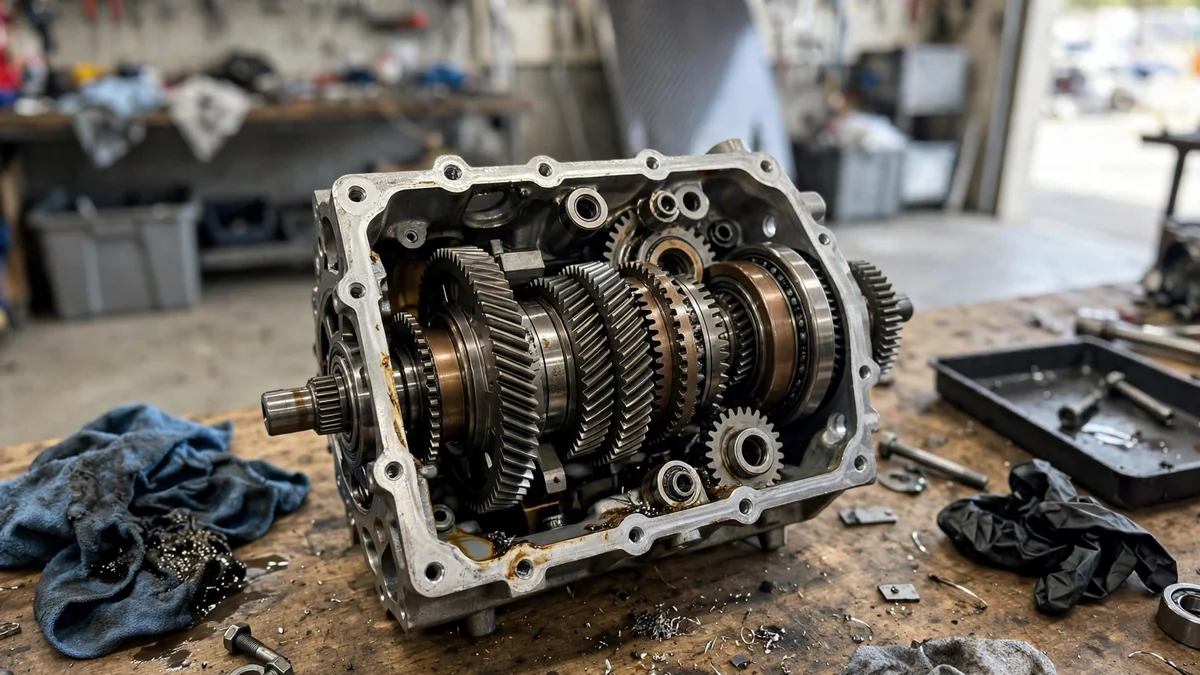
A sequential gearbox is different from a road car gearbox, and different again from a dual-clutch box. There is no gate to wander through, no skipping gears, and no synchroniser rings to match speeds. The driver moves only up or only down, one gear at a time, and steel dogs slam the next gear home. This is how a hypercar sequential gearbox is made, from a billet of steel to a machine that can shift a thousand times a race without missing once.
How It’s Made
Step 1: Gear blanks are cut from billet steel
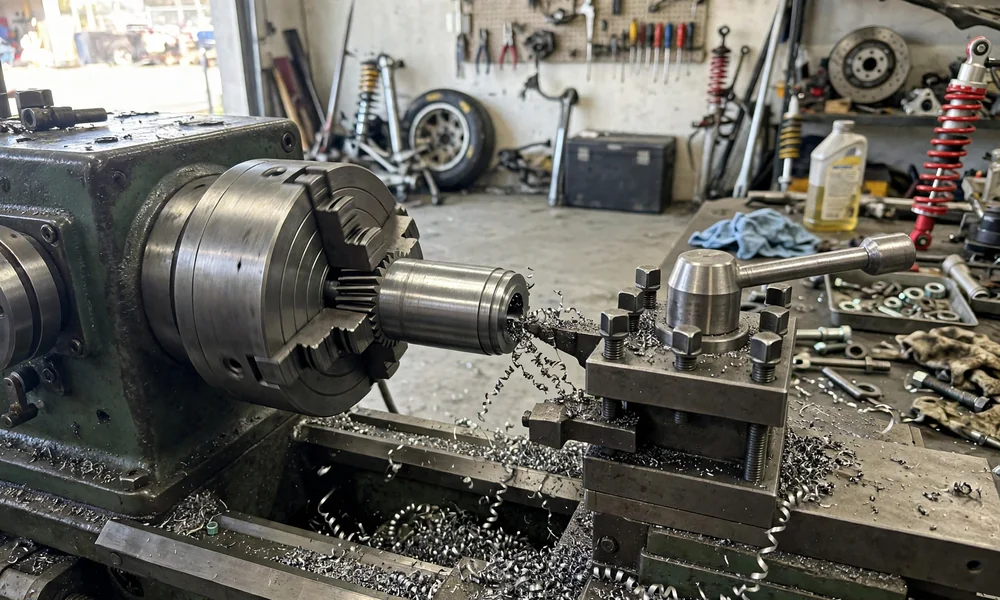
The gears start as billets of high-grade steel, usually a nickel-chromium alloy chosen for toughness. Each billet is cut into a blank on a lathe, then heated and forged to refine the grain, because a gear slammed into engagement thousands of times cannot have a weak spot inside. The blanks are then rough-machined close to their final shape, and every blank is checked for cracks with magnetic particle inspection. A hypercar gearbox is built from fewer than a dozen gears, but each one carries the full torque of an engine making over a thousand horsepower.
Step 2: Teeth and dog rings are cut
The teeth are cut on a gear hobbing machine, which rolls the blank against a cutter until the teeth take shape, then ground to their final profile. The dog rings are what make a sequential box special: instead of the fine teeth of a road gearbox, the gears carry a small number of large, square dogs, usually four or six per gear, which engage with a loud, positive clunk. The dogs are cut with a slight undercut, so torque pulls them tighter together instead of pushing them apart, which is why a sequential shift feels brutal and why it works: there is no gentle synchroniser to wear out, only steel dogs locking together. A conventional hypercar gearbox uses synchronisers instead, as described in how a hypercar gearbox is made, and the two boxes feel nothing alike to drive.
Step 3: The selector barrel and forks are machined
The selector barrel is a steel drum with grooves cut around it, the brain of the gearbox. As the barrel rotates one step, its grooves push the selector forks, which slide the dog rings into the next gear. The barrel is machined on a five-axis mill, its grooves ground to a mirror finish so the forks move without sticking. The forks are machined from steel or titanium and fitted with bronze pads, and each fork is measured against the barrel it will work with, because a groove a fraction of a millimetre out of place would try to engage two gears at once. The barrel is what makes the box sequential: it can only turn one step at a time.
Step 4: Gears are heat-treated and ground
Once cut, the gears are case-hardened in a furnace, which leaves a hard skin on the teeth and dogs while the core stays tough. After hardening, the gears are ground again, because heat treatment always moves the metal slightly, and a gear out of true by a few microns will whine and wear fast. The dogs are polished by hand, since a burr can stop a dog engaging cleanly, and each gear is then measured and paired with the gear it will mesh with, because gears are matched in sets, not swapped at random.
Step 5: The casing is machined and the box is assembled
The casing is machined from a solid billet of aluminium or magnesium, hollowed out on a CNC mill until only thin walls remain. The bearing bores are machined in one setup so they line up perfectly, because shafts that are not parallel wear their bearings out in hours. The shafts, gears, barrel, and forks are then assembled into the casing in a set order, with shims setting the exact end float of each shaft, and the mechanic turns the input shaft by hand through every gear, feeling for a tight spot, before the box is filled with racing oil. The differential that the gearbox feeds is built separately, as described in how a hypercar differential is made, and the gearbox must bolt to it with no misalignment at all.
Step 6: The gearbox is tested on a rig and on track
Finally the gearbox goes onto a test rig, where an electric motor spins it through thousands of shifts at full load while sensors watch for missed engagements. Any shift that hesitates is investigated, and the barrel or a fork is adjusted until every shift is clean, then the box goes into a car for track testing, where a driver runs it through full-throttle upshifts and downshifts under braking. A dual-clutch gearbox shifts differently, as shown in how a dual-clutch gearbox is made, but a sequential box is judged on one thing: whether it never misses a shift when the driver needs it most. Only when the rig and the track agree is the gearbox signed off and shipped to the team.

Hypercar Sequential Gearbox Specifications
| Specification | Typical figure |
|---|---|
| Gears | Usually 6 or 7 speeds |
| Shift time | Around 40 to 80 milliseconds |
| Gear material | Nickel-chromium alloy steel |
| Engagement | Dog rings, 4 to 6 dogs per gear |
| Casing material | Aluminium or magnesium billet |
| Maximum torque | Over 1,000 newton metres |
How Much Does a Hypercar Sequential Gearbox Cost?
A hypercar sequential gearbox is one of the most expensive parts of the car, because almost every piece is machined from billet and matched by hand. Industry estimates put a race-spec sequential gearbox at roughly $50,000 to $150,000 (estimate), depending on the gears, the materials, and whether it includes the differential. The price comes from the machining time, the hand finishing, and the testing, and from the fact that these boxes are built in tiny numbers. Teams accept the cost because a missed shift can lose a race, and a broken gearbox can end one.
A Rare Fact About Hypercar Sequential Gearboxes
Here is something few people realise: a sequential gearbox can be shifted without the clutch at all, and race drivers often do exactly that. Because the dogs are undercut to pull themselves together under load, a driver can cut the ignition for a few milliseconds and slam the next gear home with the throttle still open. The engine management does the cut automatically on a paddle shift, which is why the shift is so fast. It sounds violent, and it is, but the dogs are designed for it. A road gearbox would be destroyed by the same treatment in an afternoon, which is why the sequential box is a race part first and a road part second.
So the next time you hear a hypercar crack through the gears with no pause between them, remember what is doing the work: steel billets forged and cut into dog-ringed gears, a grooved barrel that only ever moves one step, a casing machined from solid metal, and a test rig that shifted it thousands of times before the driver ever touched a paddle.