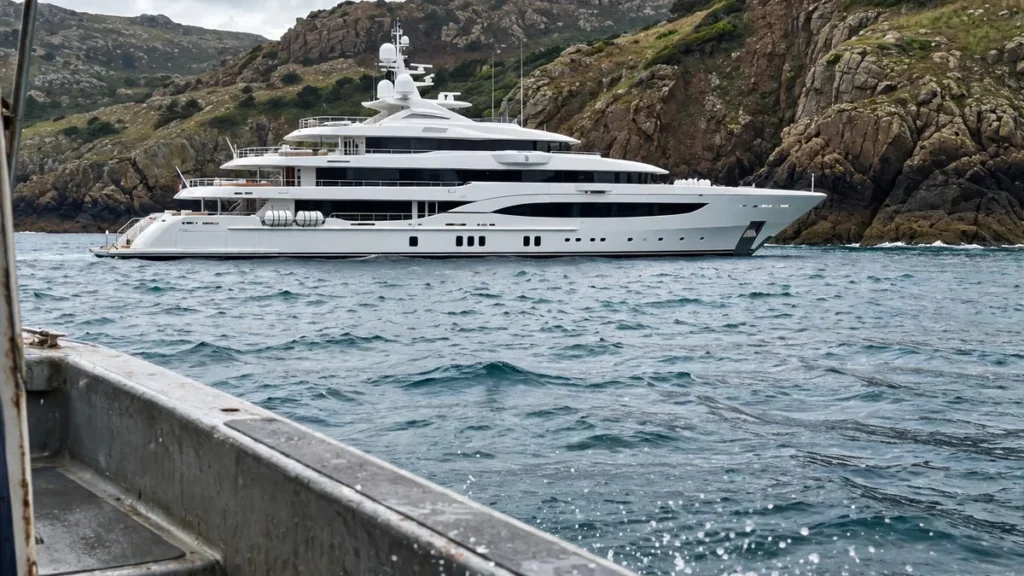
Step through the door at the bottom of a superyacht and the world changes. The polished wood and white leather of the guest decks are gone. In their place is a room of steel and copper, hot, loud, and smelling faintly of diesel and paint, where two engines the size of small cars sit in a space barely taller than a man. This is the engine room, and it is the hardest-working room on the yacht. Everything the guests enjoy, the air conditioning, the hot water, the lights, the stabilisers that keep the gin from sliding off the table, is made here.
A superyacht engine room is not just a place where engines sit. It is a complete power station, a water plant, and a workshop, squeezed into a steel box below the waterline. Building it is one of the longest jobs in the whole yacht, and it starts long before the hull is finished. Here is how a superyacht engine room is made.
The work is done in a particular order, because the engine room is built from the inside out. The biggest pieces go in first, while the hull is still open to the sky, and the walls are built around them. Once the deck goes on, nothing large can ever come out again without cutting a hole in the yacht.

How It’s Made
Step 1: Building the steel room
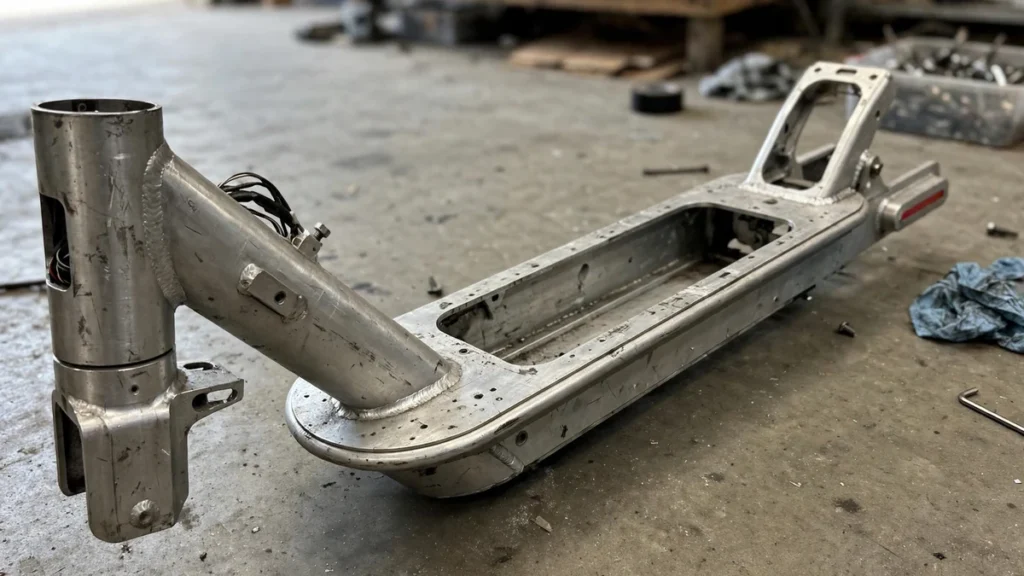
The engine room starts as part of the hull itself. Steel plates are cut, bent, and welded into the lower hull, and the engine room is formed by watertight bulkheads, steel walls that divide the yacht into compartments so that a leak or a fire in one cannot sink or burn the whole boat. The steel is painted with a thick protective coating, because the room will spend its life warm and damp, the perfect conditions for rust. The floor is laid with steel grating over the bilge, the lowest part of the hull, where any water collects to be pumped out. The steelwork here is the same craft as the hull above it, described in how a superyacht steel hull is made.
Step 2: Lowering in the main engines
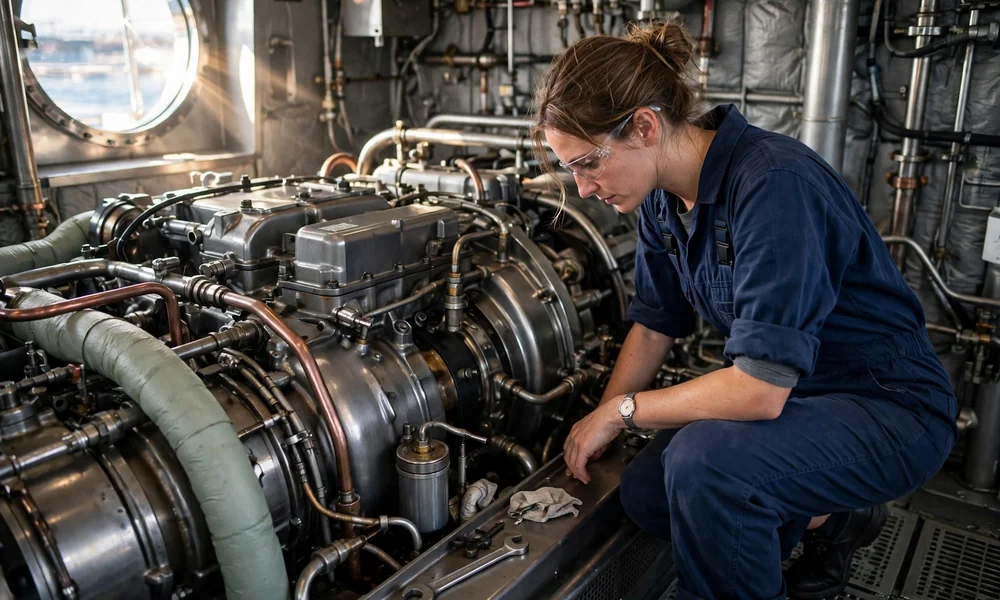
The main engines arrive on the back of a truck, each one a marine diesel the size of a van, weighing several tonnes. They are lifted by crane through the open top of the hull and lowered onto steel foundations, beds that have been welded to the hull and machined flat. The alignment is critical: the engine, the gearbox, and the propeller shaft must sit in a dead straight line, or the shaft will vibrate and wear out its bearings. A big ship’s engine room follows the same principles on a grander scale, as explained in the guide to cruise ship engine materials.
Step 3: Fitting the generators and gearboxes
Beside the main engines sit the generators, smaller diesel engines that spin alternators to make electricity for the whole yacht. The gearboxes are fitted between the main engines and the propeller shafts, reducing the engine’s speed to the slow, efficient spin a propeller needs. Fuel tanks are already in the hull, and now the fuel treatment system is installed: filters, separators, and pumps that clean the diesel before it reaches the engines, because dirty fuel is the most common cause of a dead engine at sea.
Step 4: Plumbing and wiring the room
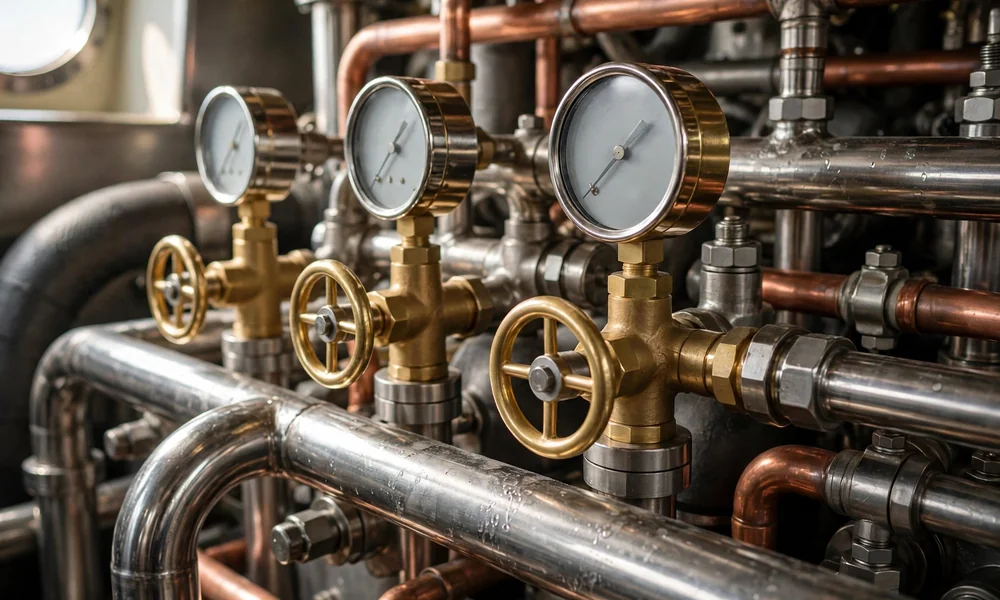
Now comes the part that makes an engine room look like a maze. Pipes run everywhere: seawater for cooling, fresh water for the engines, fuel, lubricating oil, hydraulic fluid, and exhaust gas. The pipes are made of steel, copper-nickel, and stainless steel, chosen for what flows through them, and each one is labelled so that a mechanic can trace it in the dark.
Step 5: Fire, bilge, and safety systems
A room full of fuel, hot engines, and electricity is a fire risk, so the safety systems are built in alongside everything else. The engine room is fitted with smoke and heat detectors, a fixed fire-extinguishing system that floods the room with gas or fine water mist, and fire dampers that slam the ventilation shut if a fire starts. The bilge system is fitted at the same time: pumps, alarms, and pipes that can empty the lowest part of the hull if water gets in. The whole room can be sealed and flooded with extinguishing gas from outside, so that a fire can be fought without anyone having to enter.
Step 6: Testing, trials, and handover
With everything installed, the engines are started for the first time, usually while the yacht is still tied up in the yard. They are run for hours, then days, while engineers watch temperatures, pressures, and vibration readings, and fix the inevitable leaks. Then comes the sea trial: the yacht goes out into open water, the engines are run up to full power, and the yacht is driven hard while the engineers check speed, fuel consumption, noise, and vibration in every cabin. The finish of the rest of the yacht is another craft entirely, and the superyacht interior joinery production guide shows what happens on the decks above.
Superyacht Engine Room Specs
| Specification | Typical range |
|---|---|
| Main engines | 2 marine diesels, often MTU or Caterpillar |
| Power per engine | About 1,500 to 4,000 horsepower |
| Generators | 2 to 3 diesel generators |
| Generator output | About 100 to 400 kW each |
| Fuel capacity | About 50,000 to 200,000 litres |
| Top speed | About 15 to 25 knots |
| Range | About 4,000 to 6,000 nautical miles |
| Engine room crew | 1 to 3 engineers on a large yacht |
What Does a Superyacht Engine Room Cost?
There is no price tag for an engine room on its own, because it is built into the yacht. A 60-metre superyacht is estimated to cost roughly $30 million to $60 million to build, and the propulsion and engineering package, engines, generators, gearboxes, and systems, is estimated to account for a significant share of that, often a fifth or more. A single large marine diesel engine of the kind used in a superyacht is estimated at roughly $200,000 to $400,000. Prices are estimates only and vary widely by size, brand, and specification.
A Rare Fact
The quietest place on a superyacht is not the guest cabin. It is the engine room at rest, and the loudest place is the engine room at full power, where the noise can top 110 decibels, louder than a chainsaw. That is why the engines sit on flexible mounts, why the room is lined with sound insulation, and why the exhausts run through silencers the size of dustbins. Some owners never hear their engines at all: at anchor, the yacht runs silently on its generators, and the main engines may not start for days.
The engine room is the part of a superyacht nobody photographs and everybody depends on. It makes the power, the water, the air, and the motion, and it does it in a steel box below the waterline, in heat and noise, for years at a time. The engine room earns it.