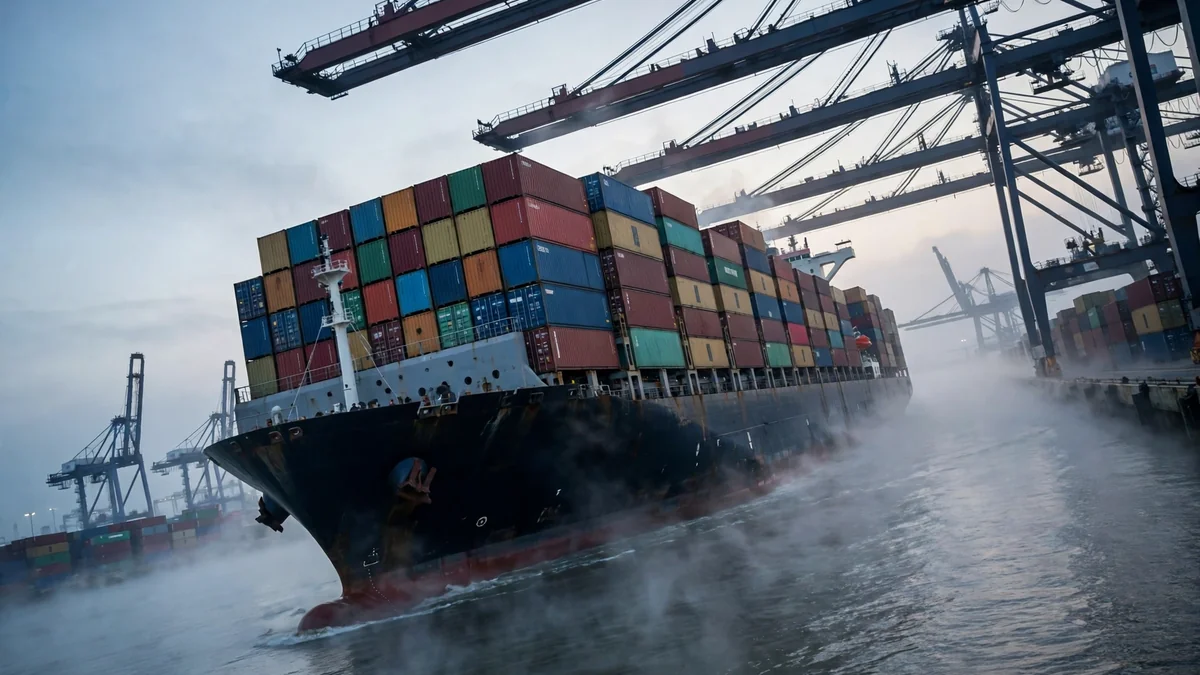
The first time you stand beside a container ship at dawn, the numbers stop being numbers. The quay is still dark, the cranes are black cutouts against a grey sky, and then the ship slides in out of the mist, longer than four football fields laid end to end, its sides stacked ten containers high above the waterline. It feels less like a vessel arriving and more like a small steel town deciding to visit the port for a morning.
That feeling is the point of the spec sheet. A modern luxury container ship is not simply big; it is big in very particular, carefully engineered ways, and every figure on the page exists because a trade-off was made somewhere in a design office. Length buys speed and capacity but limits which ports the ship can enter. Beam buys stability and container rows but decides which canals it can transit. Engine power buys schedule reliability but drinks fuel by the tonne. Read the specifications properly and you are reading the ship’s biography: where it is meant to go, what it is meant to carry, and how much it must earn on every voyage to justify its existence.
This guide walks through the headline figures of a top-tier modern container ship, the kind of vessel that sits at the sharp end of global trade, and explains what each one actually means in practice. There is no jargon for its own sake here. Where a number matters, you will find out why it matters and how it connects to the steel, the engine, and the crew that bring the whole machine to life.
How the numbers are built into the ship
A container ship’s specifications are not chosen in isolation. They are locked in, step by step, as the vessel is designed and built, and each stage of construction fixes a figure that will follow the ship for its entire working life.
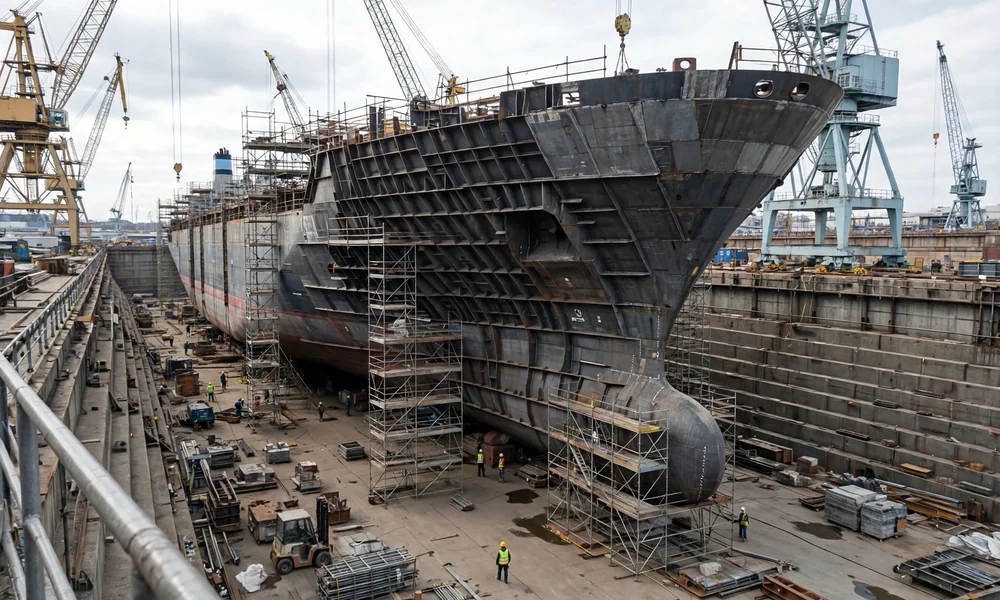
- Steel cutting and block building. Construction starts with flat steel plates cut by computer-guided torches and welded into enormous blocks, each one a room-sized section of hull. Plate thickness follows the structural specification: thicker steel around the engine room and the bow, thinner where weight can be saved. The ship’s length and beam are fixed at this stage, because the blocks are built to exact dimensions and there is no stretching a hull later.
- Engine bed and main engine. While the hull blocks take shape, the main engine is built separately, often in another country, and shipped to the yard as a single colossal unit. The engine bed, a heavily reinforced steel foundation deep in the hull, is machined flat to fractions of a millimetre so the engine sits perfectly true. Its rated power, measured in tens of thousands of kilowatts, decides the ship’s service speed for its whole career.
- Hull assembly in dry dock. The blocks are lifted by giant gantry cranes and welded together in the dry dock, one after another, until the full hull stands complete. Surveyors measure the hull constantly as it grows, because even a small twist now becomes a permanent drag penalty later. The draft marks are painted on the bow and stern at this stage, the numbers that tell every port how deep the ship sits in the water.
- Container cell guides. Below deck, the cargo holds are fitted with vertical steel cell guides, the rails that let containers slide down into exact slots like drawers into a cabinet. The number of guides, their spacing, and the strength of the lashing bridges above deck decide the TEU capacity, the headline figure owners quote first. A ship that carries twenty-four thousand TEU has twenty-four thousand precisely engineered parking spaces.
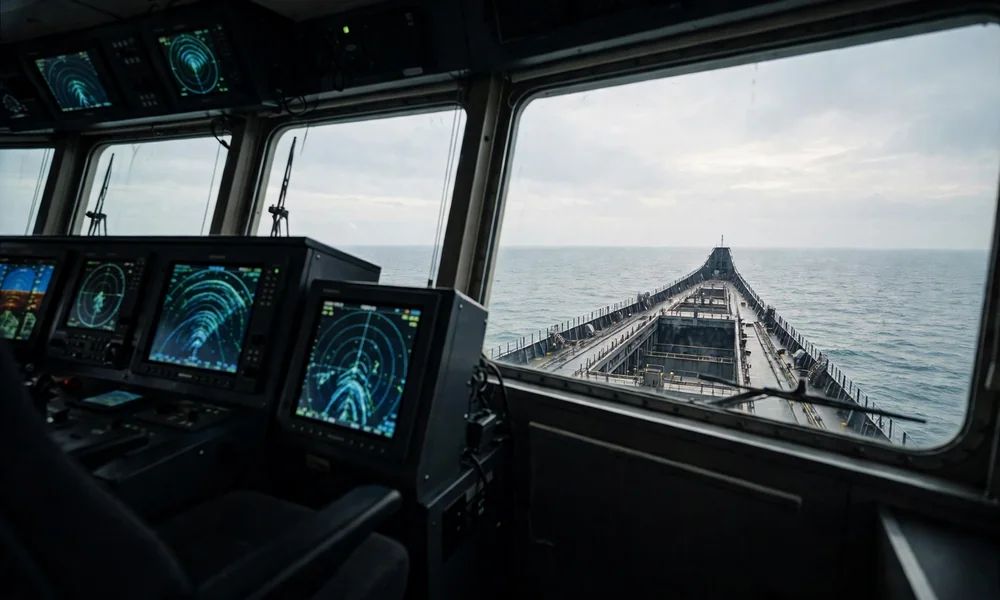
- Bridge and navigation systems. The bridge block, often built as a complete unit and lowered onto the hull by crane, carries the radar, the electronic charts, and the engine controls. Modern bridges are designed around a small crew, so automation handles much of the watchkeeping, and the visibility angles from the conning position are measured and certified before the ship ever sails.
- Sea trials and the load test. Finally the ship goes to sea, empty at first, then loaded, while engineers measure the real speed, fuel consumption, vibration, and turning circle against the contracted figures. If the ship misses its guaranteed speed by even a fraction of a knot, the yard pays a penalty. Only when the measured numbers match the promised ones does the owner sign the delivery papers.
The headline specifications
These are the figures for a representative ultra-large modern container ship, the class of vessel that dominates the busiest trade lanes today.
| Specification | Figure |
|---|---|
| Length overall | About 400 metres |
| Beam (width) | About 61 metres |
| Container capacity | About 24,000 TEU |
| Deadweight tonnage | About 220,000 tonnes |
| Gross tonnage | About 230,000 GT |
| Service speed | About 22 knots |
| Main engine power | About 60,000 kilowatts |
| Maximum draft | About 16.5 metres |
| Fuel consumption at sea | About 250 tonnes per day |
| Crew | About 25 people |
The most surprising figure on that list is usually the last one. A machine four hundred metres long, carrying the contents of a small city, is run by roughly two dozen people. Automation does the heavy lifting: the engine room is unmanned at night, the cargo is tracked by computer, and the bridge team keeps watch over systems that would once have needed a crew of fifty.
What a ship like this costs
A new ultra-large container ship of this class costs an estimated $150 million to $190 million to build, and that figure is an estimate that moves with steel prices, engine availability, and the order book at the big Asian yards. Fuel, crew, insurance, canal fees, and port charges add tens of millions of dollars a year, which is why the specifications matter so much: a ship that burns five percent less fuel earns its premium back many times over across a working life of a quarter century. If you want to see how those numbers become a real vessel, how a luxury container ship is made follows the build from first steel to delivery, and why a luxury container ship is so expensive explains where the money actually goes.
A rare fact worth knowing
Here is a figure that rarely makes it onto the brochure: a single fully loaded ultra-large container ship can carry more cargo, by weight, than the entire annual freight of some small countries’ railways. And the propeller that pushes it all along can weigh more than a hundred tonnes, a single piece of bronze as wide as a three-storey house is tall, cast in one pour and polished by hand until it is smooth enough to spin at over a hundred revolutions a minute.
The spec sheet, read properly, is a kind of travel writing. It tells you where a ship can go, what it can carry, how fast it can get there, and what it costs to keep it moving. The next time you see a container ship on the horizon, remember that behind that simple silhouette sits four hundred metres of deliberate decisions, each one measured, tested, and written down in numbers that have to be right. For a sense of how those same engineering choices look on a smaller, harder-working vessel, the luxury tugboat specs explained shows what happens when the same ideas are squeezed into a hull a tenth of the size.