The broker spread the spec sheet across the table in the marina office, and it looked less like a brochure than a census. Length overall, beam, draught, gross tonnage, range, cruising speed, maximum speed, fuel capacity, fresh water capacity, guest cabins, crew cabins, generator output and a dozen more numbers, each one printed with the confidence of a fact and none of them explaining what a week aboard would actually feel like.
The buyer stared at the tonnage figure, which was the biggest number on the page, and asked the obvious question: did a bigger number mean a bigger yacht? The broker smiled, because that is the question every first-time buyer asks, and the answer is the reason the spec sheet needs translating.
This guide explains what each superyacht specification really measures, number by number, in plain English.

How to Read a Luxury Superyacht Spec Sheet
Length overall: the headline number
Length overall is the distance from the tip of the bow to the very end of the stern, including the swim platform, and it is the number everyone quotes first. A superyacht starts at about 24 metres, a large one runs 50 to 80 metres, and the giants stretch past 100 metres. Length decides where the yacht can berth, because many marinas charge by the metre and some cannot take anything over 60 metres at all, and it also decides the cost of almost everything else, from painting the hull to replacing the anchor chain.
Gross tonnage: the size that counts
Gross tonnage is not a weight at all, but a measure of enclosed volume, and it is the most honest size number on the spec sheet. One gross ton equals 100 cubic feet of enclosed space, so a 500-ton yacht encloses about 50,000 cubic feet of cabins, saloons, engine rooms and crew quarters. Two yachts of the same length can differ by hundreds of tons if one has an extra deck or a wider beam, and the tonnage figure decides the regulations the yacht must follow, the number of crew it needs and the size of its engines.
Beam and draught: width and depth
Beam is the widest point of the hull, usually about 8 to 14 metres on a large superyacht, and it is the number that decides how roomy the saloon and cabins feel. A wider beam means a bigger main saloon, a full-beam master cabin and more space for a beach club at the stern, but it also means higher marina fees and a yacht that cannot squeeze into narrow berths. Draught is how deep the hull sits below the waterline, usually about 2.5 to 4.5 metres, and it decides which anchorages and shallow bays the yacht can enter. The two numbers pull in opposite directions, and every yacht is a compromise between them.
Speed and range: cruising versus maximum
The spec sheet usually quotes two speeds: a cruising speed of about 12 to 16 knots and a maximum speed of about 17 to 22 knots. The cruising speed is the honest number, the speed the yacht can hold all day without burning fuel at a ruinous rate, while the maximum is a sprint figure that few owners ever use for long. Range is the distance the yacht can travel at cruising speed before refuelling, typically about 4,000 to 6,000 nautical miles, which is enough to cross an ocean with fuel to spare. Range matters far more than top speed, because a yacht that can cross the Atlantic without stopping is more useful than one that can briefly do 22 knots and then needs a fuel dock.
Power and generators: the floating hotel
A superyacht is a floating hotel, and its electrical load is the load of a small building. The main engines usually produce about 2,000 to 5,000 horsepower each, and there are usually two of them, driving the propellers through gearboxes. Separate from the engines, the generators produce the electricity for air conditioning, lighting, galley equipment, stabilisers and the water makers, and their combined output is often 200 to 500 kilowatts, which is roughly what a small village uses. As our guide to how a luxury superyacht works explains, the generators run almost constantly while guests are aboard, and the spec sheet’s kilowatt figure is really a measure of how much comfort the yacht can deliver at once.
Guests, crew and water: the human numbers
The guest number is usually 10 to 12, set by international rules that become much stricter above 12 passengers, and the cabins are arranged so that every guest sleeps in comfort rather than squeezed in. The crew number is usually 10 to 20, and the ratio is the real luxury: one crew member per guest, or better, means service that never keeps you waiting. Fresh water capacity is about 20,000 to 50,000 litres, and the water makers can produce several thousand litres a day from seawater, which means long showers and a full swimming pool are possible far from any shore. The way the yacht is put together, with its cabins, tanks and machinery fitted into the hull, decides whether those numbers work in practice, as our guide to how a luxury superyacht is made shows.
Luxury Superyacht Specs
| Specification | Typical range |
|---|---|
| Length overall | About 24 to over 100 metres |
| Gross tonnage | About 100 to 3,000 gross tons |
| Beam | About 6 to 14 metres |
| Draught | About 2.5 to 4.5 metres |
| Cruising speed | About 12 to 16 knots |
| Maximum speed | About 17 to 22 knots |
| Range | About 4,000 to 6,000 nautical miles |
| Main engines | Two engines, about 2,000 to 5,000 horsepower each |
| Generator output | About 200 to 500 kilowatts combined |
| Fuel capacity | About 20,000 to 150,000 litres |
| Fresh water capacity | About 20,000 to 50,000 litres |
| Guests and crew | About 10 to 12 guests, 10 to 20 crew |

What Does a Luxury Superyacht Cost?
A luxury superyacht typically costs an estimated 20 million to 100 million dollars to buy, with the largest custom yachts passing an estimated 300 million dollars. The annual running cost is the number that surprises new owners most: an estimated 10 percent of the purchase price every year, covering crew wages, fuel, insurance, berthing and maintenance. A 50-metre yacht therefore costs an estimated 3 million to 5 million dollars a year simply to own and operate. The engine room is where much of that running cost is decided, and our guide to the superyacht engine room specs explains the machinery behind the numbers.
A Rare Fact
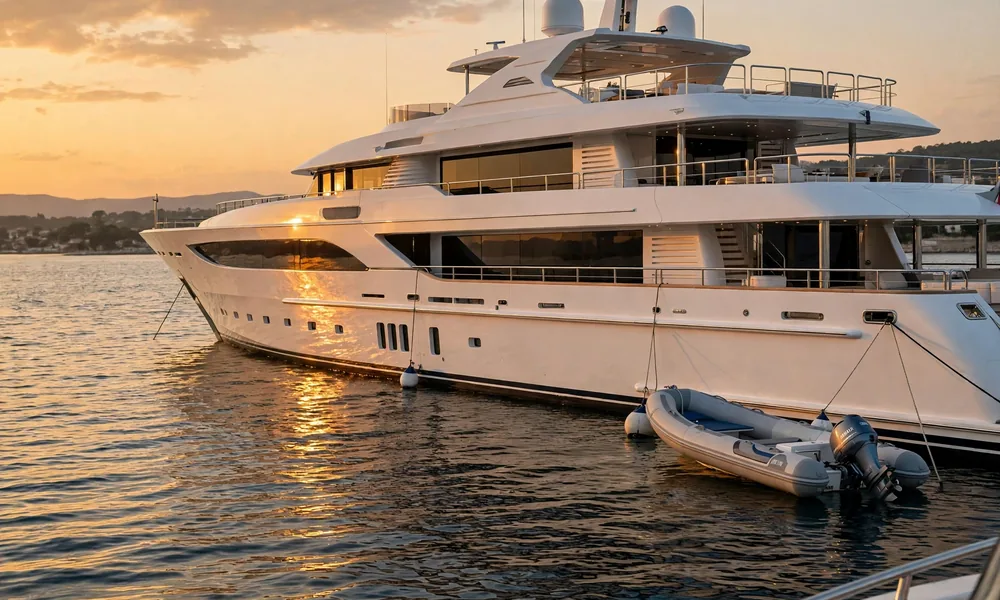
Gross tonnage is measured by a surveyor who walks through the yacht with a tape measure and a set of rules that date back to the age of sail, and some spaces count while others do not. An open deck with no roof does not count toward tonnage, which is why so many superyachts have enormous open aft decks and beach clubs that feel vast but add nothing to the official figure. Naval architects quietly design around the measurement rules, shaping roof lines and open spaces so the yacht feels far bigger than its tonnage suggests, and the spec sheet never mentions the trick.


