Below the marble floors and the sunlit decks, past the galley and the crew cabins, there is a room that no guest ever sees and that the whole yacht depends on. It is hot, loud, and full of machinery that never stops. This is the engine room, and on a superyacht it is less a room than a small power station, a workshop and a control centre squeezed into the lowest deck of the hull.
A superyacht engine room has to do three jobs at once. It has to move a vessel that can weigh thousands of tonnes through the water at 20 knots or more. It has to generate enough electricity to run air conditioning, lighting, galley equipment and stabilisers for dozens of people. And it has to do all of this, day and night, for weeks at a time, in a space that is smaller than a family living room, while the guests above hear nothing at all.
The specification sheet is where that impossible brief becomes numbers: engine power, generator output, fuel capacity, cooling, ventilation and noise. Read it properly and you can tell whether a yacht is a genuine ocean-going vessel or a floating hotel that is afraid of the open sea.
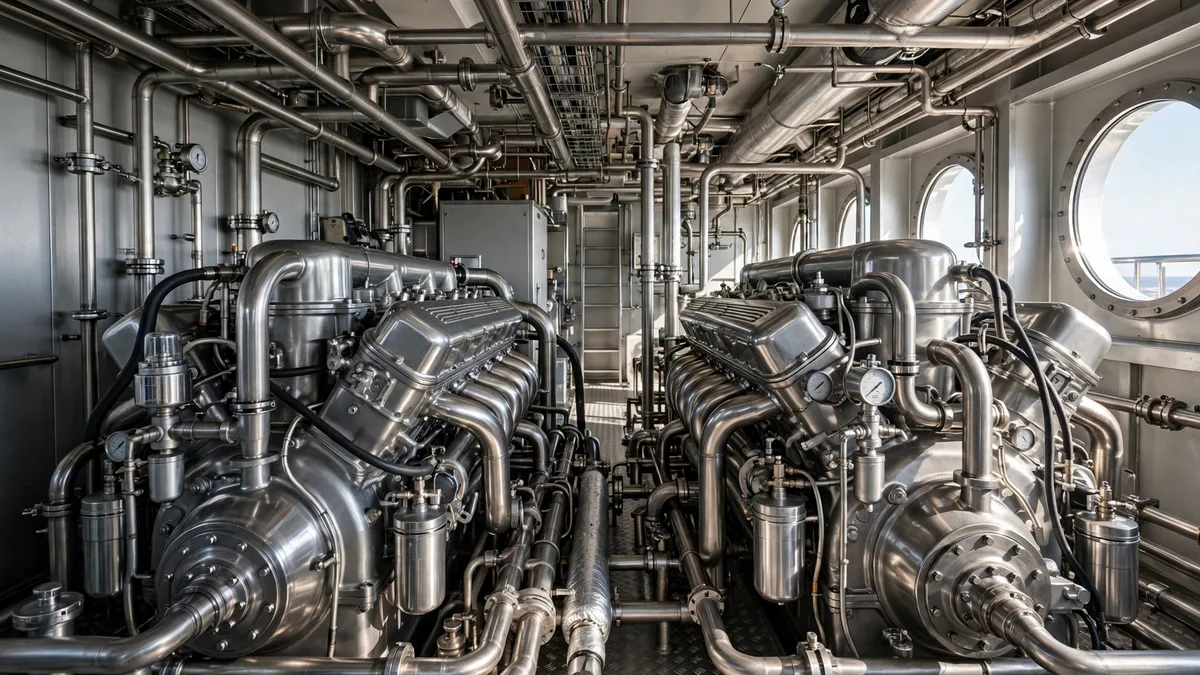
Main Engines: Power to Move Thousands of Tonnes
The main engines are the heart of the engine room, and on a modern superyacht they are almost always diesel. A yacht of 50 to 60 metres typically uses two engines, each producing between 2,000 and 3,000 horsepower, for a total of 4,000 to 6,000 horsepower. Larger yachts of 80 metres or more can use engines of 4,000 horsepower each, or more, with total power exceeding 10,000 horsepower.
Generators: The Power Station Below Deck
While the main engines move the yacht, the generators power everything else. A superyacht typically carries two or three generators, each producing 100 to 300 kilowatts of electricity, for a total of 300 to 900 kilowatts. That is enough to power a small village, and it has to be, because a superyacht at anchor with all its systems running can consume as much electricity as a street of houses.
The generators are separate from the main engines, and they run even when the yacht is not moving, which is why the engine room never truly sleeps.
Fuel, Range and the Tanks Below
Fuel capacity is the number that decides how far a superyacht can go. A 50-metre yacht typically carries 50,000 to 100,000 litres of diesel, which gives it a range of 4,000 to 5,000 nautical miles at cruising speed. Larger yachts carry 200,000 litres or more, and can cross an ocean without refuelling.
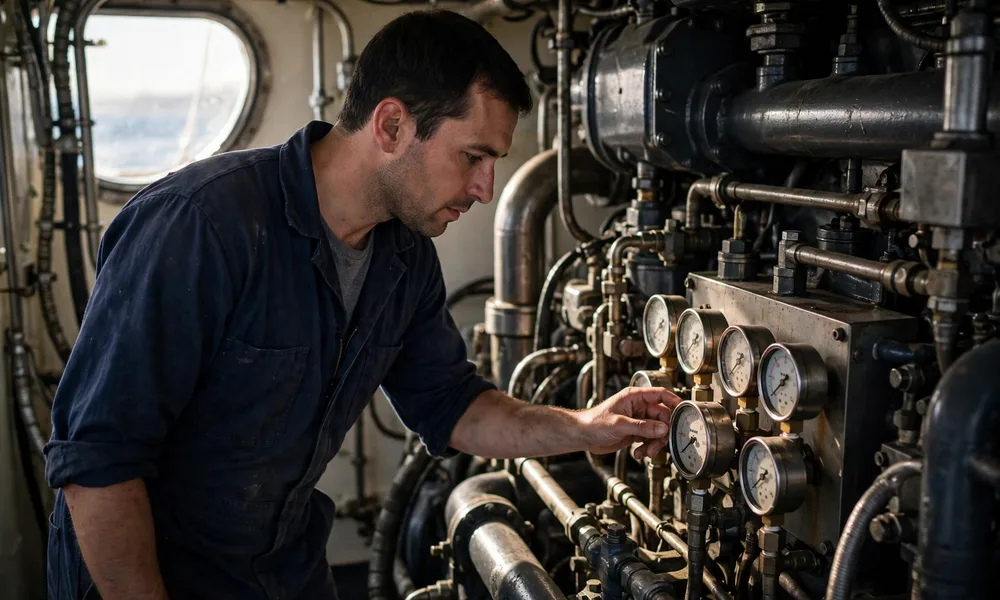
Cooling, Ventilation and Fire Safety
An engine room generates an enormous amount of heat, and removing it is one of the hardest engineering problems on a yacht. The main engines are cooled by seawater, pumped in through sea chests in the hull, circulated through heat exchangers, and pumped back out. The ventilation system has to supply enough fresh air for the engines to breathe and for the crew to work, while also removing the heat, which means large fans and ducting that take up precious space.
Fire safety is the other half of the equation. An engine room is full of fuel, oil and hot surfaces, and a fire at sea is the most dangerous thing that can happen on a yacht. The engine room is fitted with a fixed fire suppression system, typically using a gas that removes oxygen, and the whole space is built as a fireproof box, with steel bulkheads and fire-rated doors. The crew train for engine room fires more than any other emergency, because it is the one they are most likely to face.
Noise, Vibration and the Guest Experience
The engine room is designed so that the guests never know it exists. The specification for noise in the guest cabins is typically below 45 decibels, which is quieter than a normal conversation, and the vibration is kept to a minimum by mounting the engines on flexible mounts and by using a floating floor in the engine room. The exhaust is routed up through the funnel, with silencers that reduce the noise to a low hum.
This is one of the most expensive parts of the yacht to build, because it requires careful engineering and high-quality materials. The insulation alone can cost hundreds of thousands of dollars, and it has to be maintained, because a single failed mount or a cracked exhaust can turn a silent yacht into a noisy one overnight.
What It Costs
A superyacht engine room is not a separate purchase, but the machinery inside it accounts for a large share of the yacht’s price. A 50-metre superyacht costs an estimated 30 to 50 million dollars, and the engines, generators and associated systems can account for 10 to 15 percent of that figure. The annual running cost is also dominated by the engine room: fuel, maintenance and crew for the engineering department can cost several million dollars a year.
The honest way to read the cost is as the price of independence. A yacht that can cross an ocean, generate its own power and maintain itself at sea is a self-contained world, and the engine room is what makes that possible. A cheaper yacht with a smaller engine room is not a bargain; it is a vessel that cannot go as far, stay out as long, or look after its guests as well.
A Rare Fact
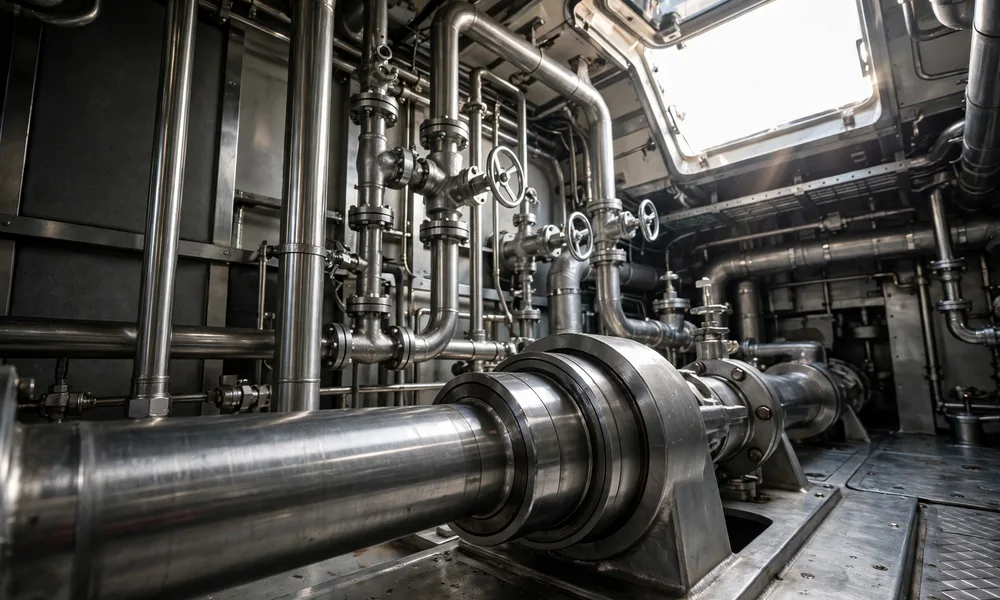
The largest superyacht engine rooms are bigger than the first engine rooms ever built for ships. The engine room of the SS Great Eastern, the largest ship of the 1850s, was a marvel of its time, with a steam engine that produced 8,000 horsepower. A modern 100-metre superyacht can produce more power than that, in an engine room that is smaller and quieter, with engines that run for weeks without stopping. The Great Eastern’s engineers would have recognised the layout: engines in the centre, boilers and generators around them, and a crew who live by the gauges. The technology has changed beyond recognition, but the job has not: keep the ship moving, keep the lights on, and keep the sea outside.
Read the engine room specification before you judge a yacht. The main engine power tells you how fast it can go, the generator output tells you how comfortably it can live at anchor, the fuel capacity tells you how far it can travel, and the noise figure tells you whether the guests will ever know the machinery exists. Everything above deck is about luxury. Everything below deck is about engineering, and the engine room is where the two meet.
For the steel hull that contains the engine room, read how a superyacht steel hull is made. For the mast above it, see superyacht mast specs explained, and for the propeller the engines drive, read yacht propeller specs explained.