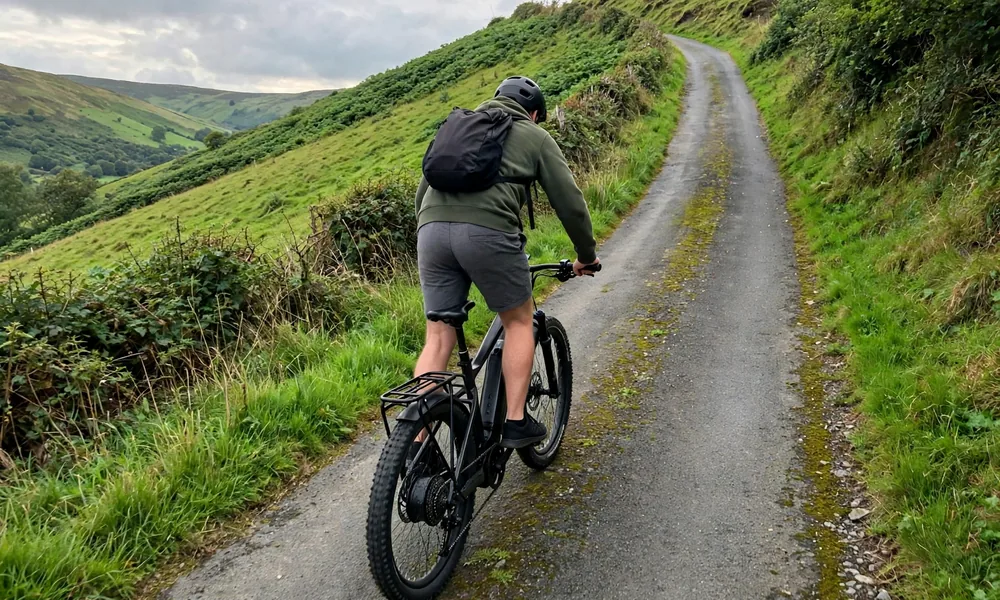
The modern e-bike is quietly taking the rider out of riding. Automatic shifting, torque sensors and software that decides which gear you should be in: the pitch is that you never have to think about gears again. It sounds convenient, and for some riders it is. But the case for manual gears on e-bikes is that thinking about gears is not a chore to be removed. It is part of riding, and removing it makes the bike worse in ways that matter: less control, less range, and a duller ride.
Start with control, because that is what a rider feels first. A manual gear lets you choose exactly how hard you are pedalling at any moment. Approaching a steep hill, you drop down early and keep your cadence smooth. Rolling onto a flat stretch, you shift up and let the motor work with you rather than for you. An automatic system can only react. It senses the load rising and then shifts, usually a beat late, often with a clunk as it changes under power. On a climb that late shift is the difference between flowing up the hill and grinding to a near-stop while the bike decides what to do. The rider who shifts for themselves never waits for permission.
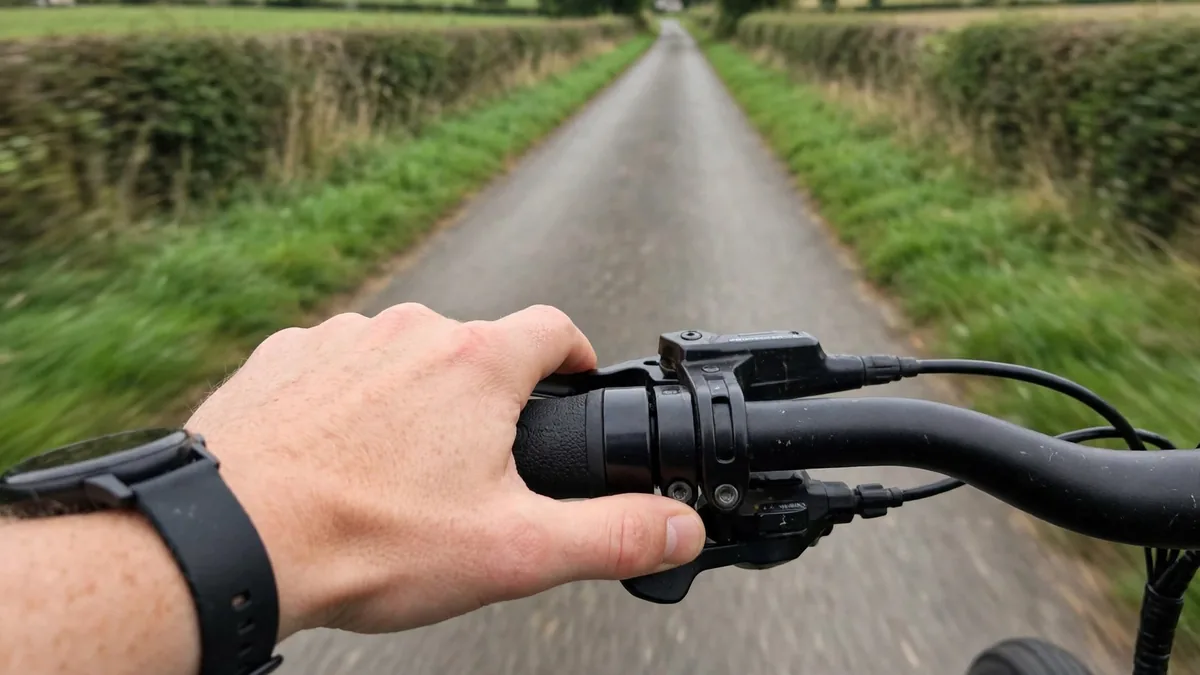
The rider knows the road better than the sensor
No sensor can see what is coming. You can. You see the hill before you reach it, the headwind before it hits you, the junction where you will need to accelerate, the loose gravel where a sudden surge of power would spin the wheel. A manual gear lets you prepare for all of that. You shift before the hill, not during it. You hold a low gear through the gravel so the motor delivers its power gently. You spin up early before a traffic light changes so you are already moving when the gap opens. Automatic shifting, however clever, is always looking backwards at what just happened. The rider is looking forwards, and that is an advantage no algorithm can close.
This matters most where e-bikes are actually used: in traffic, on hills, and on mixed surfaces. City riding is a series of small decisions, and a bike that makes them for you makes them slightly wrong, slightly late, over and over again. The result is not dramatic failure. It is a ride that feels vague and disconnected, where the bike surges when you wanted it to hold back and hesitates when you wanted it to go. A manual drivetrain is honest. It does what you ask, when you ask it, and the connection between your legs, the motor and the road stays intact.
Manual gears save battery
Range is the second argument, and it is the one that should convince even riders who do not care about feel. An electric motor is most efficient in a fairly narrow band of speeds, and gears are what keep it there. A rider with manual gears can hold the motor in its efficient zone by shifting as the road changes, keeping cadence steady and letting the motor spin where it works best. An automatic system can do this too, in theory, but in practice it shifts less often, more conservatively, and with a bias towards smoothness over efficiency. The difference is not huge on any single ride, but over a week of commuting it adds up to real kilometres.
There is a simpler version of the same point. Manual gears let you do more of the work yourself when you want to. On a flat stretch with a tailwind, you can shift up, ease off the assistance, and pedal under your own power. On a gentle downhill, you can coast in a high gear and save the battery entirely. Automatic systems tend to keep the motor engaged and the assistance high, because they are tuned to feel effortless rather than efficient. Effortless is pleasant. It is also wasteful, and on an e-bike with a small battery, waste is range you do not get back. The way electric bike gear systems work is straightforward, but the efficiency only shows up when the rider is allowed to use them properly.
Simplicity is a feature, not a flaw
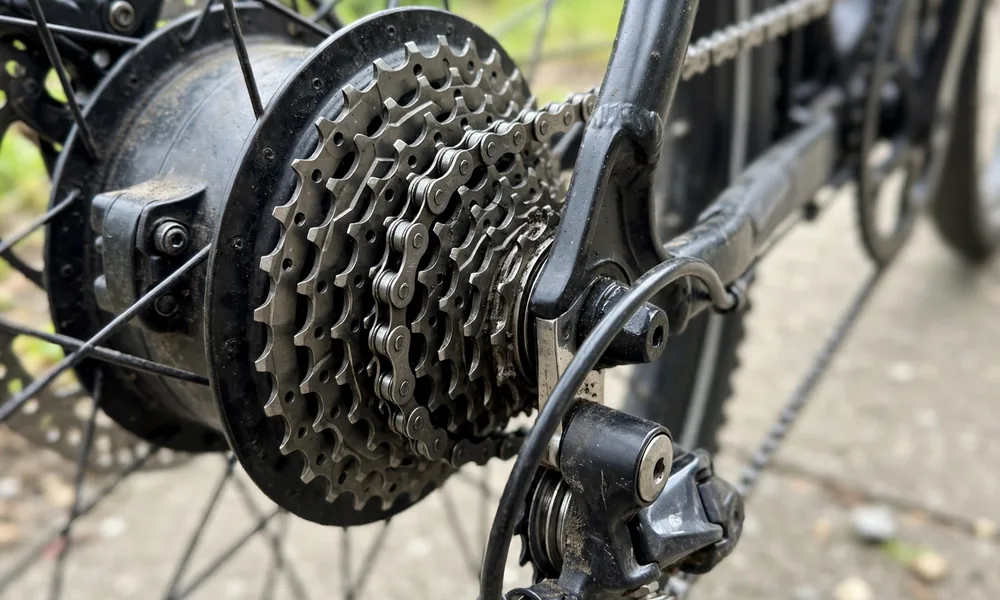
Then there is the question of what breaks. A manual drivetrain is a chain, a cassette, a derailleur and a shifter: parts any bike shop in the world can fix, usually in minutes, with spares that cost little. An automatic shifting system adds sensors, a motor in the derailleur, a battery, firmware, and a wireless link, each of which can fail, each of which needs a specialist to diagnose. When it fails, the bike often fails with it, stuck in one gear or shifting at random, and the repair bill is a multiple of a manual fix. For a bike that is meant to be daily transport, that fragility is a serious flaw.
The same logic applies to the car world, where the argument for manual gearboxes in electric cars is about keeping the driver involved rather than letting software do everything. On an e-bike the case is even stronger, because the rider is the engine as well as the driver. Taking away the gears does not just remove a control. It removes the rider’s main way of managing their own effort, and with it much of what makes cycling satisfying. A bike that does everything for you is a moped with extra steps.
Engagement is the point of a bike
It is easy to forget, in the rush to automate everything, why people ride bikes at all. They ride for the feeling of it: the rhythm of pedalling, the small decisions, the sense of working with a machine rather than being carried by one. Manual gears are part of that rhythm. Learning when to shift, getting it right on a climb, finding the gear where everything clicks into place: these are small pleasures, but they are the pleasures that make someone choose the bike over the car or the bus. Automate them away and the bike becomes just another appliance, and appliances are not something people love.
This is not nostalgia. Nobody is arguing for friction shifters or against electric assistance itself. The motor is a genuine improvement, and it is what makes e-bikes useful for hills, for longer commutes, for riders who could not manage a conventional bike. The argument is only that the motor should assist the rider, not replace them. A good e-bike is a partnership between legs and motor, and manual gears are how the rider holds up their end of it. The e-bike gearbox is at its best when it is a tool the rider uses, not a black box that uses the rider.
The verdict
Automatic shifting will keep improving, and for some riders — those with limited hand strength, or those who genuinely want a bike that asks nothing of them — it is a welcome option. But it should be an option, not the default, and certainly not the future that manual gears are supposed to give way to. The default e-bike should have a shifter on the handlebar and a rider who knows how to use it.
Manual gears give the rider control over the road ahead, better range from the same battery, a drivetrain any shop can fix, and a ride that actually feels like riding. That is a lot to give up for the sake of never touching a shifter. Keep the motor, keep the assistance, and keep the gears in the rider’s hands. The e-bike is better that way, and so is the ride.