Put your hands on the steering wheel of a modern car and turn it at parking speed. Then do the same at motorway speed. In both cases the wheel feels almost the same: light, smooth, and oddly silent about what the tyres are doing. That is not an accident. It is the result of decades of engineering aimed at removing effort from steering, and somewhere along the way the engineering also removed information. The case for manual steering in cars is simple: a steering system that talks back to the driver is not a hardship to be engineered away. It is a safety device, and it is one that no screen or sensor has yet replaced.
Manual steering, in the sense used here, means a direct mechanical connection between the wheel in the driver’s hands and the road wheels — a rack and pinion, or an older recirculating-ball box, with little or no power assistance filtering what comes back through the column. It does not mean wrestling with a wheel at every junction. It means that when the front tyres lose grip, load up in a corner, or hit a patch of standing water, the driver feels it in their hands before they see it anywhere else. That early warning is the whole argument, and it is worth defending.
Feel is information, not nostalgia
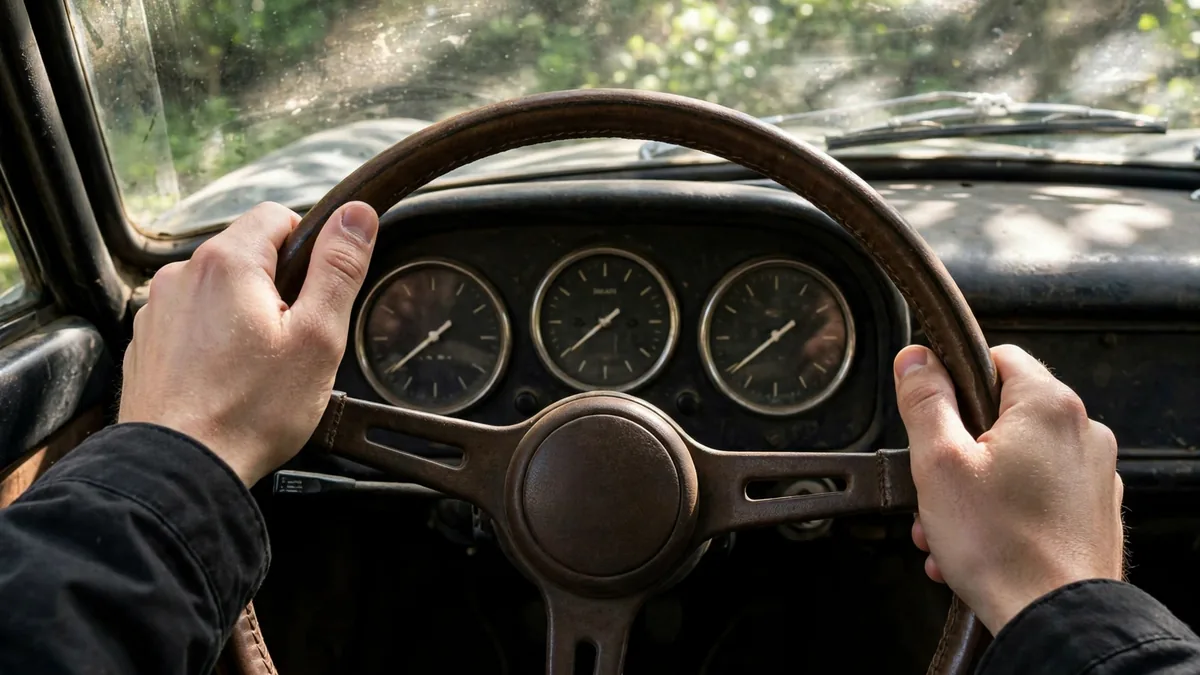
The first argument is feel, and it is a practical one rather than a sentimental one. A front tyre approaching its limit of grip does not fail silently. It loads up, it starts to slip, and the steering goes light in a particular way that an experienced driver recognises at once. On a wet roundabout, that lightness arrives a fraction of a second before the car starts to push wide, which is exactly when the driver needs to ease off. A heavily assisted system filters that signal out. The wheel turns with the same weight whether the tyres are gripping or sliding, and the driver learns about the loss of grip when the car itself starts to move — later, and with less time to correct.
Heavy steering makes better drivers
The second argument is about the driver rather than the car. Steering that demands some effort changes how people drive. A heavy wheel discourages the small, constant corrections that make a car wander in its lane, and it rewards smooth, deliberate inputs. Drivers learn to read the road ahead because the wheel punishes inattention: drift towards a rut and the wheel tugs, take a corner too fast and the weight builds until it is impossible to ignore. The car is, in effect, teaching its driver.
Light steering does the opposite. When turning the wheel costs nothing, drivers turn it casually, often too much and too late. The car forgives the input, the electronics tidy up the result, and the driver never learns where the limit was. That is fine until the day the electronics reach their own limit, or a sensor fails, and the driver is suddenly asked to catch a sliding car with hands that have never felt one slide. Manual steering keeps the driver’s skill honest. It is a training aid that never switches off, and it costs nothing to run.
Simplicity is reliability
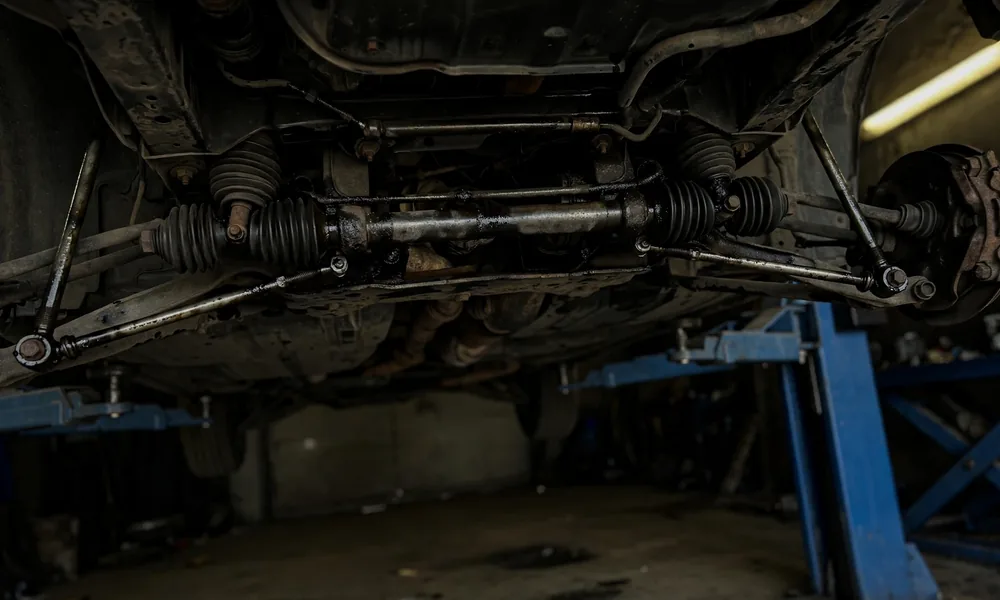
The third argument is mechanical. A manual steering system is a small number of strong parts: a column, a rack, two tie rods, and the joints between them. There is no pump to leak, no electric motor to burn out, no software to update, and no sensor to misread a signal. When it wears, it wears gradually and obviously — a little play in the wheel, a clunk over bumps — and a competent mechanic can diagnose it by hand in minutes. The best hypercar steering systems are marvels of engineering, but their complexity is a cost, not a free gift, and it is a cost paid in maintenance bills and in failure modes that a simple rack does not have.
The weight saving is real
The fourth argument is weight, and it is one that performance-minded drivers understand immediately. A power-steering pump, its fluid, its hoses and its brackets, or an electric motor and its control unit, all add mass to the front of the car — exactly where a car least wants it. Removing them lightens the nose, sharpens the turn-in, and improves the weight distribution. The effect is small in absolute terms, a handful of kilograms, but it is mass removed from the worst possible place, and in a light car it is noticeable.
Weight saving also compounds. A lighter front end needs less structure to support it, smaller brakes to stop it, and less fuel to move it. None of these savings is dramatic on its own, but together they are the difference between a car that feels alert and one that feels padded. The case for a manual gearbox in a hypercar rests on the same logic — that removing a layer of assistance can make the machine better, not worse — and the case for manual gearboxes in hypercars shows how often drivers prefer the direct connection once they have tried it. Steering is no different.
It keeps the driver in the loop
The fifth argument is about attention. Modern cars are full of systems that steer, brake and accelerate on the driver’s behalf, and each one asks the driver to do a little less. That is comfortable, and comfort is seductive, but a driver who does nothing for long stretches stops paying attention, and a driver who has stopped paying attention is slow to react when the car hands control back. Manual steering is a small, constant demand on the driver — a reminder, through the hands, that driving is still happening.
This is not an argument against assistance in general. Power steering has a genuine place in heavy cars, in cars driven by people with limited strength, and in city cars that spend their lives parking. But the default has flipped: assistance is now assumed, and the direct connection is treated as a defect. The healthier default would be the other way around — a direct connection unless the car genuinely needs help, with the assistance tuned to preserve as much feel as possible. A look inside how a hypercar steering system works shows how much effort engineers spend trying to put feel back into systems that removed it. It would be simpler not to remove it in the first place.
The counter-case
The counter-case is honest and strong. Manual steering is heavy at parking speed, and in a heavy car with wide tyres it can be genuinely hard work. For many drivers, especially older drivers or those with limited upper-body strength, power assistance is not a luxury but the difference between driving and not driving.
Verdict
Manual steering should not return to every car, and it will not. But it should survive — and be chosen deliberately — in the cars where driving still matters: light sports cars, drivers’ cars, and any car whose buyer values connection over comfort. In those cars, the direct link between hand and road is not a throwback. It is the cheapest, most reliable driver-assistance system ever fitted to a car, and it is one that no amount of software has managed to imitate. Keep the assistance where it is needed. Keep the feel where it counts.