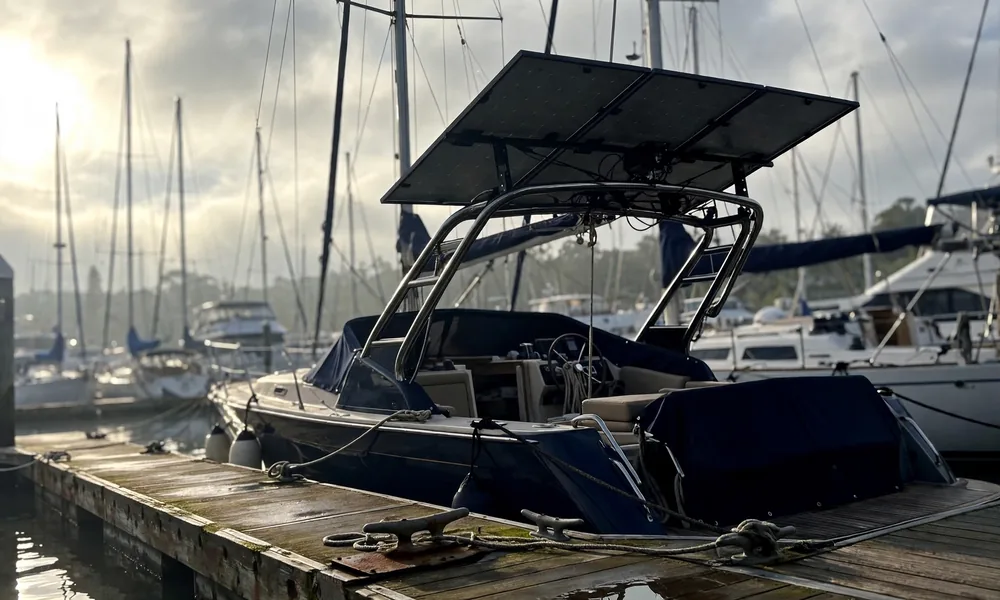
A yacht at anchor should be the quietest place on earth. The engine is off, the wind is light, and the water is barely moving. Yet on most modern yachts the silence is broken every few hours by the same sound: a generator coughing into life, burning diesel to keep the fridge cold, the lights on and the batteries charged. It is a strange arrangement. The boat is sitting under a free and endless supply of energy, the sun, while it burns fuel to do the job the sun could do. The case for solar yachts is simple: the sun should be doing that work.
This is not a claim that solar power can replace a yacht’s engines. It cannot, not yet, and anyone who says otherwise is selling panels. It is a claim that solar should be the default source of a yacht’s hotel power — the electricity that runs everything except propulsion — and that a yacht designed around the sun from the start is a better boat than one with panels bolted on as an afterthought. The technology is ready. The economics have already tipped. What is missing is the will to design for it.

Silence is the point of being at sea
People do not go to sea to listen to a diesel engine. They go for the quiet, the open horizon, the feeling of being a long way from everything that hums and rattles on land. A generator destroys that feeling in a way that is hard to overstate. It vibrates through the hull, it smells of exhaust, and it runs at the worst possible times — through the night while the crew sleeps, or in the middle of a still anchorage where every other boat can hear it too.
Solar power is silent by nature. There are no moving parts, no exhaust and no vibration. A yacht that can run its fridge, its lights, its navigation instruments and its water pump from the sun can sit at anchor for days without ever starting an engine. The quiet is the product, and solar is the only power source that delivers it.
The fuel is free and it follows the boat
Every other source of power on a yacht has to be carried, bought or waited for. Diesel has to be loaded in port and paid for by the litre. Shore power is only available in a marina, and marinas are where the bills live. A yacht’s own engine can charge the batteries, but only by burning fuel at low load, which is the least efficient way to run a diesel.
Sunlight is the only fuel that arrives on its own. How a yacht solar panel works shows why the panels themselves are so suited to the job — no moving parts, sealed against salt spray, quietly converting light into charge hour after hour.
Solar changes how a yacht is used
Cheap, silent electricity changes behaviour. When power is scarce, a crew rations it: the fridge is turned down, the lights are kept off, the instruments are switched off at anchor, and the watermaker — the machine that turns seawater into drinking water — is used as little as possible. The boat is managed like a campsite, and every decision is about what can be switched off.
When power is plentiful and free, the rationing stops. The fridge stays cold, the freezer works, the watermaker runs in the middle of the day when the sun is strongest, and the crew can stay at anchor for a week instead of two days. The yacht becomes self-sufficient rather than dependent on the next port. How solar power works on a sailing yacht explains how the panels, batteries and charge controllers fit together to make that independence possible.
The panels have earned their place on deck
There was a time when the case against solar was a practical one. Early marine panels were fragile, inefficient and ugly, and they took up deck space that a sailing yacht could not spare. That time has passed. Modern marine panels are built to survive salt spray, flexing decks and the occasional wave over the bow, and their output has risen steadily while their size and weight have fallen.
Just as importantly, yacht designers have learned where to put them. Panels now sit on cabin roofs, across biminis, on arch structures over the stern and even integrated into hardtop roofs, in places that were previously dead space. On the best new yachts they are part of the design from the first drawing, and the boat is better for it.
Solar makes the rest of the boat better
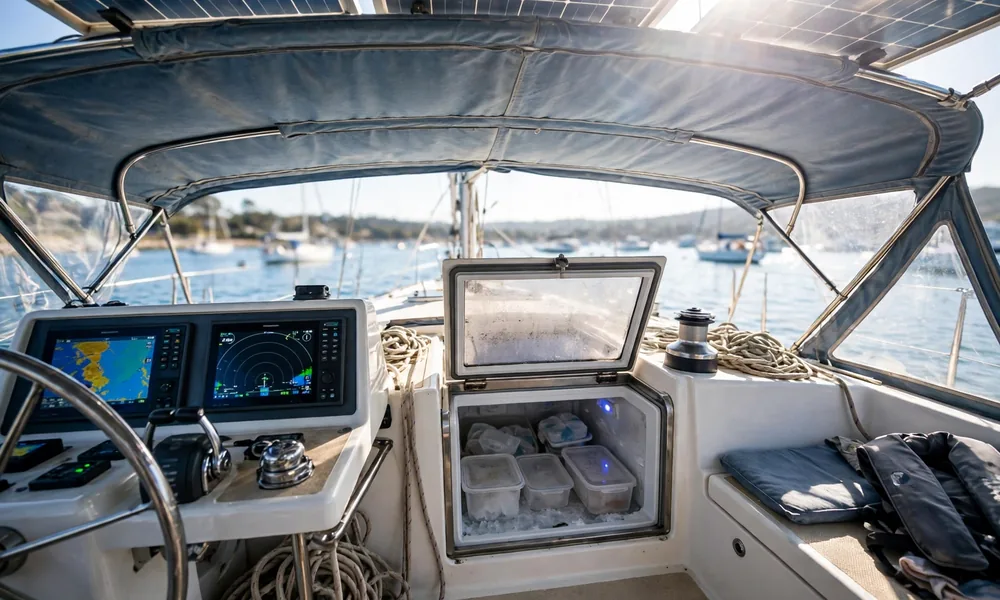
A yacht that is designed around solar ends up better in ways that have nothing to do with electricity. To make the most of free power, designers fit efficient LED lighting, well-insulated fridges and low-draw instruments, and each of those improvements pays off whether the sun is shining or not. The batteries get bigger and better, which means the boat can go longer between charges in any conditions.
There is also a quieter benefit. A yacht that rarely runs its generator rarely needs its generator serviced, and its main engines run fewer hours at low load, which is where most engine wear happens. That simplicity is part of why hybrid superyachts pair electric systems with conventional engines — the electric side does the quiet work, and the whole vessel becomes calmer to live with.
The honest counter-case
The case against solar yachts is real, and it deserves a fair hearing. Solar cannot drive a yacht. Propulsion needs far more power than any practical area of panels can deliver, and on a cloudy week in high latitudes the panels may barely cover the fridge.
There are practical limits too. Panels need clean, unshaded space, and on a monohull that space is limited. A boom swinging over the cabin roof can shade half an array at the worst moment, and a single shaded cell can drag down the output of a whole panel. The batteries that store the sun’s power are heavy, expensive and need replacing, and in winter the days are short just when the heating is needed most.
All of that is true, and none of it defeats the argument. The claim is not that solar replaces engines. It is that solar should carry the hotel load, the everyday electricity that currently forces generators to run for hours a day. For that job, the sun is more than enough on most cruising grounds, most of the year. The counter-case limits solar. It does not eliminate it.
The verdict
A yacht is a machine for being somewhere beautiful, quietly. A generator is the one piece of equipment on board that works directly against that purpose, and it runs only because the boat has no better way to make electricity at anchor. Now it does. Solar panels are proven, affordable and silent, and they turn the sun that a yacht already sails under into the power that runs the boat.
The industry should stop treating solar as an optional extra for the eco-conscious and start treating it as standard equipment, designed in from the beginning. The sun is already there. It is time the yacht used it.