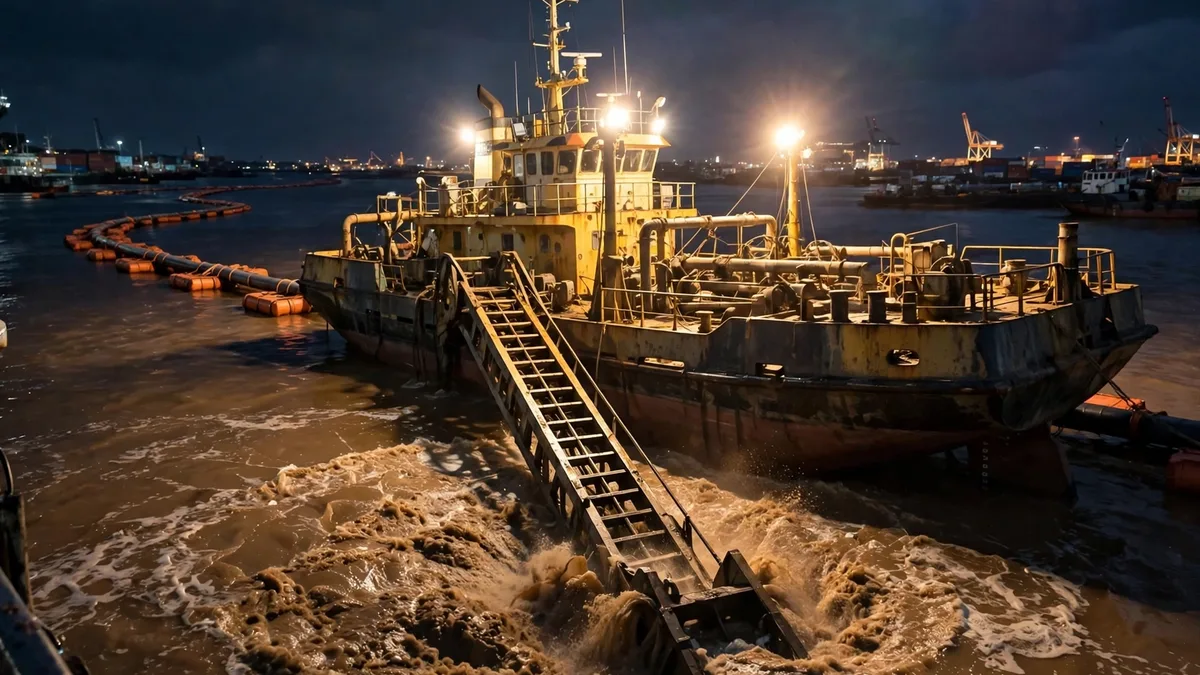
At two in the morning, the harbour was lit like a construction site that had drifted out to sea. A vessel the length of a football pitch sat mid-channel, held by steel legs driven into the seabed, while a ladder the size of a bridge lowered a spinning cutter into the mud. The water boiled brown. Every few minutes a slurry of sand and rock surged up a pipe as wide as a car and out through a floating pipeline to a beach half a mile away. Nobody watched except the crew — and the crew watched instruments, not the water.
That vessel was a dredger, and the newest cost more than a fleet of superyachts. A luxury dredger is no pleasure craft; it is a floating factory that digs harbours, builds islands and keeps shipping lanes open, fitted with the best equipment money can buy and accommodation unthinkable a generation ago. The price is in the digging gear, the pumps and the power — and in a machine that works, day and night, where nothing else can.
What a dredger actually does
A dredger removes material from the seabed or a riverbed: sand, clay, gravel and rock. Ports hire them to deepen channels, reclaim land from the sea, build breakwaters, and lay foundations for bridges and wind farms. The work is measured in cubic metres, and a large dredger can move tens of thousands in a day — a small hill, dug and carried away before breakfast.
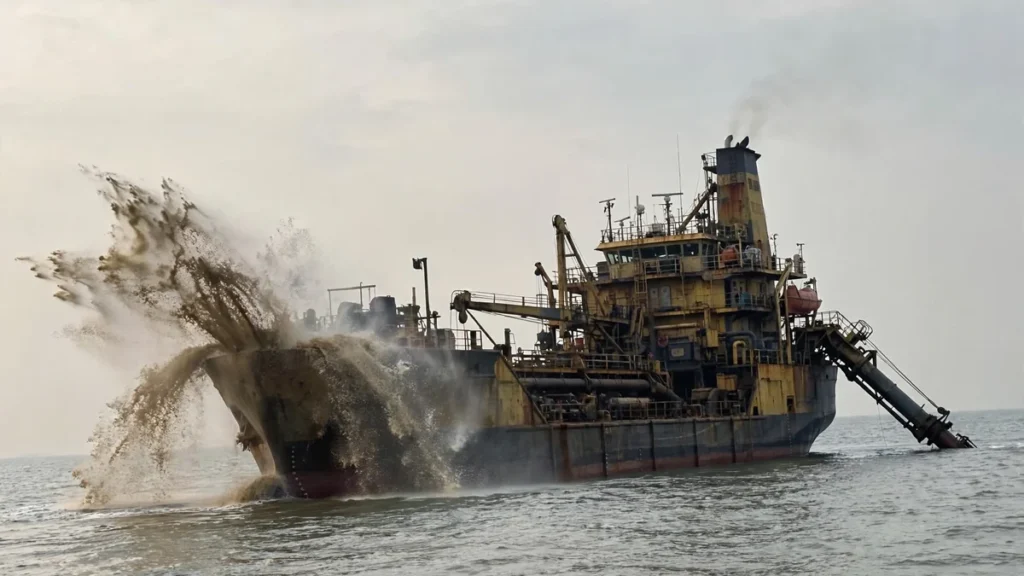
There are two main kinds. A cutter suction dredger cuts the seabed with a rotating cutter head, then sucks the loosened material up a pipe and pumps it ashore. A trailing suction hopper dredger drags a pipe along the bottom while sailing slowly, fills its own hold with sand, then sails away to dump it. The luxury versions are the newest builds: automated, quiet, clean-burning, with accommodation keeping thirty crew happy on a six-week contract. How a luxury dredger is made starts with one question — what ground must it cut, and how deep — and every answer after that costs money.
How a luxury dredger is made
Step 1 — The design starts with the ground. Engineers study the seabed it will work in: soft sand, stiff clay or solid rock. Soft ground needs a big pump and a gentle cutter; rock needs a heavy cutter head and enormous power. Hull, ladder and pumps are sized around that one decision, and getting it wrong means a dredger that cannot do its job.
Step 2 — The hull is built like a barge with a backbone. A dredger hull is wide, flat-bottomed and enormously strong, built to carry heavy digging gear and to be held by steel spuds in rough weather. The deck is a working platform: cranes, winches, pipes and the A-frame raising and lowering the cutter ladder. Accommodation goes in a block at the front, clear of dust and noise.
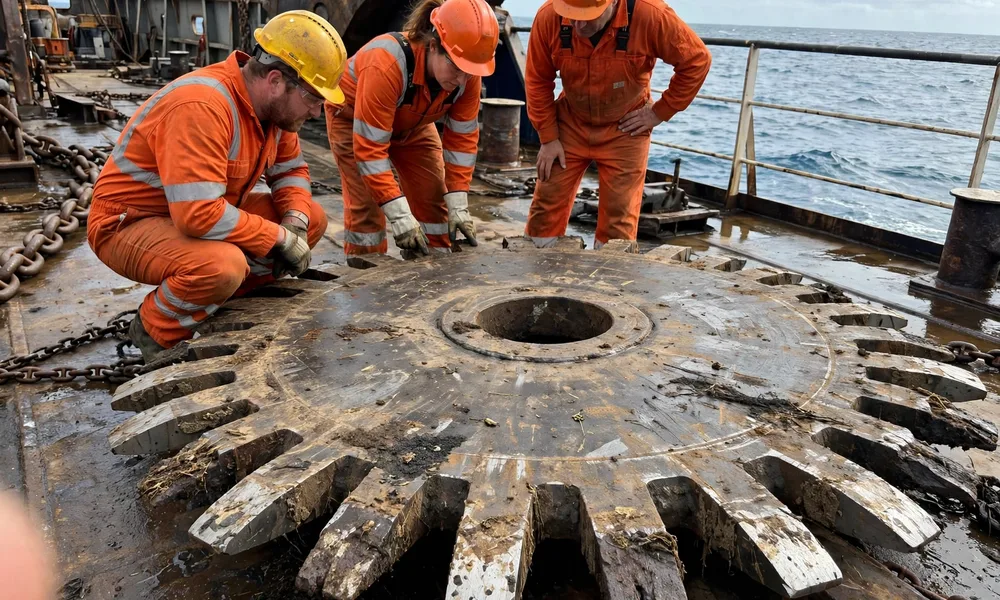
Step 3 — The cutter ladder is fitted. The ladder is a steel structure as long as a bridge, hinged at the hull and lowered to the seabed on wires. At its end sits the cutter head, a basket of steel teeth driven by a motor of several thousand horsepower. Teeth are consumables: on hard ground a set wears out in days, and spares are carried by the pallet.
Step 4 — Pumps and pipelines go in. The dredge pump is the heart of the ship, moving a river of sand and water at enormous pressure. From the pump, a pipeline runs over the stern to floating pipes carrying the spoil ashore, sometimes for kilometres. The newest add booster pumps along the line to push the slurry further.
Step 5 — Positioning and power are installed. A modern dredger holds position with spuds — steel legs lowered into the seabed — and winches that swing the cutter head in an arc. GPS and dynamic positioning guide every move to the centimetre. Diesel generators totalling tens of thousands of horsepower provide the power, the newest builds adding batteries or cleaner fuels.
Step 6 — Trials in real ground. Before delivery the dredger is tested on a real seabed: cutting, pumping and discharging, production measured in cubic metres per hour. Only when the numbers match the contract does the owner take the ship — the first job usually waiting before the paint is dry.
The specification that drives the price
| Specification | Typical figure | What it means |
|---|---|---|
| Length overall | 100–160 metres | Carries the digging gear |
| Cutter power | 5,000–10,000 hp | Cuts rock, not just sand |
| Dredging depth | 25–45 metres | How deep it can dig |
| Pump capacity | 20,000–40,000 m³ per day | Material moved in a working day |
| Total power | 25,000–40,000 hp | Generators for pumps, winches and cutter |
| Crew | 25–40 people | Round-the-clock digging, in shifts |
| Discharge distance | Up to 10 km | How far the spoil can be pumped |
| Build time | 24–36 months | From first steel to delivery |
The figure that surprises people most is cutter power: a dredger’s cutter head alone can draw more power than a whole train, and it needs it — cutting rock underwater is one of the hardest jobs any machine does. The second surprise is the crew. A dredger works around the clock, so the accommodation must feed, house and rest two full shifts, which is why the newest builds spend real money on cabins, a gym, a mess room and quiet. A tired crew is a slow dredger, and a slow dredger costs its owner a fortune.
What it costs
A large new cutter suction dredger typically costs an estimated $100 million to $300 million, depending on size, depth and the power of cutter and pumps. A mid-size harbour vessel sits near the lower end; a flagship built to cut rock at forty metres, with the latest automation and a premium crew block, reaches the top. Only a few yards in the world build them, and order books are measured in years. Running costs are enormous too — fuel, cutter teeth by the pallet, a crew in shifts around the clock — yet the work pays: a dredger that deepens a channel lets a port take bigger ships, and one deepening pays for the dredger many times over. The price of a luxury trawler looks modest beside it, but a trawler catches fish; a dredger moves the ground itself.

A rare fact
Dredgers built entire islands. The Palm Jumeirah in Dubai — a palm-shaped island big enough to see from space — was made by dredgers pumping millions of cubic metres of sand from the seabed and raining it into place, then shaping it with bulldozers. No land was bought and no rock was quarried; the island was simply moved, one pump-load at a time, from the bottom of the sea to the surface. It is the largest thing dredgers have ever built, and it took a fleet years. The price of a luxury center console boat buys a fine machine for a weekend; a dredger’s price buys a machine that can redraw the coastline.
A luxury dredger is not luxurious the way a yacht is: no marble, no champagne — just steel, power and precision, and a crew block quiet enough to sleep in while the cutter grinds rock forty metres below. It is one of the most expensive machines that floats because it does one of the hardest jobs there is: moving the earth, under water, in the dark, without stopping. Ports, islands and shipping lanes exist because a dredger was there first.