Imagine a steel tube, ten metres across, lowered into the deep ocean. The water presses on it from every side, and the deeper it goes, the harder the squeeze. At a few hundred metres down, that pressure is dozens of times greater than the air around you right now, enough to crush an ordinary hull like a drinks can. A submarine hull has to hold that pressure back, hour after hour, year after year, with a crew inside trusting it with their lives.
Most submarine hulls are made of high-strength steel, but a small number are made of titanium, and those are among the most expensive structures ever built for the sea. Titanium is lighter than steel, stronger for its weight, and almost immune to corrosion, which sounds like the perfect hull material. This is why a titanium hull costs so much, and why so few of them exist.
Why It Costs So Much
Reason 1: The metal itself is rare and costly
Titanium does not come out of the ground as metal. It is extracted from ore through a long, energy-hungry process that produces a spongy grey material, which must then be melted, refined and rolled into plate. The metal is expensive by the kilo, and a submarine hull needs hundreds of tonnes of it, so the raw material bill alone runs into tens of millions of dollars. Before a single plate is cut, the hull is already one of the most expensive metal structures on Earth. The way the finished hull is put together is explained in how a submarine titanium hull is made, and the metal is where the story starts.
Reason 2: Forging and rolling titanium is a different trade
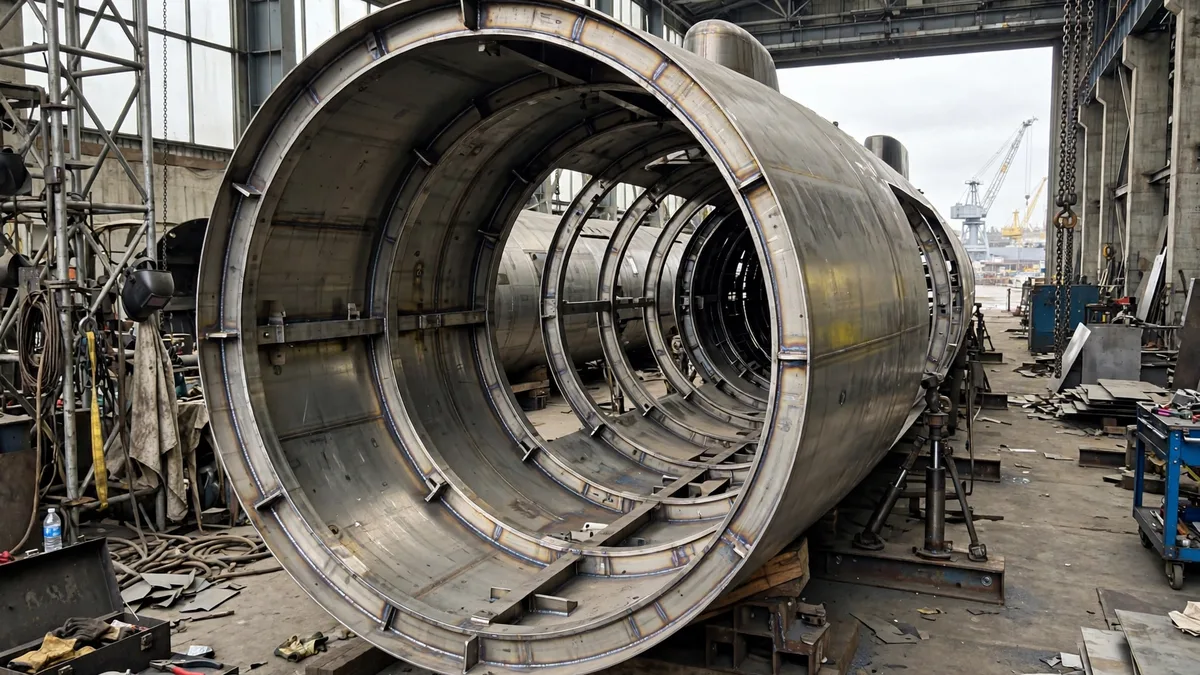
Titanium plate for a hull is not bought off the shelf. Thick plates must be forged and rolled to exact thicknesses, and the metal behaves very differently from steel when it is hot. It must be heated in a controlled atmosphere, worked at precise temperatures, and cooled slowly, because the wrong treatment leaves the metal brittle. The rings that stiffen the hull are forged as single pieces and then machined to shape, a process that takes huge presses and furnaces that few yards own. The forging is where titanium earns its reputation as a difficult metal.
Reason 3: Welding titanium is the hardest part of all
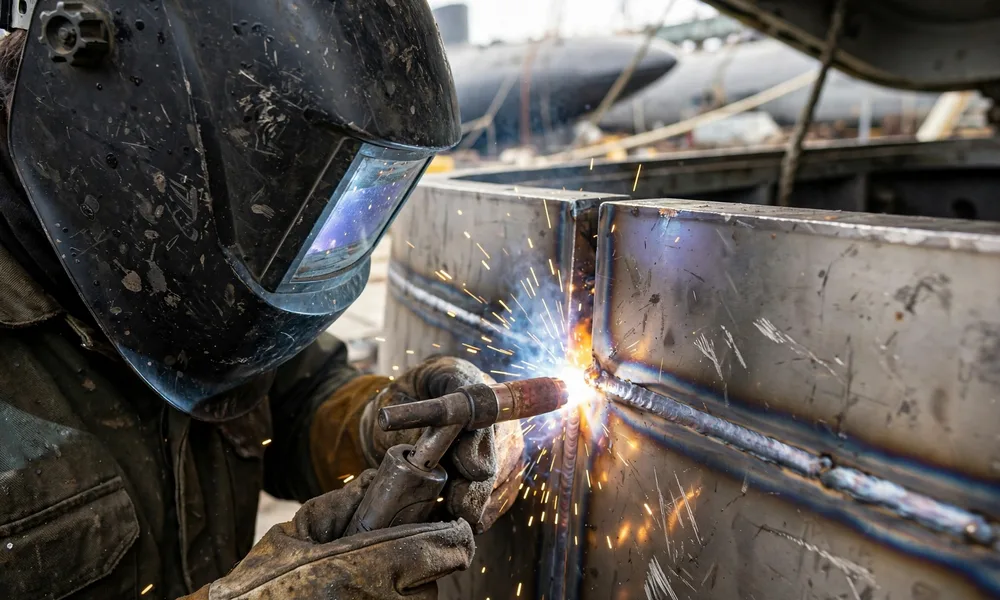
Joining titanium plates is the most demanding job on the whole hull. Titanium reacts with oxygen and nitrogen in the air when it is hot, and a weld contaminated by air becomes brittle and weak. Welders must work inside argon-filled chambers or under trailing gas shields that keep the air away from the weld until it has cooled, and the welding is done slowly, pass by pass, with the temperature watched constantly. A hull can take years to weld, and the welding is a large share of the final price.
Reason 4: The hull must be perfectly round
A pressure hull works because it is a near-perfect cylinder, and any flat spot, dent or ovality concentrates the pressure and can start a failure. Building a ten-metre cylinder out of heavy plate, and keeping it round to within a few millimetres over its whole length, is an extraordinary feat of measurement. The yard checks the shape constantly with lasers and templates, and sections that drift out of tolerance are jacked, heated and reworked until they are true. Roundness is not a detail on a titanium hull, it is the whole point.
Reason 5: Testing is slow, strict and unforgiving
When the hull is finished, it is tested in ways no other structure is tested. Sections are pressure-tested in huge chambers, filled with water and squeezed far beyond the pressure they will ever see at sea, while sensors listen for the tiniest sound of a crack forming. If a test finds a flaw, the hull goes back for repair and retesting, and the schedule slips by months. This testing regime is slow and costly, but it is the reason a crew can trust the hull, and no navy or builder will ever skip it.
Reason 6: Very few yards can do it at all
The final reason is scarcity. Building a titanium pressure hull needs the titanium supply, the forging presses, the argon welding halls, the pressure test chambers and the specialists, all in one place, and only a handful of yards in the world have ever assembled that combination. Each hull is a one-off project that takes years, and the knowledge lives in the heads of the engineers and welders who have done it before. The buyer is paying not just for metal, but for a capability that almost nobody else has.
Submarine Titanium Hull at a Glance
| Specification | Detail |
|---|---|
| Material | Titanium alloy, marine pressure-hull grade |
| Key strength | High strength for its weight, superb corrosion resistance |
| Hull shape | Cylinder with ring stiffeners, kept near-perfectly round |
| Plate thickness | Tens of millimetres, varying by depth rating |
| Welding | Argon-shielded, X-ray and ultrasound tested |
| Main enemy | Pressure, weld contamination and loss of roundness |
| Testing | Hydrostatic pressure tests beyond working depth |
| Main advantage | Light, strong, almost immune to seawater corrosion |
| Main drawback | Very expensive, slow to build, few yards can do it |
What Does It Cost?
As rough estimates, a titanium pressure hull alone can cost several hundred million dollars (estimate), and a complete submarine built around one can cost well over a billion dollars (estimate). The titanium itself is a large share, with forging, welding, testing and the yard’s specialist facilities making up the rest, and a single hull can take years to complete. Those figures are estimates, not quotes, and the real number depends on the size of the boat, the depth it is designed for and the yard. The materials behind those prices are set out in the submarine titanium hull materials, while the steel pressure hulls that most submarines use are covered in how a submarine pressure hull is made.
A Rare Fact
Titanium is so resistant to seawater that a titanium hull barely corrodes at all, even after decades underwater, which is one reason the metal is prized for deep-sea work. The same property makes it valuable far beyond submarines: titanium is used in aircraft, in medical implants and in spacecraft, anywhere that light weight, great strength and resistance to corrosion matter more than cost. A submarine hull is simply the largest and most demanding use of the metal, a place where its virtues are worth almost any price and its difficulties are faced head-on.
A titanium submarine hull is a quiet marvel of engineering. It holds back the crushing pressure of the deep with a shell of metal that weighs less than steel, never rusts, and is shaped to within millimetres over tens of metres. It costs so much because the metal is rare, the forging is hard, the welding must be shielded from the air, and almost nobody in the world can build one. Pay for all of that, and the hull will carry its crew through the deep for decades; settle for less, and the ocean will remind you, at depth, that it does not forgive shortcuts.